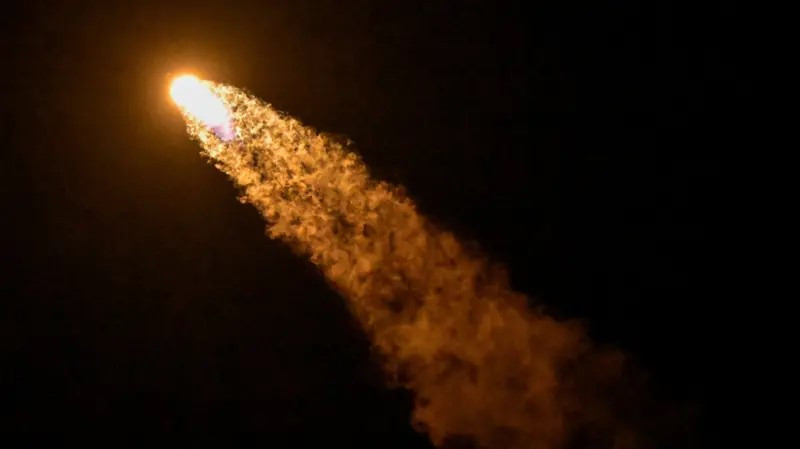
A DISCARDED section of a SpaceX Falcon 9 rocket is believed to have crashed into the Moon after drifting through space for months on an accidental trajectory towards the lunar surface.
The rocket’s upper stage, weighing about 4,000kg, was detached after the Falcon 9 launch last year as part of normal mission operations. However, instead of being directed towards a controlled disposal path, the object continued travelling through space before eventually entering a collision course with the Moon.
BBC reported on Wednesday that the impact was expected at around 7.35am BST and is being monitored by specialist telescopes, with confirmation to come after scientists analyse the available observations.
No live footage of the collision is expected because none of the spacecraft currently orbiting the Moon were in a suitable position to record the event.
Scientists will compare images of the lunar surface captured before and after the impact to identify any new crater or changes caused by the collision, a process expected to require detailed analysis.
NASA spokesperson Jimi Russell said the impact posed "no danger to Earth", adding that the agency would use the event to "collect lunar data from the event and refine techniques for tracking objects in space".
The incident has renewed concerns over the growing amount of human-made debris beyond Earth and the challenges it could pose for future space exploration.
Astronomer Matt Bothwell warned that increasing congestion in space could eventually make missions beyond Earth’s orbit more difficult.
"It could feasibly be, within a few decades, hard to get past Earth's orbit because space is so crowded," he said.
The impact will add another human-made object to the Moon’s surface, which already contains thousands of remnants from previous missions, with the combined mass of artificial objects on the lunar surface estimated at about 190 tonnes.
Although the collision poses no immediate threat, scientists say studying the impact could provide valuable data on lunar environments while improving methods for monitoring and managing objects travelling through space. - August 5, 2026