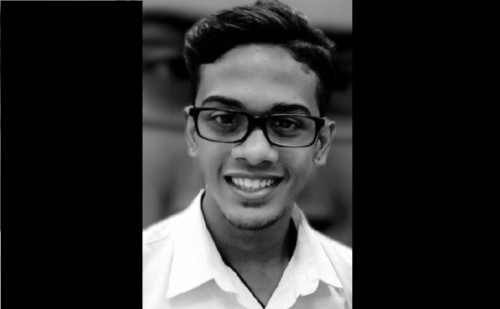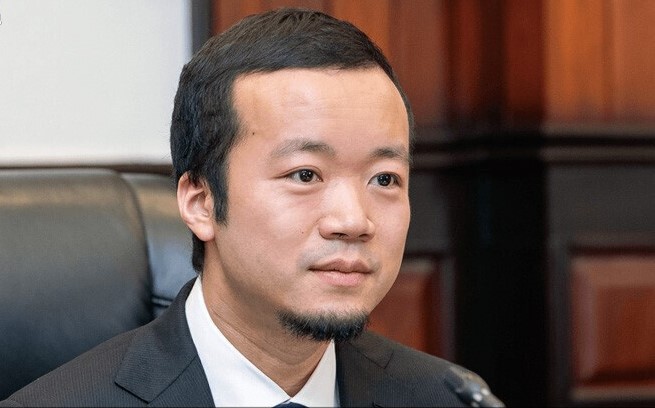
A KEY associate of alleged scam kingpin Chen Zhi (pic) built a substantial financial and corporate footprint in Singapore while helping oversee the risk-control operations of a global criminal syndicate accused of generating billions of dollars through investment fraud and money laundering.
An investigation by The Straits Times (ST) and the Organized Crime and Corruption Reporting Project (OCCRP) in Singapore, based on hundreds of pages of official records, has identified the second co-conspirator named in a US criminal indictment as Chen Xing, who later changed his name to Chen Sokly after acquiring Cambodian citizenship.
Sokly, who was also known in some Singapore circles as wealthy businessman Martin Chen, was identified by investigators through corporate records, citizenship documents and records of his former residences in Singapore and the United States.
The findings reveal how the alleged Prince Holding Group network extended across multiple jurisdictions through a web of companies, property holdings and financial relationships.
The US indictment identified Sokly as a trusted lieutenant of Chen Zhi and alleged that he was placed in charge of the syndicate’s risk-control function, including monitoring law enforcement investigations and cultivating relationships with foreign officials.
Chen Zhi, who was born in China, was identified by US prosecutors as the head of a global criminal syndicate involved in investment fraud and money laundering.
The indictment resulted in the US government forfeiting 127,271 bitcoins, valued at about US$15 billion at the time, in one of the largest financial fraud seizures in history.
Three Singaporeans and 17 Singapore-registered entities were also placed on the US Treasury Department’s Office of Foreign Assets Control (OFAC) Specially Designated Nationals and Blocked Persons list.
Sokly is believed to be currently in the United States, although he previously spent significant periods in Singapore.
Former employees interviewed by the investigators said he typically spent between two and three months a year in Singapore, where he socialised with associates including Chen Zhi and maintained a luxury lifestyle.
In 2017, Sokly established himself in Singapore by purchasing an apartment at 10 Leedon Heights for $11 million.
He later incorporated his first Singapore company, M Capital Global Holdings, investing just over $5 million with his wife. The couple remain shareholders of the company.
Over the following two years, Sokly became a director of at least 16 Singapore companies. Most of those directorships were removed between 2020 and 2023.
The companies shared an address in Shenton Way, although a visit by The Straits Times found no apparent connection between the occupants of the office and Sokly.
His assets in Singapore also included a fleet of luxury vehicles, including a Bentley and a high-end seven-seater, while a former employee said his son attended an international school in the city-state.
The investigation also traced Sokly’s business expansion beyond Singapore.
In 2018, he became chairman of Awesome Global Investment Group in Cambodia, a company established by Chen Zhi a year earlier. He subsequently used the Awesome and M Capital brands to establish further companies overseas, including several firms in the United States.
The US indictment alleges that Sokly used his influence with officials to protect the Prince Group’s interests.
Prosecutors alleged that in May 2023, Sokly communicated with a Chinese government official who promised that he could get Prince Group associates “off the hook” for any trouble they encountered.
In return, Sokly promised to take care of the official’s son.
Prosecutors also alleged that Sokly directed a Chinese official to have local police officers extort businesses on behalf of the Prince Group.
The indictment said he was sufficiently confident in his political connections to dismiss a crackdown on scam compounds in Cambodia, saying nothing would happen to the Prince Group.
Documents also showed Chen Zhi and Sokly discussing the number of officials Sokly allegedly had under his influence.
A ledger of alleged bribes maintained by Chen Zhi and uncovered by US authorities showed that Sokly purchased a yacht worth more than US$3 million for a foreign government official in 2019.
The indictment further alleged that Sokly used violence to protect the group’s dominance over other scam operators.
In July 2024, Chen Zhi reportedly instructed another associate to contact Sokly after a member of the group allegedly stole money from the organisation.
Sokly also allegedly boasted about the syndicate’s scale, claiming it was generating US$30 million a day through illicit activities.
The investigation traced further wealth into the United States, where California property records showed Sokly bought a home in 2019 from Fang Zhizhen, a member of the Chinese cybercriminal syndicate Knight Attack Group.
Sokly sold the property in 2024 for about US$4.5 million.
Property records also showed that he transferred ownership of another US$4 million property to his wife on Nov 4, 2025, weeks after sweeping sanctions were imposed on the Prince Group. The property was subsequently placed in a trust operated by his wife.
Sokly also had direct links to Cambodia-based Huione Group, which US authorities have accused of acting as a money-laundering hub for transnational criminal organisations.
His Cambodian company LM Car entered a joint venture with Huione Technology in Phnom Penh in 2022.
US authorities have alleged that Huione Group laundered at least US$4 billion in illicit proceeds between August 2021 and January 2025.
The US Treasury Department’s Financial Crimes Enforcement Network (FinCEN) said Huione had significant exposure to suspected fraud activities, including cryptocurrency investment scams commonly known as pig-butchering.
“FinCEN assesses that Huione Group’s extensive CVC services and its online marketplace, Haowang Guarantee, has made Huione Group a ‘one-stop shop’ for criminals to launder CVC obtained through illicit activities, and ultimately convert it to fiat currency,” said FinCEN in May 2025.
FinCEN said Huione Group had received at least US$36 million in cryptocurrency investment scam proceeds since August 2021, with the figure rising to US$300 million when other forms of cyber scams were included.
The agency described a process in which illicit actors sent cryptocurrency to Huione, which then converted the proceeds into fiat currency or another cryptocurrency before transferring them to different digital wallets.
US authorities also seized a cloud computing account on June 23 that was allegedly used by Huione subsidiaries to host backend infrastructure for the network.
The investigation found that Sokly was also closely connected to two associates linked to former Huione chairman Li Xiong, who was arrested and extradited to China in April.
Chen Zhi was himself arrested and extradited to China in January.
Corporate records showed Li Xiong was involved in a Cambodian real estate company, Cocosili Investment, with Chinese nationals Dai An and Xiong Huajun.
Dai was sanctioned by OFAC on June 23 over his alleged links to the Prince Group and was described by US authorities as a “high-level leader” in the organisation.
Dai, who acquired Cambodian citizenship in 2017 at the same time as Sokly, had previously been known as Dai Dewen.
Dai has denied involvement in the companies and activities raised by investigators.
“I am writing to tell you the plain truth regarding the matters you raised,” he said.
“The honest truth is that I have absolutely no involvement, connection or knowledge regarding this company’s activities,” he said in response to queries about his involvement in multiple companies linked to Sokly and Xiong Huajun.
Dai said he was registered as a director in the companies for “administrative credentials” and claimed he had no role in their operations and received no money.
“The matters, transactions or allegations you mentioned in your e-mail are completely foreign to me. I had zero knowledge that these things were happening,” he added.
However, records showed the close proximity between the three men extended into Singapore.
Dai became Sokly’s neighbour in 2017 after purchasing the apartment directly above Sokly’s Leedon Heights residence for $6.15 million.
Xiong purchased a luxury apartment in Nassim Road for $18.8 million in 2019, while a Mauritius registration document from 2018 listed a Leedon Heights address previously used by him.
In 2023, Sokly, Dai and Xiong were all listed as ultimate beneficial owners of the Mauritius-based Oceanic Opportunity Fund PCC, which provided millions of dollars in loans to Prince Bank.
The same fund also invested in Chen Zhi’s Singapore investment vehicle, Skyline Investment Management, until at least 2021.
All three were also involved in Mauritius-based Meritwise Group Public in 2018, alongside Singaporeans Karen Chen Xiuling and Cliff Teo Kang Yeow.
A Singapore police arrest warrant remains outstanding for Karen Chen, who is closely linked to Chen Zhi in Singapore and Taiwan, while Cliff Teo is wanted by Taiwanese authorities investigating his alleged connections to Chen Zhi and Prince Group subsidiaries in Taipei.
Flight records obtained by OCCRP and reviewed by The Straits Times also showed that Sokly, Dai and Xiong travelled together to Palau on April 23, 2019, aboard a private jet belonging to Hu Xiaowei.
Hu Xiaowei, who used multiple aliases, was sanctioned by the United States and Britain in October 2025 over his alleged role in the Prince Group, where he was described as Chen Zhi’s second-in-command.
He had arrived in Palau a day before the three men.
On June 23, OFAC formally sanctioned Hu Xiaowei’s known aliases, including Chen Xiao’er, Hu Shi and Wu An Ming.
Sokly did not respond to requests for comment from The Straits Times and OCCRP.
The investigation comes as US authorities intensify action against networks accused of exploiting forced labour in scam compounds, laundering illicit cryptocurrency proceeds and using complex international corporate structures to conceal their assets and operations.
The extensive Singapore property, corporate and financial trail linked to Sokly illustrates how individuals alleged to be operating within the Prince Group network were able to establish a presence across major financial centres while maintaining links to entities in Cambodia, the United States and Mauritius.
The rewrite keeps the source’s quoted material intact while shifting the lead towards the Singapore asset trail, cross-border financial network and alleged money-laundering infrastructure. The core identification and asset findings are supported by the uploaded source. - August 8, 2026