FRESH attacks on international shipping in the Gulf of Oman and the Bab el-Mandeb Strait on Tuesday have further dimmed prospects for a swift resolution to the Iran conflict, with Tehran declaring that the strategic Strait of Hormuz will remain closed until Washington meets its demands.
Global stock markets slipped as investors digested the fading likelihood of a quick diplomatic breakthrough.
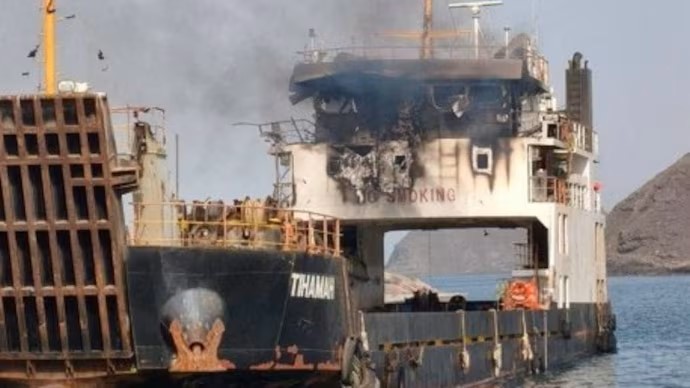
Four crew members died following a suspected Houthi attack on the Egyptian-owned cargo ship Tihamah in the Bab el-Mandeb Strait at the entrance to the Red Sea, according to Yemen's Transport Ministry.
Reuters reported on Wednesday that Yemen's Coast Guard confirmed that two local rescuers from an anti-Houthi military faction were also killed, marking the first reported fatalities aboard commercial vessels involving the group since the broader war broke out.
Houthi-aligned news agency Saba reported that the movement had targeted a Saudi vessel transporting military cargo, following its pledge last month to enforce a naval blockade against Saudi Arabia. Riyadh has not yet issued an official response to the claim.
In a separate action, the United States military confirmed that a US Navy MH-60 helicopter launched two Hellfire missiles to disable the steering mechanism of a Panama-flagged container vessel off the Pakistani coast as it attempted to enter the Gulf of Oman. US Central Command stated the vessel had repeatedly ignored warnings regarding Washington's blockade of Iranian ports.
Addressing the shipping closure, senior Iranian security official Mohsen Rezaei signaled a prolonged deadlock, insisting that access to the waterway—which previously carried a fifth of global oil supplies—remains contingent on American concessions.
"As long as America does not change its behaviour and does not accept Iran's conditions, the Strait of Hormuz will not be opened," Rezaei said, according to the Tasnim news agency. Tehran's demands include the unfreezing of Iranian assets and a halt to military hostilities across the region.
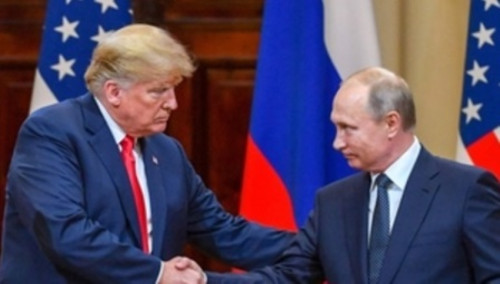
US President Donald Trump offered contrasting signals regarding the conflict's timeline, telling reporters that "Iran is going fine, going just absolutely fine," whilst adding that the United States maintained total control over the Strait of Hormuz.
"At some point, maybe they'll do something and then they get blown away," Trump noted. "But right now, we're in a very good position. We have a country that has been the bully of the Middle East for 50 years, really 51 if you think about it ... and they're no longer the bully of the Middle East."
In an earlier interview with Real America's Voice, Trump acknowledged that diplomatic efforts could drag on, describing Iranian envoys as "very devious negotiators" and suggesting Washington might elect to "bop along" to let Tehran suffer economic collapse.
Tensions were further heightened by statements from Iranian military personnel. Mohammad Reza Naqdi, an adviser to the Revolutionary Guards commander, announced on Iranian state television that forces were preparing for potential operations outside the region.
"We need to be able to move the operations to the enemy's soil, whenever this is needed and ordered," Naqdi said. "This is the characteristic of the offensive doctrine that has to be attained." - August 12, 2026