NEPAL faces a years-long reconstruction challenge after a catastrophic Himalayan flood destroyed homes, businesses and vital infrastructure, with survivors in devastated communities now weighing whether to rebuild their lives or relocate to safer ground.
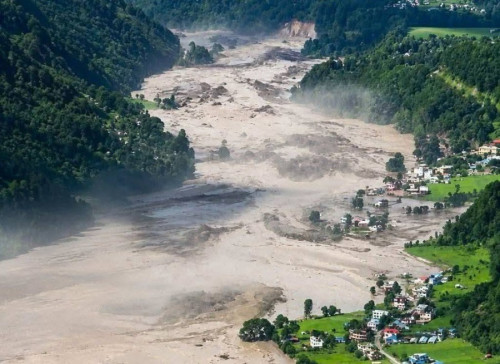
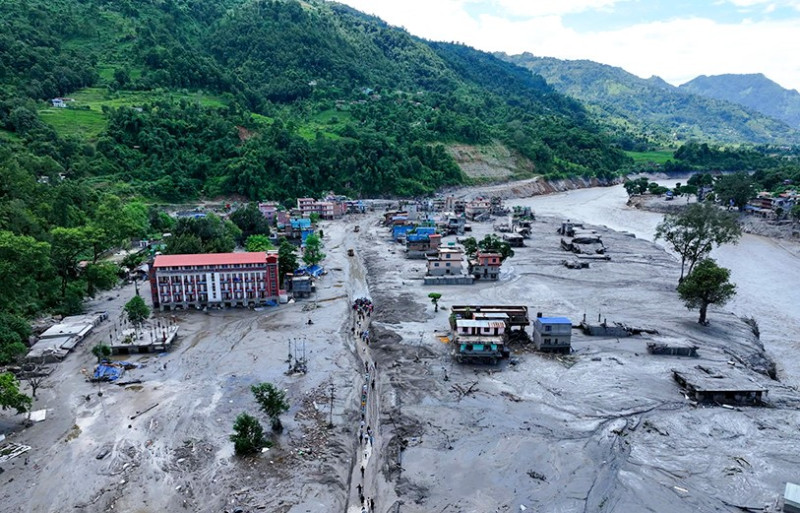
In Devighat, a picturesque pilgrimage town at the confluence of the Trishuli and Tadi rivers, the Aug 26 flood washed away more than 300 homes and left much of the settlement buried under thick layers of silt.
Among the victims was 60-year-old restaurant owner Bir Man Chitrakar, whose three-storey concrete home and family business were destroyed within minutes as floodwaters swept down the Trishuli River.
“Nothing was left. We could not salvage even a spoon or a glass,” Chitrakar told The Straits Times, standing in the family’s barely recognisable kitchen, where mud covered tiles decorated with images of utensils and colourful fruit.
Chitrakar and his family of 11 survived by fleeing to higher ground as the flood tore through the town. They are now staying at a relief camp and relying on charity meals.
The family does not want to rebuild beside the river, despite the location once being considered prime real estate.
“This river is going to wash us away again… How can we live here?” Chitrakar said.
His dilemma reflects a broader question facing Nepal as the country moves from emergency response to reconstruction: whether to restore communities where they stood or relocate them away from rivers and other areas exposed to future disasters.
Nepal’s Rapid Damage and Needs Assessment, released on Sept 10, found that 15 villages and towns across five districts along the affected rivers had been destroyed.
More than 1,400 people have been killed in Nepal and Tibet and more than 6,000 remain missing following the disaster, while about 1.6 million people have been affected in some way.
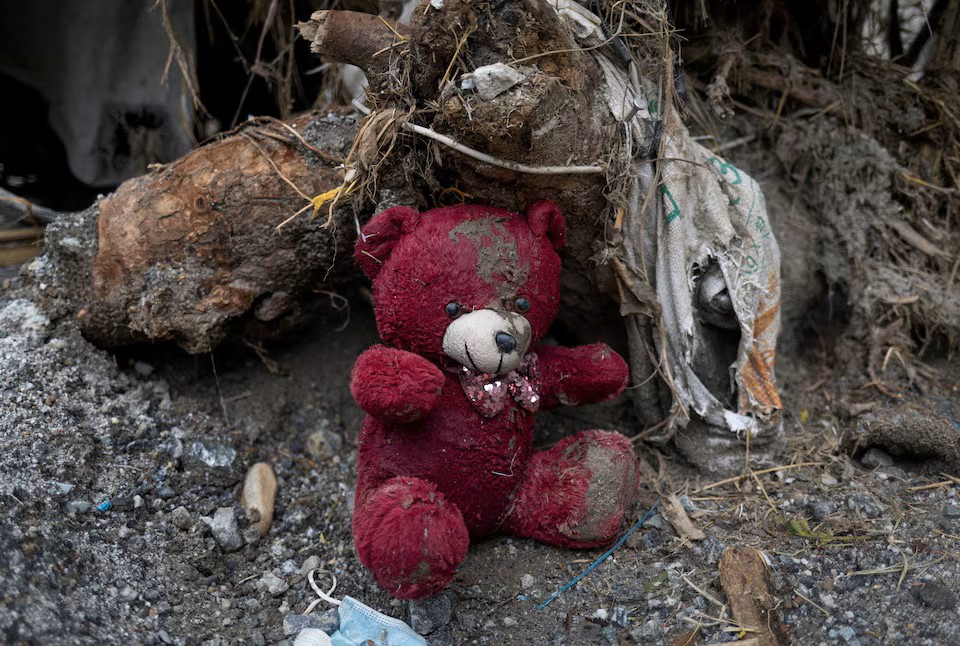
Thousands of homes, 18 schools, seven health facilities, places of worship, hotels, markets, roads, bridges and government offices were destroyed or damaged beyond repair.
The disaster also severed 69km of the main overland route between Kathmandu and Nepal’s border with China, damaging about 33 motorable bridges and 53 footbridges.
The disruption has hit tourism, which contributes about 7 per cent of Nepal’s gross domestic product, as well as trade with China, which accounts for about 19 per cent of Nepal’s imports.
Thirteen hydropower projects were also affected, adding pressure on Nepal’s hydroelectricity-based economy and its plans to expand energy exports.
“The entire civilisations have been swept away. This is a mega disaster with a variety of impacts, so the reconstruction will require multiple responses to fix the economic and social impacts,” said Dharmaraj Upreti, chief executive of the National Disaster Risk Reduction and Management Authority.
The reconstruction bill is estimated at about US$4.74 billion.
For now, authorities are clearing debris, restoring electricity and telecommunications and carrying out temporary road repairs to allow communities to resume economic activity.
The government has given itself 1½ months to complete a full-scale post-disaster needs assessment that will form the basis for the recovery effort.
But rebuilding in the same locations carries significant risks.
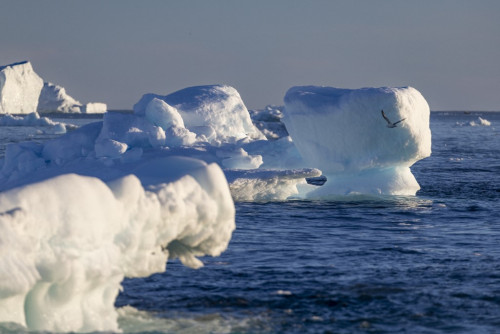
Himalayan geological experts have warned that the site of the ice-shelf collapse remains hazardous, while exposed bedrock and melting glacial lakes point to the possibility of further disasters.
“Now when we rebuild, we must avoid or minimise future disaster impacts,” Upreti said.
That could mean relocating families and reconstructing roads, schools and other infrastructure away from rivers.
In Devighat, however, there is no easy answer.
Ram Chandra Khadka, 70, lost the upper two floors of his three-storey home and suffered major losses to his pharmacy stock. He estimates his total financial loss at more than seven million Nepali rupees (about S$58,000).
“I have been living here for 40 years and we have never seen a flood this high,” Khadka said.
“I have been reduced to zero.”
Khadka wants to rebuild on the same plot, but only if the government first constructs strong enough embankments to protect the area. Otherwise, he said he would consider moving if the government provided land in a safer location.
The devastation has transformed Devighat from a colourful hill town into a landscape of grey sludge, uprooted trees and wrecked homes. The road to the Jalapa Devi Temple remains buried in silt, while the once-clear Trishuli River has turned brown.
“We survived so many years drinking this water, but this very water has now taken away lives,” Chitrakar said.
As Nepal begins the long process of rebuilding, communities such as Devighat face a choice that goes beyond replacing what was lost: whether to recreate generations of homes and livelihoods on devastated ground, or start again somewhere safer. - September 19, 2026
.jpg)

_director_Datuk_M._Kumar.jpg)