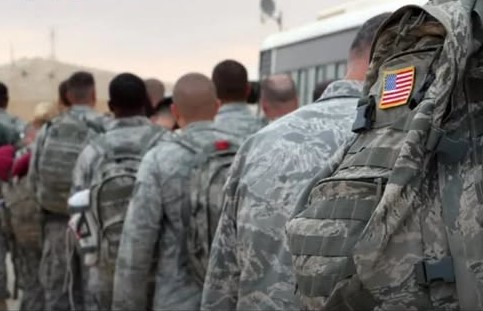
UNITED STATES forces are set to leave their last bases in Iraq by Wednesday, ending more than two decades of military involvement and raising concerns in Baghdad that the withdrawal could strengthen Iran-backed groups and create openings for Islamic State to regroup.
The departure, agreed in 2024 under then-President Joe Biden and carried out by President Donald Trump’s administration as Washington wages war against Tehran, is being celebrated by Iran and its allies as a defeat for the US presence in Iraq.
But Iraqi security officials and analysts warn that the withdrawal could leave gaps in intelligence, logistics and security capabilities, potentially allowing Iran-aligned armed groups to expand their influence while Islamic State sleeper cells seek to exploit any weaknesses.
“Iran stands to benefit strategically from the coalition's departure because it removes a military presence that for years acted as a counterweight to Tehran's influence in Iraq,” Reuters quoted Jasim al-Bahadli, an Iraqi security analyst specialising in Iran-aligned Shi'ite armed groups saying.
He said pro-Iranian militia groups were likely to portray the withdrawal as a victory and seek to turn the momentum into greater influence over security and political decision-making.
Abu Mojtaba al-Yasiri, a commander in the Islamic Resistance in Iraq, an umbrella group of Iran-backed armed factions, described the withdrawal as “a historic victory for the Iraqi Islamic resistance groups and honorable Iraqis, and a crushing defeat for the American project”.
“On September 30, we will celebrate the turning of a black page in Iraq’s history and the failure of the occupation to impose its will on our country,” he told Reuters.
“Iraq has proven that its sovereignty cannot be secured by foreign forces, but by the resistance and the will of its people.”
While the eventual departure of US forces is broadly popular among Iraqis, some officials and community leaders fear the country’s security forces are not fully prepared to assume all responsibilities without the coalition.
“We believe Iraq is still not fully ready to take over the security file at this time,” Abdulrahman al-Zobaie, a Sunni tribal leader in Fallujah, once a centre of anti-American resistance, told Reuters.
“All Iraqis aspire to full sovereignty, and no Iraqi would dispute that. But I believe that the (US-led coalition) leaving in this way and creating a vacuum is what all Iraqis fear.”
The United States invaded Iraq in 2003 to topple Saddam Hussein and subsequently occupied the country, helped install a Shi'ite-led government and fought a prolonged counterinsurgency before withdrawing at the end of 2011.
US forces returned less than three years later to support Iraqi forces in the fight against Islamic State, which seized large parts of Iraq and Syria before being defeated territorially in a major campaign from 2014 to 2017.
About 4,500 Americans died during the Iraq war and subsequent US military operations, making it the deadliest US conflict of the 21st century.
In recent years, Iraq has maintained close political and military ties with both Washington and Tehran, at times becoming a battleground for their rival interests.
The United States killed senior Iranian commander Qasem Soleimani in a 2020 strike near Baghdad airport, prompting further tensions between Iran-backed groups and US forces in Iraq.
In the current conflict with Iran, seven of the 18 US service members listed as killed were in Iraq, with the last US soldier killed there being an Army sergeant who died in July during the controlled detonation of a drone at a base near Erbil.
Iran, which has said its ultimate objective is to force US forces out of the Middle East, has portrayed the withdrawal from Iraq as a victory for its network of allied armed groups.
“Lasting security will prevail in Iraq” once American forces leave Iraq and the wider region, Amir Hayat Moqaddam, deputy chairman of Iran’s parliamentary National Security Commission, said on Monday.
Iran “welcomes the withdrawal of American troops from Iraq and will undoubtedly support it,” he told Iran’s parliamentary news service.
Washington has accused Iran-backed militia groups in Iraq of contributing to the wider regional conflict by carrying out attacks on neighbouring countries at Tehran’s direction, including a recent attack on a major Saudi oil pipeline.
The Baghdad government has said it is seeking to curb the influence of such armed groups.
Some Iraqi security officials, including those in the federal government and the semi-autonomous Kurdistan region, also fear the US withdrawal could give Islamic State an opportunity to rebuild.
The militant group, although stripped of its territorial control nearly a decade ago, retains sleeper cells in Iraq.
At its peak, Islamic State controlled about a third of Iraq and killed thousands of people, including hundreds at a former US military base where militants filmed executions.
Kurdish commander Sirwan Barzani said the loss of US intelligence, logistical support and drone capabilities could give Islamic State an opportunity to regroup.
“For more than two weeks, we have noticed movement by (Islamic State) sleeper cells, after it was announced in the general media that there will be an official withdrawal of the international coalition from Iraq by the end of September,” he said.
“This has boosted, in my opinion, the morale” of the fighters.
Iraqi security forces said a suspected Islamic State cell was preparing suicide attacks to coincide with the withdrawal, according to four Iraqi security and army officials.
The alleged plot underscored concerns that the militant group remains capable of exploiting security gaps despite years of military setbacks, said Colonel Khalid al-Bayati, a senior security official in the strategic oil town of Kirkuk.
Islamic State “is seeking to send a message that the group is still powerful and capable of launching bloody attacks,” he said. - September 29, 2026