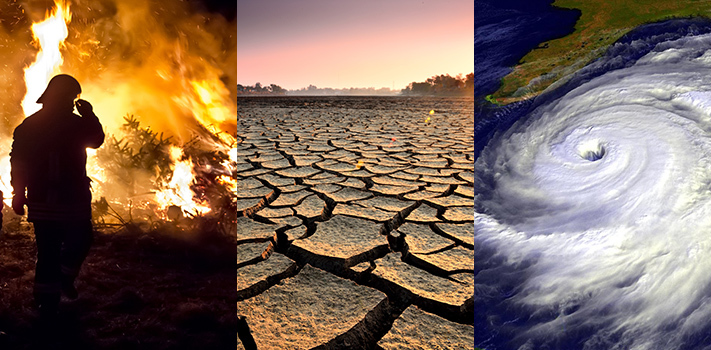
NEARLY 90 million forcibly displaced people are living in countries increasingly threatened by droughts, floods and extreme heat, prompting the United Nations refugee agency to call for greater climate adaptation funding ahead of the COP31 summit.
The UN High Commissioner for Refugees (UNHCR) said nearly three-quarters of the world's forcibly displaced population were living in countries highly exposed to climate-related risks, including Afghanistan and Bangladesh.
Its report, released ahead of the UN Climate Change Conference in Antalya, Turkiye, highlighted the growing overlap between armed conflict, forced displacement and climate change.
"Climate adaptation in fragile and displacement-affected areas is a matter of survival," Reuters quoted UNHCR Assistant High Commissioner for Operations Anton Leis Garcia saying.
"We need climate financing to reach the communities where the needs are greatest," he said.
The report cited the experience of a Sudanese refugee who fled fighting in al-Fashir in June 2023 and sought shelter at the Farchana refugee settlement in eastern Chad.
She said she sometimes went a week without finding safe drinking water and had to walk increasingly long distances to alternative sources as nearby seasonal riverbeds dried up amid rising temperatures.
UNHCR also warned that climate change was undermining prospects for displaced people to return home permanently.
More than two-thirds of refugee returns in the first half of 2026 were to countries highly exposed to climate hazards, increasing the risk of renewed displacement.
In Syria, where nearly four million displaced people have recently returned, worsening water scarcity and erratic rainfall are adding to the challenges, while flooding along the Euphrates River in May damaged homes and displaced thousands.
Across sub-Saharan Africa, one in three refugee settlements could experience at least 100 days of dangerous heat annually by 2050, threatening residents' health and livelihoods.
In some Ethiopian settlements, including Helaweyn, dangerous heat could persist for more than 200 days a year, increasing the risk of heatstroke and premature death.
"Refugees often have limited access to cooling, water and reliable energy, making it harder to escape dangerous temperatures," the report said.
The agency also warned that a forecast exceptionally strong El Nino could intensify climate-related threats in refugee-hosting countries and trigger further displacement.
In East Africa, severe flooding could displace up to three million people in Somalia, Kenya, South Sudan and Uganda by the end of 2026.
In the Sahel, drought, flooding and conflict could heighten competition for scarce resources, while parts of Asia face increased threats from droughts, floods and cyclones.
UNHCR urged governments and climate-financing institutions attending COP31 to increase support for adaptation measures, noting that only about 10 per cent of climate finance reaches fragile or conflict-affected countries.
The warning follows a separate UN report on Nov 4 which found that wealthy nations were falling significantly short of the US$305 billion needed annually to help developing countries adapt to climate change, despite increasingly frequent and severe extreme weather events. - November 6, 2026