GENEVA – The World Health Organisation said yesterday that the second stage of an investigation into the origins of Covid-19 should include further studies in China and lab audits.
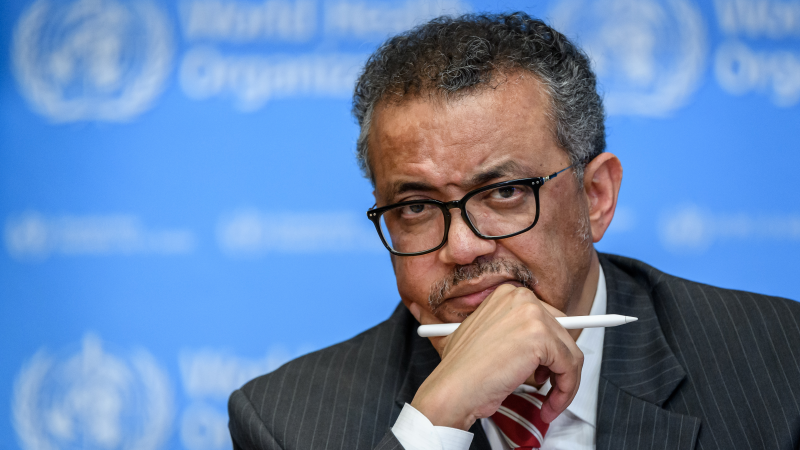
In a closed-door briefing to member states, WHO chief Tedros Adhanom Ghebreyesus proposed five priorities for the next phase of the investigation.
They included “audits of relevant laboratories and research institutions operating in the area of the initial human cases identified in December 2019”, according to a copy of his opening statement provided by the WHO.
He also suggested investigators should focus on “studies prioritising geographic areas with the earliest indication of circulation of SARS CoV-2”, the virus that causes Covid-19.
And, he called for more studies of animal markets in and around the Chinese city of Wuhan, where the disease was first detected.
The UN health agency has been under intensifying pressure for a new, more in-depth investigation of how the disease that has killed more than four million people around the world first emerged.
The WHO was only able to send a team of independent, international experts to Wuhan in January, more than a year after Covid-19 first surfaced there in late 2019, to help Chinese counterparts probe the pandemic origins.
‘Extremely unlikely’
They published a report in late March, but drew no firm conclusions about how the virus first jumped to humans.
Instead, they ranked several hypotheses according to how likely they believed they were, finding that it was most likely the virus jumped from bats to humans via an intermediate animal. An alternative theory involving the virus leaking from a laboratory was deemed “extremely unlikely”.
The investigation faced criticism for lacking transparency and access, and for not evaluating the lab-leak theory more deeply.
Long derided as a right-wing conspiracy theory, and vehemently rejected by Beijing, the idea that Covid-19 may have emerged from a lab leak has been gaining momentum.
According to information obtained by AFP, the WHO has now developed a protocol for evaluating laboratory safety and biological security to help ascertain whether the virus may have emerged due to a lab accident.
The protocol, which the agency aims to use to investigate the Covid-19 origin as well as possible future outbreaks, provides measures for evaluating, among other things, the storage of virus samples and handling of waste.
‘Premature’
Tedros, who has always maintained that all theories remained on the table, told journalists on Thursday that the push to rule out the possible link to a lab leak had been “premature”.
Chinese Foreign Ministry spokesman Zhao Lijian rejected that, standing by the first mission’s conclusion that a lab leak was “extremely unlikely”, and warning that “this issue should not be politicised”.
He also rejected Tedros’s charge at Thursday’s press conference that China had failed to share the raw data needed during the first phase of the investigation, insisting the visiting experts were given adequate access.
In his statement yesterday, Tedros thanked China and other countries “who wrote to me yesterday, and I agree that finding the origins of this virus is a scientific exercise that must be kept free from politics”.
“We expect China to support this next phase of the scientific process by sharing all relevant data in a spirit of transparency,” he said.
After the first mission went to China, Beijing has been pushing for the next phase to focus elsewhere.
Diplomatic sources who viewed the document circulated to missions earlier this week as a basis for yesterday’s briefing said China was the only country mentioned as a destination for the next mission.
‘Essential’
Tedros highlighted that getting to the bottom of the mystery of where Covid-19 came from was “essential”, for “understanding how the pandemic started and preventing future outbreaks”.
The WHO chief also announced yesterday the creation of a new permanent International Scientific Advisory Group for Origins of Novel Pathogens, or SAGO.
The new group, he said, would “play a vital role in the next phase” of the Covid origins studies, “as well as the origins of future new pathogens”. – AFP, July 17, 2021