UNITED NATIONS – An international treaty banning nuclear weapons has been ratified by a 50th country, a UN official said on Saturday, allowing the text proponents call historic to enter into force after 90 days.
While nuclear-armed powers have not signed up to the treaty, activists who have pushed for its enactment hold out hope that it will nonetheless prove to be more than symbolic and have a gradual deterrent effect.
Honduras became the 50th country to ratify the treaty.
"Today is a victory for humanity, and a promise of a safer future," Peter Maurer, president of the International Committee of the Red Cross (ICRC), said in a statement.
Other NGOs also welcomed the news, including the International Campaign to Abolish Nuclear Weapons (ICAN), a coalition that won the 2017 Nobel Peace Prize for its key role in bringing the treaty to fruition.
"Honduras just ratified the Treaty as the 50th state, triggering entry into force and making history," ICAN said in a tweet.
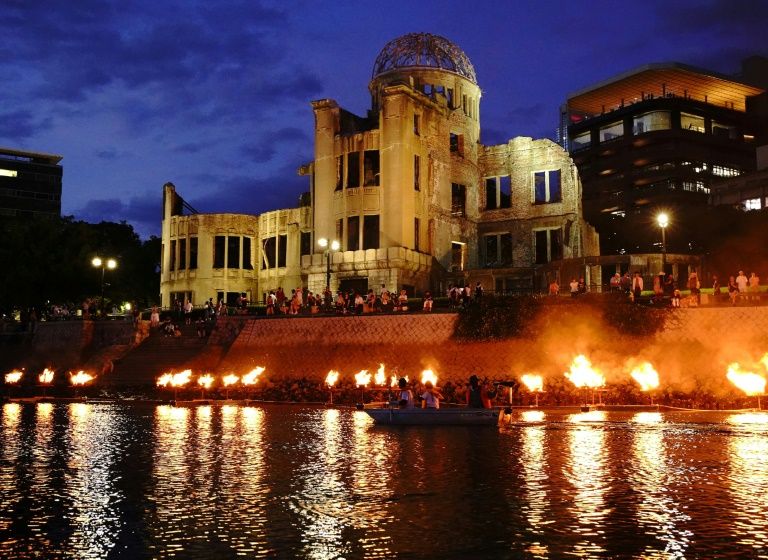
The 75th anniversary of the nuclear bomb attacks on Nagasaki and Hiroshima, marked in August, saw a wave of countries ratify the treaty in recent months.
They have included Nigeria, Malaysia, Ireland, Malta and Tuvalu.
Thailand, Mexico, South Africa, Bangladesh, New Zealand, Vietnam and the Vatican are among the countries that had already ratified it.
It is now expected to enter into force in January 2021.
'A new chapter'
The Treaty on the Prohibition of Nuclear Weapons – which bans the use, development, production, testing, stationing, stockpiling and threat of use of such weapons – was adopted by the UN General Assembly in July 2017 with the approval of 122 countries.
Eighty-four states have since signed it, though not all have ratified the text.
The clutch of nuclear-armed states, including the United States, Britain, France, China and Russia, have not signed the treaty.
However, campaigners hope that it coming into force will have the same impact as previous international treaties on landmines and cluster munitions, bringing a stigma to their stockpiling and use, and thereby a change in behavior even in countries that did not sign up.
ICAN said in a statement that "we can expect companies to stop producing nuclear weapons and financial institutions to stop investing in nuclear weapon producing companies."
The coalition's executive director Beatrice Fihn called it "a new chapter for nuclear disarmament."
"Decades of activism have achieved what many said was impossible: nuclear weapons are banned."
Nuclear-armed states argue their arsenals serve as a deterrent and say they remain committed to the nuclear Non-Proliferation Treaty, which seeks to prevent the spread of nuclear weapons.
Separately, Russia and the United States have been seeking to break an impasse in long-running talks aimed at extending a nuclear arms deal between them.
The two sides have struggled to find common ground over the fate of the New START treaty, which limits both sides to 1,550 deployed warheads but is due to expire next February.
While the US wants to rework the deal to include China and cover new kinds of weapons, Russia is willing to extend the agreement for five years without any new conditions – and each side has repeatedly shot down the other's proposals.
The agreement was signed in 2010 at the peak of hopes for a "reset" in relations between the two countries.
Together with the Cold War-era Intermediate-Range Nuclear Forces (INF) treaty, it was considered a centerpiece of international arms control.
However, the United States withdrew from the INF last year after accusing Moscow of violations. – AFP, October 25, 2020