World

Singapore eyes repeal of ‘no longer relevant’ Sedition Act

New laws deal with such issues in more targeted, calibrated manner, says minister

Updated 5 years ago · Published on 06 Oct 2021 4:30PM

Singapore eyes repeal of ‘no longer relevant’ Sedition Act
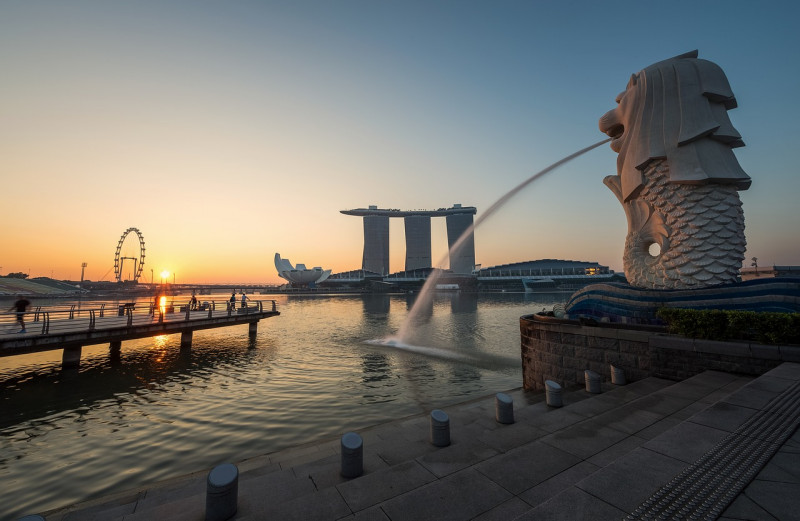
Sedition laws were first introduced in Singapore through the Sedition Ordinance 1938, when Singapore was a British colony, in part to curb local opposition to the British colonial rule. – Pixabay pic, October 6, 2021

SINGAPORE – Singapore is in the midst of repealing its 83-year old Sedition Act.

The Sedition (Repeal) Bill, which was read for the first time in Parliament on September 13 and the second yesterday, will repeal the Act and make related amendments to other legislations.

The Act, among others, empowers Singapore’s courts to suspend the publication of newspapers containing seditious content and prohibit the circulation of seditious publications.

In the first reading of the bill, the republic’s Home Affairs Ministry (MHA) said the Sedition Act had been used in the past to address various forms of conduct that could weaken Singapore’s social fabric and undermine its institutions.

Over the years, MHA said new laws were introduced to deal with these concerns in a more targeted and calibrated manner.

These include the Maintenance of Religious Harmony Act, the Protection from Online Falsehoods and Manipulation Act 2019, the Administration of Justice (Protection) Act 2016, the Undesirable Publications Act, the Newspaper and Printing Presses Act, and specific provisions under the Penal Code.

“Thus, the Sedition Act is of limited application and can be repealed,” it said.

Meanwhile, in the second reading of the bill, the republic’s MHA Minister K. Shanmugam said some of the key aspects of the Sedition Act were no longer relevant and have not been relevant for a long time.

For instance, Shanmugam law minister, said disaffection against the government shouldn’t be criminalised.

He said sedition laws were first introduced in Singapore through the Sedition Ordinance 1938, when Singapore was a British colony.

The Sedition Act, in its current form, has its roots in the Sedition Ordinance 1948, which was introduced by the British to the Federation of Malaya in 1948, in part to curb local opposition to the British colonial rule, he added. – Bernama, October 6, 2021


Related News

Events / 3w

Hong Kong shopping festival makes ASEAN debut in Malaysia

Events / 1mth

NestBloom steps up regional expansion with Malaysia entry 

World / 1mth

Singapore launches world’s first data centre powered by living human brain cells

Malaysia / 1mth

‘Look at temple dispute based on facts and laws’ – DAP reps tell Rayer

Malaysia / 1mth

Penang is first state to enforce private homestay law

World / 1mth

Former Singapore president now thinks twice about patting children after Roxy Square incident

Spotlight

Malaysia

Haze: Schools in Johor, Melaka, and Negeri Sembilan to close tomorrow

Malaysia

Tun Mahathir’s health improves, but not ready to leave hospital

Malaysia

LPT3 row puts Kelantan’s infrastructure priorities under scrutiny

Malaysia

Terengganu royal family member sues two banks over RM1.99m missing from savings

Malaysia

Irene Sofiya murder probe referred to Johor prosecutors for review

Malaysia

Teacher denies negligence charges over fatal school SUV crash in Kota Bharu

Malaysia

Sulaiman Md Ali opts out of Melaka polls, will not defend Lendu

You may be interested

World

Five Malaysians held in Tokyo over RM3.1m cocaine haul hidden in shoes

World

Malaysia seeks China’s satellite technology to improve flood warnings, combat cross-border crime

World

Fresh magnitude-6 earthquake strikes Panama after deadly tremor

World

North Korea test-fires tactical ballistic missile amid rising regional tensions

World

IMF warns AI sell-off; Soaring bond yields could trigger global market turmoil

World

Pope Leo XIV diagnosed with lung cancer after successful surgery

World

Indonesia rules out national disaster status for forest fires despite regional haze

World

Indonesia hotspots spike as Kalimantan records 326, Sumatra 303