
KUALA LUMPUR – Asian countries have been compliant with export controls imposed by the United States against Russia following President Vladimir Putin’s invasion of Ukraine, the US Department of Commerce said.
In a telephonic press briefing today, its Deputy Assistant Secretary for Export Administration Matthew S. Borman said that the US has not seen any indication of non-compliance in the region – but in fact, the opposite.
“The restrictions have been in place for roughly a month, a little bit over a month, and we certainly haven’t seen any indication that there’s non-compliance. In fact, we have seen the reverse.
“Over 300 companies (in Asia) have stopped engaging in business activities in Russia and with Russia.
“And certainly, I think there’s also a fair amount of additional self-sanctioning, if you will, by multinational companies operating in Russia,” he said.
Elaborating on the matter, Borman said major players are aware of the significant risk to their businesses if they do not comply with the restrictions as the US could take various actions against them, ranging from incurring fines to criminal penalties.
Despite the substantial demonstration of compliance from allied governments, he stressed that the US would continue to be vigilant and monitor the enforcement of controls in Asia.
“We know that Russia is quite dependent upon foreign supplies for some key inputs like semiconductors.
“Therefore, I think it will be relatively readily apparent if there is non-compliance and the task will be to trace that back to its origin.”
In addition, Borman said the US and its allies would not hesitate to continue or impose fresh sanctions – which includes the export, import and financial sectors – on Russia if the war in Ukraine continues.
He explained that there are some categories of items that are currently subjected only to restrictions if these items are headed towards listed military end users in Russia.
However, the US official warned that the list could be expanded for all end users in Russia.
“There is certainly more that could be done on the import sides, otherwise restricting more categories on import from Russia.
“And more to be done in the financial sector as well, and without prejudice to whether any of those will be done, but certainly those are all possibilities,” he explained.
He also revealed that the US is having discussions with other countries for them to join its sanctions regime as a strong initiative is needed to ensure that the boycott would continue to be effective.
The countries that the US is reaching out to in Asia, he said, are those which have substantial production, testing, and packaging in the electronics sector as well as aircraft maintenance repair facilities.
“Of course, we are also reaching out to any country which would impose comparable controls.
“We are always willing to work with any government in Asia to explain in more detail our actions and help them understand.
“This is so that they can help explain it to their industries and consider taking a comparable action to align their trade policies with the restrictive trade policies of those of us and our allies,” he said.
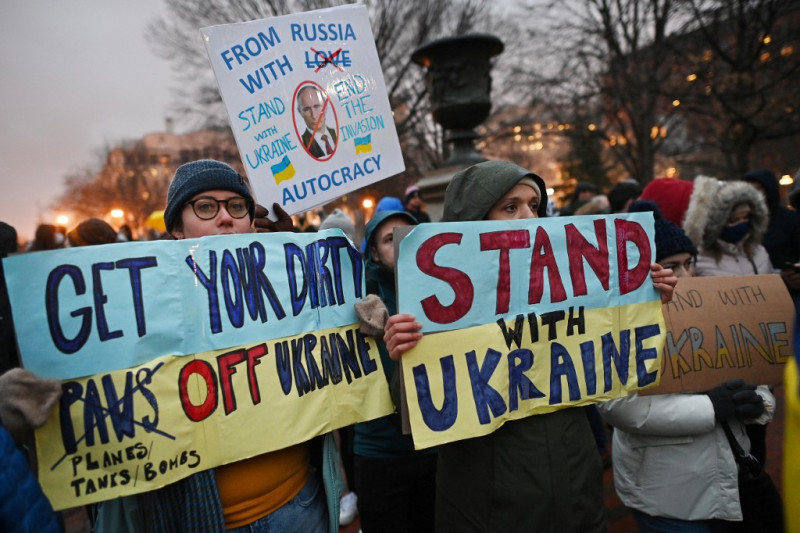
In response to Moscow’s threat against Ukraine’s sovereignty, countries all over the world have begun imposing fresh sanctions against Russia.
The restrictions consist of two parts – significant financial sanctions on a range of Russian financial institutions and individuals and far-reaching export controls imposing stringent licence requirements and licensing policies, and limited licence exception availability for exports of a wide range of items to Russia.
Asian nations such as Singapore, South Korea, Japan and Taiwan have also imposed sanctions on Russia. However, their impact is limited.
According to a BBC report, that is because the Asian countries which have joined the Western-led sanction efforts make up only 8% of Russia’s global trade.
Chairman of the international think tank, the Institute for Policy, Advocacy, and Governance, Prof Syed Munir Khasru was quoted by BBC as saying, “without having the two Asian giants China and India on board on sanctions who account for 18% of Russia’s trade, there is unlikely to be any significant impact on Russia.”
India, along with Pakistan, Vietnam, Bangladesh, Sri Lanka, Laos, and Mongolia abstained from the vote on a United Nations’ resolution to demand the end of Russia’s military operations in Ukraine.
Meanwhile, China has neither condemned nor condoned the invasion of Ukraine and has not imposed any sanctions on Russia. – The Vibes, March 29, 2022




.jpg)