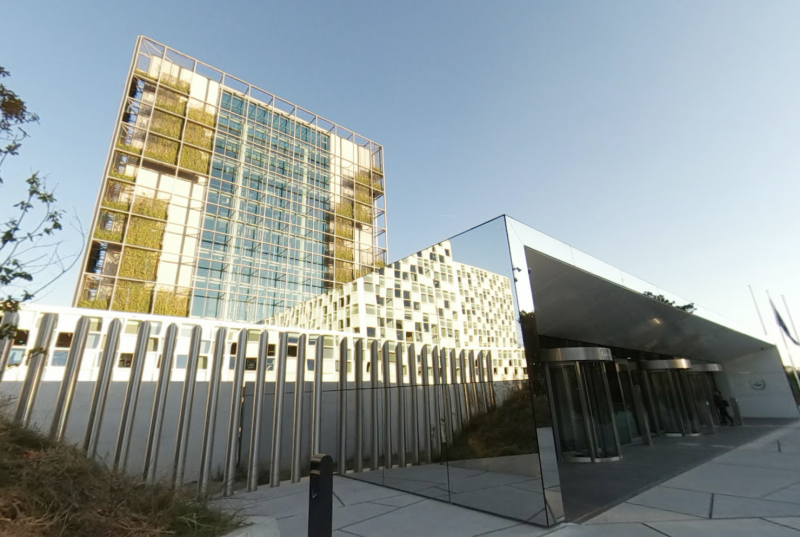
NAIROBI – The International Criminal Court (ICC) was expected to deter atrocities. It is, after all, the world’s foremost and only permanent war crimes tribunal with near universal jurisdiction for such crimes.
But its aspiration remains unmet as the Russia-Ukraine conflict, and many others across the world, rage.
Convictions at the ICC number few, acquittals many.
It is not easy to present the accused to the ICC because of the nature of their power position: they are usually senior political elite, state officials, or belligerent groups who wield significant power. Getting suspects to the courtroom, distant from the sites of crimes, is a tall order for a court that has no executive power or police force of its own.
As a result, the ICC has to rely on governments to cooperate in the arrest, surrender and prosecution of suspects, which can be a fraught process: some suspects are part of the state apparatus, so authorities are reluctant to work with the court, or suspects are beyond the reach of state actors (such as warlords who control their own territories and have military power).
Countries including Russia, Ukraine and the US have not ratified the Rome Statute giving the ICC its authority, adding to the challenge.
The Rome Statute provides for the United Nations Security Council’s referral of non-member states to the ICC, but permanent Council members such as the United States, Russia and China have used their veto power to shield allies from the court’s reach, such as in the Israeli-Palestinian and the Syrian conflicts.
The ICC operates in hostile environments, including countries with ongoing conflicts or where there is direct opposition to criminal accountability.
Intervening in difficult situations, where institutions have either collapsed or are nearly breaking down, is a difficult task for any judicial body, especially where the political elite have been accustomed to impunity. In such situations, the ICC is simply not welcome.
As a consequence, the ICC has to turn to intermediaries or “go betweens” to live up to its mandate, relying on them to collect and preserve evidence, collate witness statements, provide access to victims, understand the context, and more. In the shadow of these arrangements, the ICC has to navigate security threats to its staff on the ground.
This reliance on intermediaries has been problematic in other ways, as the defence has often challenged their use and their “negative impact on their clients” fair trial rights, especially in respect to disclosure.
Additionally, hostile state actors often resort to witness intimidation and interference, and non-cooperation in turning over crucial evidence to the ICC’s officials, weakening the prosecution’s cases, and the accused’s subsequent acquittals.
As a leading forum for international justice, the ICC must have checks and balances that respect sovereignty and encourage participation, whilst also giving the court some meaningful power.
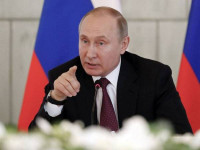
The challenges – both legislative and practical – are part of the puzzle that explains why the court has produced so few convictions during its two decades of operation, and signals some of the hurdles that lay ahead if the ICC tries to prosecute Russian President Vladimir Putin. – The Vibes, May 22, 2022
Geoffrey Lugano holds a PhD in politics and international studies from the University of Warwick in the United Kingdom, and is a lecturer of politics at Kenyatta University in Nairobi, Kenya. He researches on the International Criminal Court and local contexts, peacebuilding and African politics.
Published under Creative Commons and in partnership with 360info.org