TIMIKA – With the coronavirus devastating jobs across the country, desperate Indonesians are flocking to illegal gold mines as the soaring price of the precious metal overrides the risk to their lives and the environment.
Spooked by the economic destruction wrought by the pandemic, consumers and investors around the world have been snapping up gold, which is seen as a hedge against volatility, sending its price to a record above US$2,000 (RM8,280) an ounce last month.
The surge in demand has fuelled a boom in mineral-rich Indonesia's illegal mining industry, with workers ignoring the threat of arrest, mercury poisoning or being caught in the middle of gun battles.
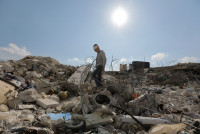
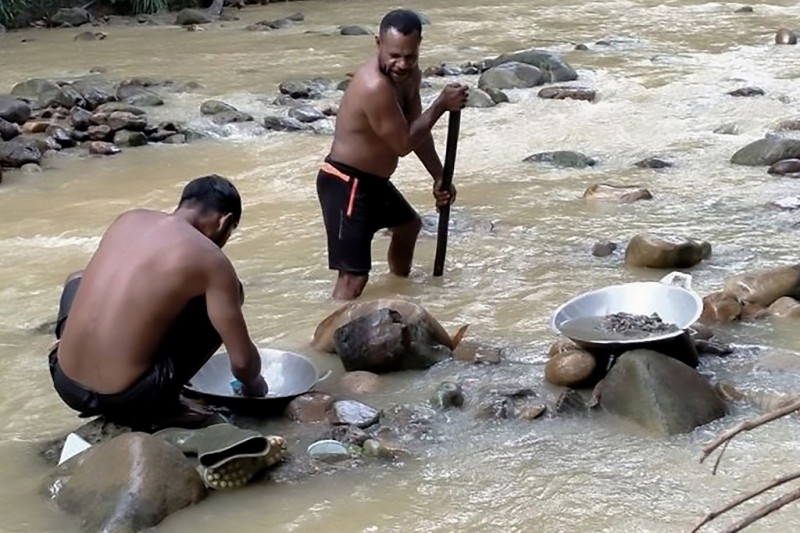
Father-of-two Mustafa is among the hundreds who play a daily game of cat-and-mouse with authorities in the restive Papua region as they pan for nuggets in a river near US-based Freeport's sprawling Grasberg site – one of the world's biggest gold mines.
On a good day, Mustafa collects a gram of gold by sifting through the mud with a fabric filter, which he can sell to a local trader for about 800,000 rupiah (US$55) – no small sum in one of Indonesia's poorest regions.
The miners here don't use mercury, he said, but there are plenty of other dangers lurking in Indonesia's rugged easternmost territory.
Fear of arrest is ever-present and so is being caught in the middle of deadly fights between security forces and independence-seeking rebels locked in a decades-old insurgency.
"There are more of us here now during the pandemic because the price of gold has jumped," Mustafa told AFP in a telephone interview.
"We're risking arrest by security forces, but we don't have any option because we need money to support our families."
The arduous job also carries the risk of catching the coronavirus or skin infections from wading through waters chock full of waste from the nearby mine.
"This is very dangerous for our health. Me and some of my friends have skin diseases," Mustafa said. "But thank god, so far no one has got the virus."
'Ecological disaster'
Thousands of kilometres to the west in Kalimantan – Indonesia's section of Borneo island – police this month arrested 400 gold miners accused of operating illegally in a conservation area, a crime punishable by up to 15 years in prison.
Here, the dangers of mercury to both miners and the environment is severe, said Sustyo Iriyono, the environment ministry's director of prevention and forest protection.
"The recent arrests in Kalimantan show that illegal activity was huge," he said.
While the ministry does not yet have hard data, Iriyono said illicit mining has spiked nationwide, including on the densely populated Java island and remote Sumbawa.
"The high price of gold during the pandemic is the stimulus behind this... illegal activity," he said.
"They're making profits by destroying the environment. We're trying to find a solution."
Environmental activist Aiesh Rumbekwan said the "massive increase" in unsanctioned mining was being driven by people desperate to feed their families in the pandemic-battered economy.
Government aid has been slow to reach many parts of the sprawling archipelago nation.
"Illegal miners (often) use mercury to speed up the process and that will harm the environment and places where this activity connects to water sources like lakes or rivers," said Rumbekwan, who heads the Papua chapter of environmental network Walhi.
"It could lead to an ecological disaster."
Indonesia banned the use of mercury for artisanal miners in 2017. But the dangerous metal, which can affect the nervous system and cause disabilities in newborn children, can still be purchased on the black market.
The livelihoods of at least one million Indonesians are supported by small-scale mining, according to the United Nations Development Programme (UNDP), which promotes mercury-free technologies.
Despite pandemic restrictions, there are reports of unlicensed operators bringing scores of domestic migrants to makeshift mines sites across the country, which have long been prone to fatal accidents.
"There's no control from the authorities," Rumbekwan said. – AFP, September 23, 2020