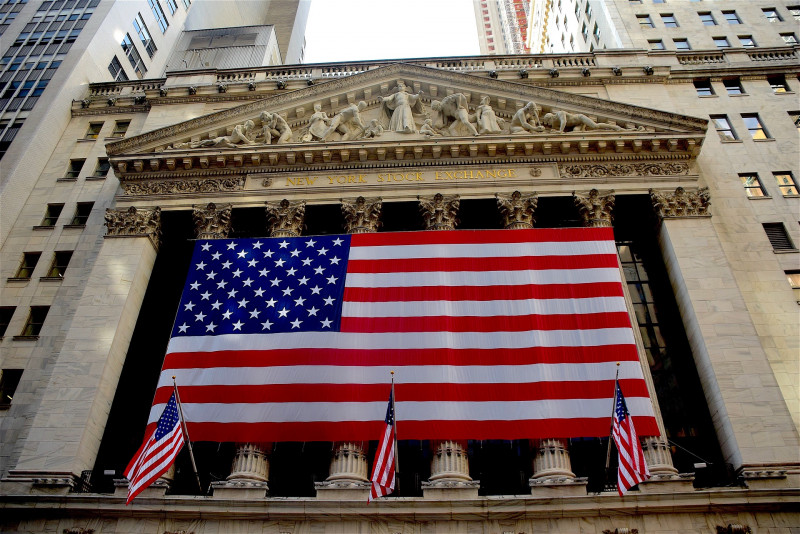
NEW YORK – Quincy Krosby, chief market strategist at Prudential Financial, does not hold back in describing 2020 on Wall Street: “a year of extreme extremes.”
From the start of the coronavirus pandemic that sent stocks crashing, to their resurgence after the approval of vaccines holding the best hope for eradicating the disease, here's a look back at the year in US stocks:
After a rather quiet January and February, Wall Street suddenly collapsed in March, frightened by the arrival of Covid-19 and its consequences for the world’s largest economy.
The major New York indices took on water, with the Dow Jones Industrial Average experiencing its third-worst session in history on March 16, with a 13% fall that was exceeded only by the 1929 Great Depression and the 1987 crash.
That marked Wall Street’s transformation into a “bear” market – meaning it had declined more than 20% from its recent highs as investors grappled with fears of a paralysed American economy and a liquidity crisis.
“If companies cannot raise money to survive, they go bankrupt, they lay people off, the unemployment rate skyrockets,” Krosby said.
But the malaise didn’t last long. Traders found a second wind when the Federal Reserve launched a massive asset purchase programme and cut its lending rate to zero, and when Congress passed a huge stimulus package later in March.
April to September: Recovery
Wall Street’s recovery continued in the spring and intensified over the summer, with the market in August nearing its pre-pandemic levels.
Driving this growth were tech giants, which experienced a meteoric rise: between April and September the share prices of Facebook, Amazon, Microsoft, Apple and Google parent Alphabet climbed, with the iPhone manufacturer gaining more than 80%.
The “rationale behind going into the mega-cap tech companies was that these were known companies, they were the best of breed and their goods and services were in demand,” Krosby said.
Other companies saw their fortunes boom because of the pandemic, including video conferencing platform Zoom, which spiked in popularity.
Companies selling cleaning products to virus-wary consumers, like Clorox and Procter & Gamble, as well as food companies like Hormel and Hershey, have also gained.
Small investors, many of whom found themselves at home with lots of time on their hands, also made their presence known in the markets, pushing up the shares of fashionable companies like Tesla.
But sectors most dependent on the overall health of the economy suffered, including cruise lines, casinos, hotels, airlines and oil majors.
By the end of July, the United States was in a recession, and tens of thousands of people had died from the virus.
November: Goodbye, Trump
By September, markets had turned their attention to the US presidential election, along with both a renewed surge in Covid-19 infections and progress toward a vaccine.
The November 3 vote signalled an end to the term of President Donald Trump, who had made the health of Wall Street an administration priority, and paved the way for president-elect Joe Biden, who will take over in January.
Large corporations that make up some of the biggest stocks on Wall Street generally prospered under Trump, who enacted a big tax cut in 2017 that helped their profits increase.
“There was a realization that if tax rates were lowered, profits would rise exponentially,” said Gregori Volokhine, president of Meeschaert Financial Services.
But the trade war Trump launched against China left some companies struggling, particularly those whose businesses depended on good relations between Washington and Beijing.
Either way, the Republican billionaire’s loss didn’t seem to bother Wall Street, where the Dow closed above 30,000 points for the first time ever on November 24.
The approval of the first Covid-19 vaccines in December heralded both better days ahead for the US economy and a rise in healthcare stocks.
Among the biggest climbers will be companies like vaccine maker Moderna and Regeneron, which makes a treatment for the disease. Both of them are expected to prosper into the new year.
Technology firms may also keep growing as interest in cloud computing, 5G capabilities and artificial intelligence intensifies.
Biden could also refocus Washington policymakers' interest on protecting the environment, and the effects of that will undoubtedly be felt in New York markets. – AFP, December 21, 2020