KUALA LUMPUR – The year 2020 was supposed to be an ambitious year for regional trade pacts.
However, progress was hampered as the world scrambled to mitigate the challenges brought about by the Covid-19 pandemic.
The deadly virus – which allegedly originated from an exotic meat market in Wuhan, China and detected in Malaysia as early as January this year – severely damaged the global economy, and the country was not spared from its repercussions.
Like many other countries, Malaysia has resorted to taking drastic actions, including implementing international border closures and restricting interstate travel to curb the spread of Covid-19, which the World Health Organisation (WHO) declared a global pandemic on March 11.
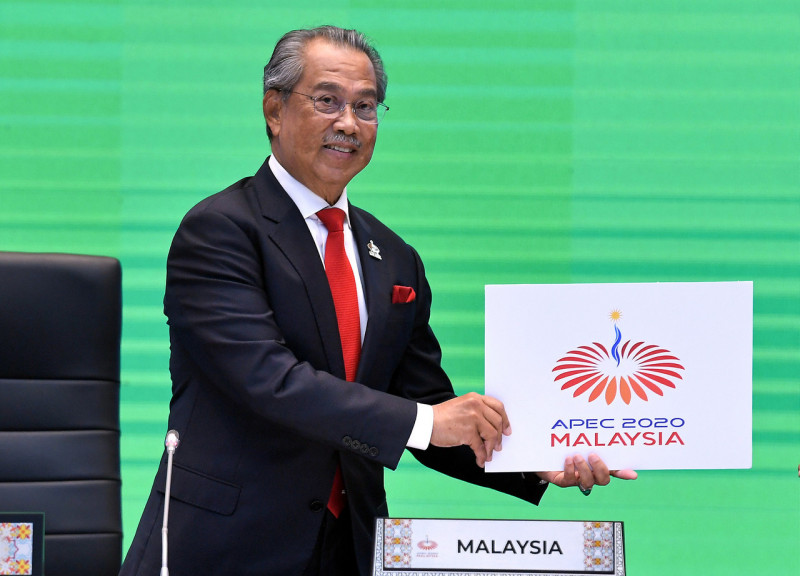
However, amid the backdrop of the pandemic, Malaysia has proven its capabilities by successfully conducting and concluding its year-long Apec chairmanship with a strong pledge towards free, open and non-discriminatory trade and investment.
The leaders of Apec's 21 member economies vowed to strengthen cooperation during and after the Covid-19 pandemic, gathering online on November 21 for the first-ever fully virtual 27th Apec Economic Leaders' Meeting (AELM).
"As a grouping whose economies constitute about 60% of the global economy, Apec assumes a central role in spearheading post-pandemic economic recovery," Prime Minister Tan Sri Muhyiddin Yassin, the host of this year's Apec meetings, said in his opening remarks.
Among the leaders at this year’s AELM were US President Donald Trump and Chinese President Xi Jinping.
Both leaders agreed to set aside their differences and recognise the importance of a free, open, fair, non-discriminatory, transparent and predictable trade and investment environment to drive economic recovery in such challenging times.
Two years ago, Apec leaders failed to agree on a joint statement for the first time in its history amid a trade row between Washington and Beijing, while last year, the AELM meeting scheduled in Chile was cancelled due to anti-government protests.
In a declaration issued after the virtually held meeting, Apec leaders stated their commitment to combatting and mitigating the impacts of Covid-19 and improving the narrative of trade and investment.
They had also committed to implement inclusive economic participation through digital economy and technology, driving innovative and inclusive sustainability, as well as strengthening stakeholder engagement during "one of the most challenging health and economic crises of our times".
The Kuala Lumpur Declaration was one of the two important documents to emerge in this year's Apec meeting, with the other being the Putrajaya Vision 2040, which will chart the future of the region and replace the Bogor Goals, which expires this year.
This year also marked another key milestone for Malaysia: to become the world's largest free-trade agreement (FTA), the Regional Comprehensive Economic Partnership (RCEP) was finally inked after undergoing 31 rounds of arduous negotiations spanning eight years.
The signing of the RCEP on November 15 represented a significant and imperative milestone in the integration and revitalisation of economies of the 15 signatories.
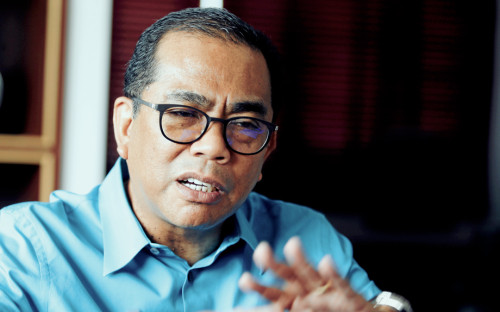
Senior Minister cum International Trade and Industry (MITI) Minister Datuk Seri Mohamed Azmin Ali said the signing of the agreement was a testament to the strengthening of the multilateral trading system while upholding the World Trade Organisation’s development agenda.
The RCEP encompasses 15 countries with a combined population of 2.2 billion, or nearly 29.7% of the world's population, and represents US$24.8 trillion (RM100 trillion) or 28.9% of the world's gross domestic product, based on the World Bank’s 2018 data.
It amalgamates and streamlines the existing FTAs of Asean+1 – which includes Japan, South Korea, China, Australia and New Zealand – into an inclusive and comprehensive agreement.
Among others, the agreement will enhance inter- and intra-regional trade and investment, strengthen regional value chains, as well as facilitate transparency, information-sharing and harmonisation of technical regulations and standards.
Meanwhile, promoting the region's post-pandemic economic recovery through digitalisation was one of the main agendas discussed during the 19th Asean Economic Community (AEC) council meeting on November 15, which was held as part of the virtual 37th Asean Summit.
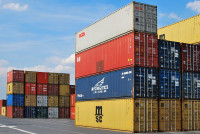
As for FTAs, MITI said Malaysia has signed 16 FTAs and implemented 14 FTAs, comprising seven bilateral FTAs and seven regional FTAs.
Collectively, last year, trade with countries covered by both the regional and bilateral FTAs accounted for 66.7% of Malaysia’s total trade, or RM1.22 trillion.
Exports to FTA countries amounted to RM672.1 billion, while imports totalled RM551.5 billion.
For the first nine months of 2020, trade with FTA partners accounted for 66.5% or RM860.6 billion.
Exports amounted to RM483.29 billion while imports totalled at RM377.31 billion. – Bernama, December 24, 2020