
IN a world increasingly defined by fragmentation, the countries that will succeed are not those that shout the loudest — but those that connect the most.
Globalisation, as we knew it, is being rewritten in real time. Supply chains are re-regionalising. Capital is becoming more cautious. Technology is bifurcating. Food and energy security are once again strategic weapons. And trust — once assumed — is now priced at a premium.
For Malaysia, this moment is not a crisis. It is an invitation.
Under Prime Minister Datuk Seri Anwar Ibrahim’s MADANI economic framework, Malaysia is repositioning itself not merely as a participant in global trade, but as a trusted convenor — a country capable of bridging markets, cultures, and value chains.
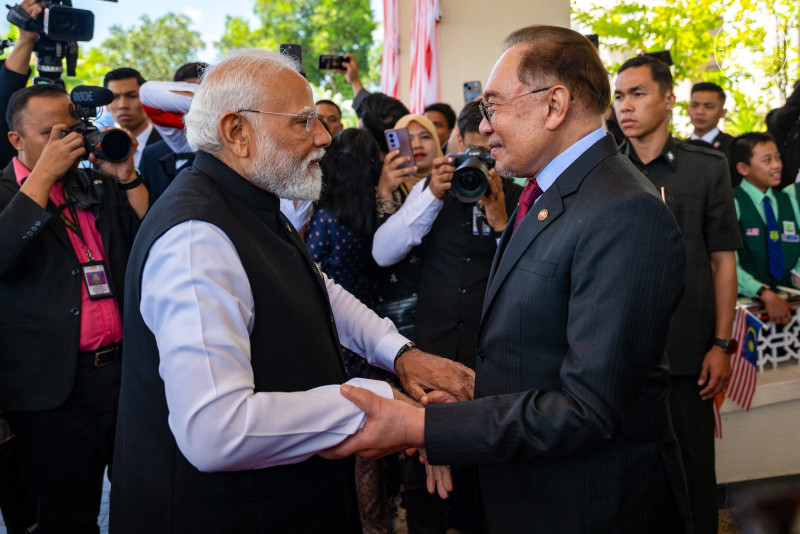
And in that strategy, the India–Malaysia relationship is not peripheral. It is foundational.
Civilisational depth as economic infrastructure
The India–Malaysia story did not begin with trade agreements or diplomatic communiqués. It began with monsoon winds, merchant ships, scholars, faith traditions, and intermarried cultures that traversed the Indian Ocean centuries before modern borders existed.
Today, it is said that nearly three million Malaysians trace their heritage to India. The reality is it is a multiple of that. That living bridge manifests in language, law, cuisine, education, entrepreneurship, and institutional familiarity.
In an era where geopolitics raises transaction costs, this cultural and social capital functions as economic infrastructure. It reduces friction. It builds instinctive trust. It accelerates partnerships in ways that memoranda of understanding alone cannot.
Economists measure trade flows. They rarely measure civilisational comfort — but it is often the difference between deals signed and deals abandoned.
India’s rise — and Malaysia’s strategic choice
India is no longer an emerging story. It has already arrived.
As one of the world’s fastest-growing major economies, India is reshaping global demand in manufacturing, services, digital infrastructure, pharmaceuticals, energy, and consumer markets. Bilateral trade between India and Malaysia has already approached the US$20bn mark in recent reporting cycles — and both governments are targeting significantly higher volumes.
But trade balances, while important, are not the true prize.
The deeper opportunity lies in the co-creation of value chains — where Malaysian manufacturing capability, logistics strength, and ASEAN market access intersect with India’s scale, talent depth, and domestic demand.
If Malaysia is to move from assembly to innovation, from cost arbitrage to capability leadership, then embedding ourselves within India’s growth ecosystem is not optional. It is strategic.
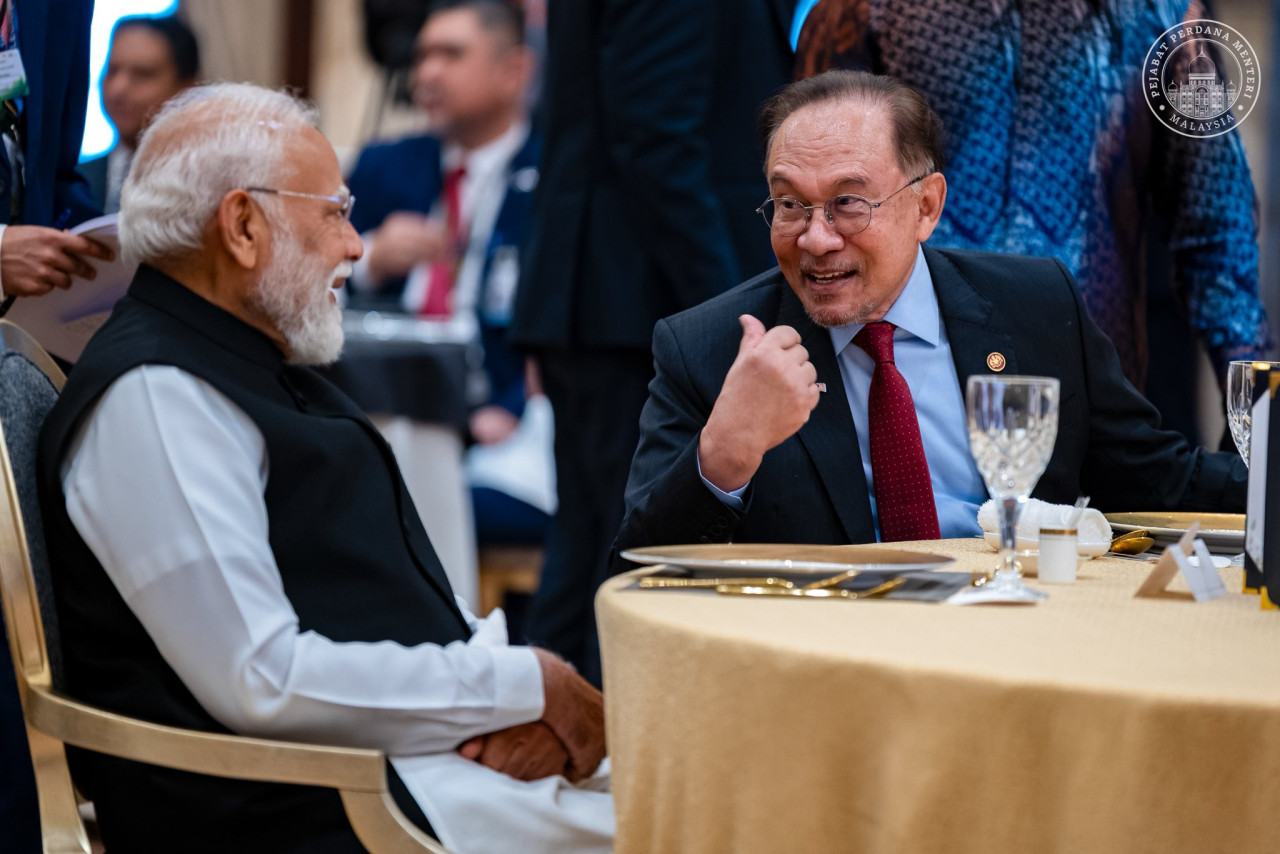
Why does this align with Anwar’s economic direction
Anwar’s economic philosophy recognises that growth without dignity is unsustainable — and dignity without growth is unattainable.
His MADANI framework emphasises institutional trust, industrial upgrading, digital transformation, and equitable wealth creation. A mature India partnership advances each of these pillars.
Semiconductors and advanced manufacturing
Malaysia is already a critical node in global electronics packaging and testing. India is investing aggressively in fabrication, design, and semiconductor ecosystems. Collaboration here transforms Malaysia from a downstream player into a co-architect of next-generation supply chains.
Digital public infrastructure and fintech
India’s digital architecture — identity systems, payment rails, and financial inclusion platforms — has scaled at population levels the world has never witnessed. Joint digital cooperation allows Malaysian firms, regulators, and innovators to leapfrog legacy systems and expand cross-border SME participation.
Energy transition and green industry
As Malaysia upgrades its national grid and decarbonisation pathways, India’s parallel renewable expansion opens avenues for technology partnerships, manufacturing collaboration, and green commodity value chains.
Food and commodity security
Palm oil, agri-processing, and food supply resilience remain central to household economic stability. Structured Malaysia–India cooperation stabilises pricing, expands downstream processing, and protects citizens from volatility shocks.
Tourism and mobility
Indian visitor flows to Malaysia have surpassed the million-traveller threshold annually — a reminder that people-to-people corridors often precede investment corridors.
Tourists become students. Students become entrepreneurs. Entrepreneurs become investors.
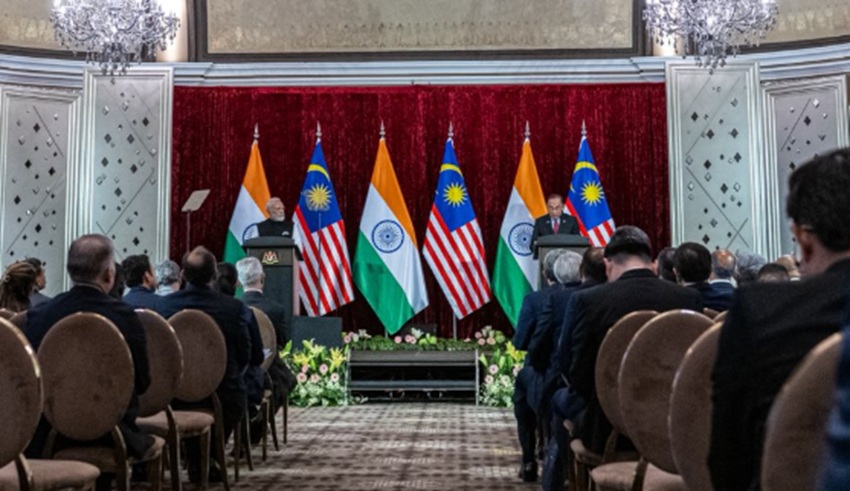
ASEAN leverage: Malaysia as India’s regional bridge
Malaysia’s strategic value lies not only in bilateral ties but in our ASEAN centrality.
As ASEAN chair, Malaysia has the opportunity to convert bilateral trust into a multilateral architecture — aligning India’s “Act East” ambitions with Southeast Asia’s integration agenda.
In practical terms, Malaysia can function as India’s gateway into ASEAN supply chains — offering regulatory familiarity, logistics infrastructure, financial intermediation, and cultural fluency.
If executed well, Malaysia does not merely trade with India. We scale India into ASEAN — and ASEAN into India.
From currency settlements to civilisational settlements
Recent moves to encourage ringgit–rupee settlement mechanisms may appear technical, but they are symbolically powerful. Reducing reliance on third-currency clearing lowers costs, de-risks transactions, and empowers SMEs to internationalise.
But beyond currency lies something deeper: a civilisational settlement — a shared recognition that Malaysia and India are not strangers negotiating, but partners rediscovering.
The execution imperative
Warm rhetoric will not build supply chains.
Malaysia must now operationalise the relationship through tangible platforms:
- Semiconductor talent corridors
- Joint innovation funds
- SME market-access accelerators
- Green manufacturing clusters
- Halal and healthcare export pipelines
- Academic and creative co-production
In short, we need to institutionalise familiarity in the industry.
The larger geopolitical lesson
The future global order will not be defined solely by superpower rivalry, but by middle-power coalitions that create stability through cooperation.
Malaysia and India — plural, democratic, multicultural societies — are uniquely positioned to demonstrate that economic growth and civilisational respect are not mutually exclusive.
We are maritime nations shaped by trade, diversity, and dialogue. Our partnership, therefore, is not transactional. It is philosophical.
A final reflection
Malaysia’s destiny has always been tied to the sea — to the flows of goods, people, and ideas that pass through our shores.
India represents both an ancient memory and a modern opportunity.
If we approach this relationship with pragmatism, ambition, and sincerity, it can anchor Malaysia’s next phase of economic expansion — not as a subordinate node in someone else’s supply chain, but as a confident architect of regional prosperity.
History connected us.
Geography sustains us.
Leadership must now scale us.
And if we succeed, the India–Malaysia corridor will not merely move trade — it will move the future. – February 9, 2026
Datuk Dr Vinod Sekhar is the publisher of The Vibes and Chairman of the Petra Group