BOOSTING national investment in research and development (R\&D) is essential for Malaysia to become a high-income, innovation-driven and globally competitive economy, said the Ministry of Science, Technology and Innovation (MOSTI).
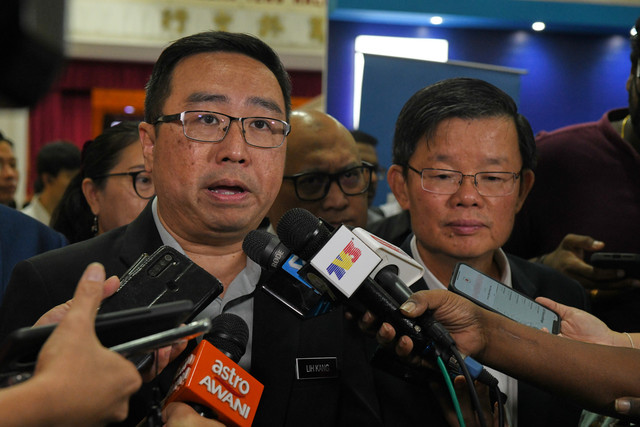
Minister Chang Lih Kang said the government is committed to strengthening Malaysia’s R\&D ecosystem by ensuring that research outputs do not remain confined to laboratories but are translated into real-world solutions.
“These solutions must generate real impact for the people, support local industries and drive innovation-led economic growth,” he said in a statement today.
He acknowledged that Malaysia still lags behind advanced economies such as South Korea, Japan and Singapore in R&D spending, but said MOSTI is determined to narrow this gap by 2030.
Under the MADANI Economic framework, the government has targeted gross expenditure on R&D (GERD) to reach 3.5% of GDP to support long-term economic resilience.
To achieve this, MOSTI has rolled out a series of strategic initiatives aimed at building a more robust national R&D landscape and fostering a society that is innovative, resilient and ethical.
These include expanding R&D funding access for companies and research institutions in high-impact areas such as green, digital and sustainable technologies.
Chang also highlighted the establishment of industry-academia research consortia that enable cross-sector collaboration between government, industry and academia to solve national challenges.
“For example, the Semiconductor Research Consortium, led by MIMOS in 2024, has accelerated technological progress and positioned Malaysia as a semiconductor R&D hub in ASEAN,” he said.
Other initiatives include enhancing national R\&D infrastructure through laboratory upgrades, strengthening centres of excellence, and inter-state networks to support inclusive technology development.
MOSTI also launched the National Technology and Innovation Sandbox (NTIS) in 2020 to bridge the gap between research and industrial application. The sandbox provides a real-world testbed for pre-commercial technologies.
Chang added that developing research talent remains a key priority, with programmes supporting international collaborations, industry placements and incentives for young scientists.
Among the initiatives is the Young Scientists Network under the Academy of Sciences Malaysia, which offers research training, exposure to emerging technologies and global collaboration platforms.
Open innovation and commercialisation policies are also being advanced to ease technology transfer and facilitate the market readiness of research outcomes, through IP protection and seed funding for R&D-based startups.
“The Technology Commercialisation Accelerator programme is designed to fast-track lab-to-market journeys with expert mentorship, technology readiness assessments and access to strategic investors,” Chang said. - July 17, 2025