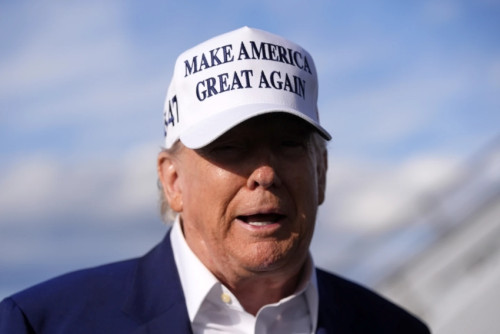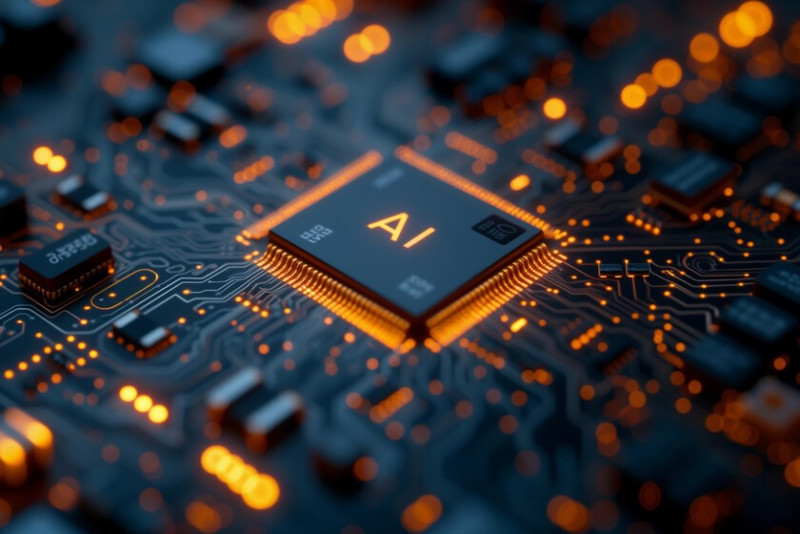
THE United States has authorised the export of Nvidia’s H200 artificial intelligence chips to China, imposing a 25% fee on such sales, President Donald Trump announced on Monday, a move that sparked a 2% rise in the company’s shares in after-hours trading.
Reuters, on Tuesday, cited the decision marks a compromise between maintaining U.S. technological leadership and addressing concerns that advanced AI chips could bolster China’s military capabilities.
Trump posted on Truth Social that he had informed Chinese President Xi Jinping about the arrangement, who “responded positively,” and stated that the same approach would extend to other U.S. AI chipmakers, including Advanced Micro Devices and Intel.
“We will protect National Security, create American Jobs, and keep America’s lead in AI,” he wrote, noting that Nvidia’s latest Blackwell chips, which are faster than H200s, would not be part of the export deal.
While the Commerce Department finalises the details, Trump did not specify how many H200 chips would be authorised or the precise conditions of their export, only that they would occur “under conditions that allow for continued strong National Security.”
Administration officials described the measure as a balanced compromise between withholding chips entirely, which could strengthen Huawei and China’s domestic AI industry, and sending the most advanced Blackwell chips, which remain off-limits.
Nvidia welcomed the decision, saying, “Offering H200 to approved commercial customers, vetted by the Department of Commerce, strikes a thoughtful balance that is great for America.”
The 25% fee, confirmed by a White House official, will be applied as an import tax from Taiwan, where the chips are manufactured, before a U.S. security review and eventual export to China.
The decision has provoked criticism from U.S. lawmakers and security experts. Several Democratic senators described the move as a “colossal economic and national security failure,” warning it could aid China’s military development.
Eric Hirschhorn, a former senior Commerce Department official, said, “It’s a terrible mistake to trade off national security for advantages in trade. It cuts against the consistent policies of Democratic and Republican administrations alike not to assist China’s military modernization.”
Analysts note that the H200 chips are nearly six times more powerful than the H20 models currently allowed for export to China.
The Blackwell chips, in use by U.S. AI firms, outperform H200s by roughly 1.5 times for training and five times for AI inferencing tasks, with some Nvidia research suggesting a tenfold advantage for specific workloads.
China’s response to the authorisation remains uncertain. Chris McGuire, a former U.S. State Department official, observed that Chinese firms are likely to purchase H200s, but Beijing’s caution and concerns about backdoors may complicate uptake.
“Washington may approve the chips, but Beijing still has to let them in,” said McGuire. The announcement coincided with the Justice Department’s revelation that a China-linked smuggling ring had attempted to export at least $160 million worth of controlled Nvidia H100 and H200 chips in late 2024 and early 2025.
The policy signals a continued U.S. effort to balance commercial interests in AI technology with national security concerns, while limiting the risk that Chinese military forces could exploit advanced semiconductors. - December 9, 2025