THE U.S. dollar retreated broadly on Monday after the United States and Iran announced a framework agreement to end their conflict, easing fears over global energy supplies and triggering a sharp decline in oil prices.
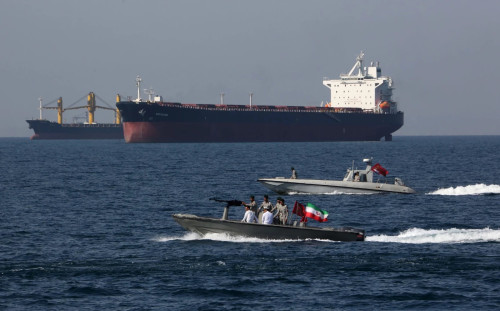
The agreement, confirmed by officials from both countries on Sunday, outlines plans to end the war, lift the U.S. blockade of Iran and reopen the strategically vital Strait of Hormuz, a key artery for global crude shipments.
The development immediately weighed on oil markets, with Brent crude futures falling more than four per cent to US$83.82 a barrel.
The prospect of lower energy prices and reduced geopolitical risk prompted investors to shift away from traditional safe-haven assets, pushing the dollar index down 0.31 per cent to 99.492, its lowest level since June 5.
According to Reuters, the euro climbed 0.35 per cent to US$1.1607, while sterling gained 0.3 per cent to US$1.3448.
Commodity-linked currencies also advanced, with the Australian dollar rising 0.5 per cent to US$0.7075 and the New Zealand dollar strengthening 0.4 per cent to US$0.5854.
Market participants, however, remained cautious over the durability of the breakthrough after U.S. President Donald Trump warned that military action could resume if Iran failed to reach a final nuclear agreement with Washington.
Trump told the New York Times on Sunday that if Tehran did not conclude a comprehensive nuclear accord, he would restart military attacks on the Iranian capital or make the United States “the guardian of the Middle East” in exchange for 20 per cent of the region’s revenues.
Investors are also assessing how quickly normal shipping operations can resume through the Strait of Hormuz and whether global oil flows can recover to pre-conflict levels.
“I think we'll see the dollar fall over the course of the next few sessions. We'll probably see some of the risk currencies like Aussie and yen appreciate a little bit. But I don't think we're going to see any huge moves,” said Nick Twidale, chief market strategist at ATFX Global in Sydney.
“There's going to be a lot of wait and see, on how quickly the Strait really reopens and how long it's going to take for oil flow to really get back to normal. It's certainly going to be months rather than weeks.”
Meanwhile, the Japanese yen weakened to as much as 160.150 against the dollar, remaining near levels that have previously prompted concerns over possible intervention by Japanese authorities.
Attention is now turning to the Bank of Japan, which is widely expected to raise interest rates to their highest level in 31 years at the conclusion of its policy meeting on June 16.
Policymakers are also expected to signal further tightening as they seek to contain inflationary pressures exacerbated by the Middle East conflict.
A rate increase would place Japan alongside other major central banks moving towards tighter monetary policy, including the European Central Bank, which delivered a closely watched interest rate hike last week.
While markets have responded positively to the prospect of peace, analysts caution that confidence remains dependent on the successful implementation of the agreement and the eventual conclusion of a comprehensive nuclear settlement between Washington and Tehran. - June 15, 2026