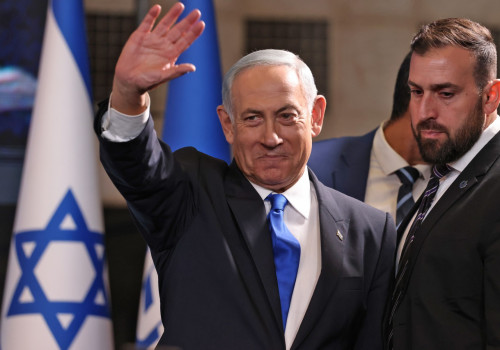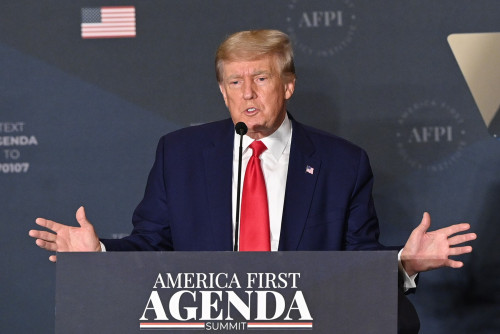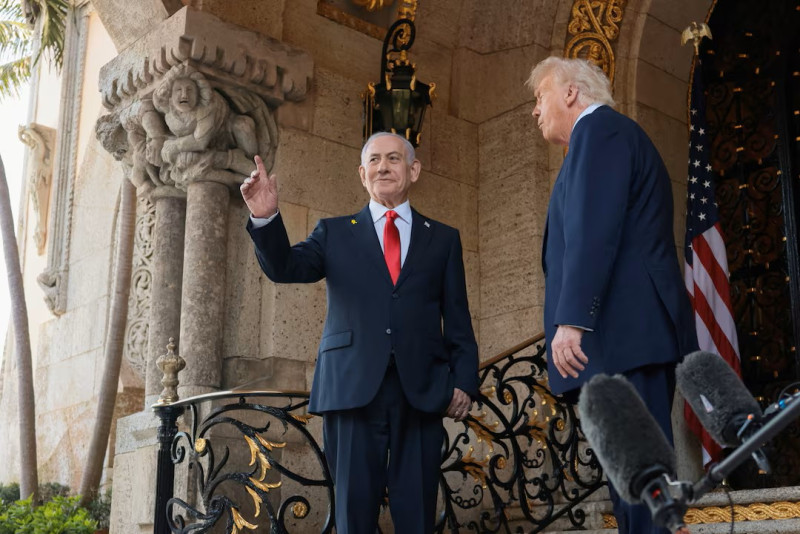
ISRAELI Prime Minister Benjamin Netanyahu said he held an “excellent” meeting with United States President Donald Trump at the White House on Tuesday, describing the discussions as a demonstration of close strategic coordination as tensions in the Middle East escalated once again.
The closed-door meeting, which lasted about 90 minutes, marked the leaders' first face-to-face talks since the United States and Israel launched their joint military campaign against Iran earlier this year.
White House Press Secretary Karoline Leavitt described the discussions as “positive and productive”, while Trump later characterised them on social media as “a very good meeting” during which “many important subjects were discussed”, without elaborating further.
AP reported on Wednesday that the meeting came as both leaders face increasing political pressure at home. Netanyahu is preparing for re-election amid scrutiny over his relationship with Trump, while the US president is under pressure to contain a conflict that has weighed on the global economy and driven higher energy prices ahead of November's midterm elections.
Hours after the talks, the US military said it intercepted multiple ballistic missiles launched by Iran at American forces stationed in the Middle East, with all incoming missiles successfully destroyed.
According to an Israeli official familiar with the discussions, Netanyahu assured Trump that Israel would respond decisively if directly attacked by Iran, while respecting the US president's judgement on any broader military response.
Following the meeting, Netanyahu praised the discussions in a statement posted on Instagram.
“When I say excellent, I don't mean it in a superficial way,” he said.
“It was a conversation marked by full partnership, mutual support and a shared understanding of the common objective of ensuring that Iran does not obtain nuclear weapons, alongside other important goals.”
Vice President JD Vance joined Trump and Netanyahu during the White House meeting, despite previously expressing frustration with Israeli policies and cautioning Israeli officials that Trump remained their strongest international ally.
Earlier in the day, Trump publicly revealed signs of tension with Netanyahu, criticising reports suggesting the Israeli leader intended to raise intelligence regarding Iranian activities at the so-called Pickaxe Mountain nuclear site.
“I know exactly what's going on at Pickaxe,” Trump told Fox News.
“Whatever Iran is doing there is not a big problem. Bibi's telling me that because he wants me to stay involved.”
The Israeli official said Netanyahu reaffirmed Israel's commitment to sharing intelligence with Washington while acknowledging that the United States must also consider broader regional and allied interests before deciding on further military action.
The leaders also discussed ongoing diplomatic efforts involving Lebanon and the expansion of the Abraham Accords, which seek to normalise relations between Israel and Arab and Muslim-majority countries.
Netanyahu later joined Trump, Vance and Ukrainian President Volodymyr Zelenskyy at the funeral of Senator Lindsey Graham, one of Israel's and Ukraine's strongest supporters in the US Congress.
The Israeli premier is also seeking to reassure Washington that Israel will support wider diplomatic and reconstruction initiatives in both Gaza and Lebanon, following previous concerns voiced by Trump over the humanitarian impact of continuing military operations.
In Lebanon, Israeli and Lebanese authorities are preparing for another round of US-backed talks aimed at expanding the deployment of the Lebanese army into southern villages previously dominated by Hezbollah.
Meanwhile, Israel has also approved plans that could allow an international stabilisation force to begin limited operations in southern Gaza under a US-backed framework, although participating countries and operational arrangements remain under discussion.
Despite renewed diplomatic engagement, fighting across the region continues, with both Washington and Jerusalem maintaining that preventing Iran from acquiring nuclear weapons remains their central strategic objective. - July 29, 2026