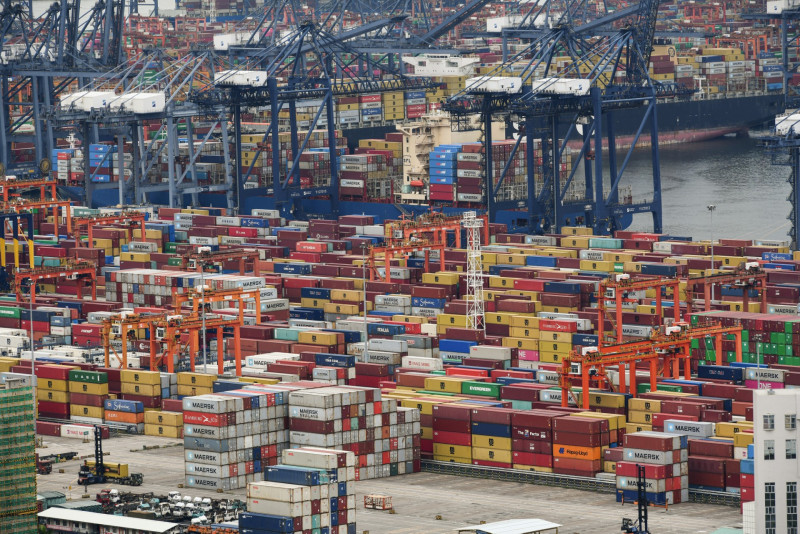
MARITIME industry expert Datuk Seri R. Jeyenderan has urged the Royal Malaysian Customs Department (JKDM) to reveal whether petroleum cargo declared under the K8 Customs procedure can be blended or mixed with existing inventory in shore tanks.
Jeyenderan said the issue involved two petroleum cargoes comprising 76,954.325 metric tonnes of Atlanta Crude valued at more than RM220 million, which were discharged at Tanjung Langsat, Johor, under the K8 Customs procedure.
Jeyenderan, who is also chief executive officer of Maritime Network Sdn Bhd, said he had sought clarification from the Malaysian Investment Development Authority (MIDA), but was told that the matter could only be determined by Customs, leaving him in limbo pending a written decision.
“I have approached MIDA for clarification, but MIDA said the matter can only be determined by Customs. So, I am in limbo because I still do not have a written determination from the authority responsible for deciding the Customs treatment,” he said.
Jeyenderan, with over 30 years' experience in the industry, said Customs should clearly state whether cargo declared under K8 could be mixed or blended with existing petroleum inventory in shore tanks and, if so, what conditions, documentation and regulatory requirements would apply.
“If blending or mixing is permitted, Customs should state clearly the basis, conditions and documentation required. If it is not permitted, then the industry should also be told what procedure should be followed,” he insisted.

Jeyenderan stressed that his request was not an allegation that any particular party had unlawfully blended the cargo, adding that whether blending or mixing actually occurred should be established from the relevant records and evidence.
According to a Maritime Network report, the two cargoes comprised 34,903.062 tonnes carried by MT Marlin Santorini in January and 42,051.263 tonnes carried by MT Invictus in March, with the report identifying several shore tanks at DIALOG Terminals Langsat (DTL).
Jeyenderan said the key concern was traceability, particularly how the authorities and relevant parties could establish what happened to the cargo after it entered tanks containing existing inventory, including any subsequent movements, mixing or blending.
He said the relevant records should establish the quantity entering each tank, existing inventory, product movements, laboratory specifications and quantities eventually removed or transferred, allowing an unbroken chain of documentation to be established.
Jeyenderan said Maritime Network had acted as the vessel or shipping agent for the cargo movements and was not the cargo owner, terminal operator, laboratory or Customs authority, making it important for the respective roles and responsibilities of all parties to be clearly established.
He also said a written Customs determination was necessary to prevent companies from being left exposed to uncertainty years later if regulatory advice was given verbally and the officers involved were subsequently transferred or retired.
“We are asking for clarity, not a particular outcome. If the authorities say the procedure was compliant, then that should be stated clearly. If there are additional requirements, those should also be identified,” he said. – September 19, 2026





.jpg)


_director_Datuk_M._Kumar.jpg)