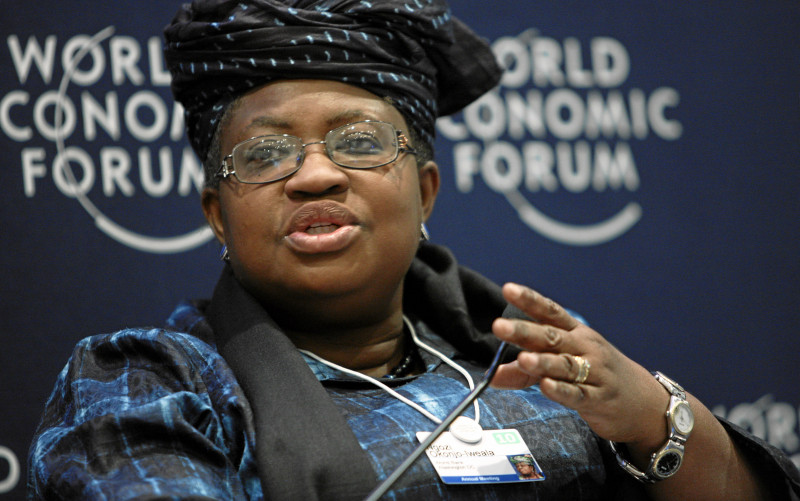
WASHINGTON – Nigeria’s Ngozi Okonjo-Iweala, the newly selected head of the World Trade Organisation (WTO), yesterday said she will push for concrete results in addressing the dual economic and health crises facing the globe.
Her immediate goals are to ensure Covid-19 vaccines are produced and distributed worldwide, not just for rich nations, and to resist the push towards protectionism that worsened during the pandemic, so that free trade can help in economic recovery.
“I think WTO is too important to allow it to be slowed down, paralysed and moribund,” she told AFP in an interview.
“That’s not right.”
She will take over leadership on March 1 of an institution that has become weighed down and increasingly defanged, especially by the open hostility of the Donald Trump administration.
Amid the turmoil, including the United States move that shut down the dispute resolution court in December 2019 over complaints about the handling of disputes with China, her predecessor stepped down last August, a year before his term was up.
Selected by the membership on Monday, after US President Joe Biden’s administration backed her candidacy, Okonjo-Iweala promised to breathe fresh life into the trade body, which she said has lost focus on helping improve living conditions for “real” people.
“I believe WTO can contribute more strongly to a resolution of the Covid-19 pandemic by helping to improve accessibility and affordability of vaccines to poor countries.”
Vaccine push
“It’s really in the self-interest of every country to see everyone vaccinated because you’re not safe until everyone is safe,” she said.
Some countries, such as India and South Africa, have been pushing for a suspension of trade rules on patents to allow more rapid vaccine roll-outs.
But rather than get caught in another squabble among WTO members, Okonjo-Iweala said the organisation can promote a quicker path.
“Instead of spending time arguing on those, we should look at what the private sector is doing” with licensing agreements, to allow vaccines to be produced in multiple countries – something she noted AstraZeneca has done in India.
“The private sector has already looked for a solution because they want to be part of reaching poor countries and poor people.”
In addition, WTO needs to work to ward off the trend towards export restrictions for medical devices and therapeutics, as well as the possibility of restrictions on Covid-19 vaccines themselves.
While it is natural for politicians to help their own countries first, Okonjo-Iweala warned that supply chains are tightly linked and cannot be quickly disentangled to create all-domestic production.
Trade negotiators just want to win
The Massachusetts Institute of Technology-trained economist, who served as Nigeria’s first female and longest-serving finance minister, and who is also a US citizen, is adamant that WTO must return to its original function of helping countries deliver better living standards to their people.
“It’s about creating employment, decent work for people. It’s about… improving lives.
“There is definitely a role for trade to play in the recovery” from the Covid-19 economic crisis, she said.
Even before the pandemic sparked a global recession, WTO had lost sight of that goal, said Okonjo-Iweala, lamenting the example of negotiations over a fisheries subsidies agreement that have dragged on for two decades.
“This cannot go on. We must bring it to a conclusion. We can’t afford to fail on this.”
The talks, which aim to end subsidies that lead to overfishing, failed to yield an agreement by the end-2020 deadline.
Okonjo-Iweala blamed some of the calcification on the dominance of negotiators, which she called an “Achilles heel” for WTO.
“Geneva is full of negotiating experts, but the problems have not been solved. They’ve gotten worse.
“For them, it’s all about winning or not losing, and so, they stalemate each other.”
WTO needs “something entirely different” to turn things around, she said, rejecting criticism from some sectors that she lacks trade experience.
“You need strong political skills; you need the ability to manoeuvre,” she said, adding that she can serve as a bridge between developed and developing nations, pulling on her 25-year career at the World Bank.
Okonjo-Iweala intends to push to schedule the pandemic-delayed WTO ministerial meeting by the end of the year, which will allow her to spark movement on critical issues.
First woman, again
She will once again be the first woman in a key leadership role, taking over WTO for a term that runs through August 31, 2025, but is renewable.
She agreed it is a challenging, thankless job, but said it makes her even more passionate to show results, so that in the future, no one can question placing a woman in the role.
“That means I need people to support me even more. I need more cooperation.” – AFP, February 17, 2021