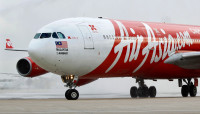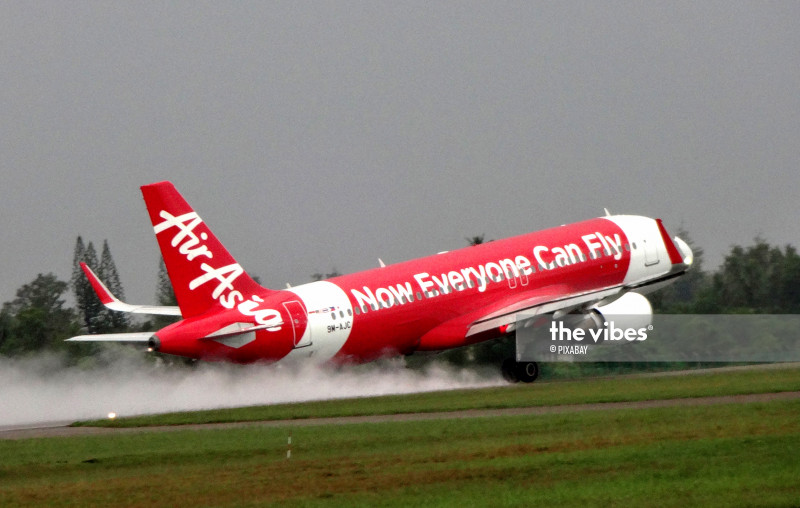
KUALA LUMPUR – AirAsia has joined growing calls for a standardised approach to travel protocols to help kickstart the international air travel revival, as Covid-19 vaccinations and domestic travel resume.
AirAsia Group President, Airlines, Bo Lingam says: “Covid-19 has left a severe impact on everyone and particularly on the travel and hospitality industries. In order to resume cross-border travel activity effectively and safely, a mutually agreed global framework approach is needed.
“Travel requirements in the region are currently complex and uncoordinated and travel bubbles are limited and underutilised. While we welcome the implementation of certain travel passes which are currently being developed or in testing phases, what is needed to stimulate international air travel again, is coordination among countries.”
He said in a statement today that the travel and tourism industry must work together with one consistent set of protocols and procedures for guests, coupled with a mutually agreed common digital health pass and with the expansion of travel bubbles to include the leisure sector.
“Furthermore, with 40% to 50% of the regional population expected to be vaccinated by the third quarter of 2021, travel policies should be updated regularly.
“A good example is in the Philippines where they have recently standardised all the travel requirements in the country and removed the ones that are no longer relevant,” said Bo.
AirAsia is also soon commencing the roll-out of biometric facial recognition technology across key ports, launching in Malaysia’s klia2 in April as it continues to develop new products and services to make flying more hygienic and seamless, he added.
Bo’s comments follow a recent AirAsia review of Covid-19 procedures and protocols in regional countries such as Malaysia, Indonesia, Singapore, Thailand, the Philippines, China, and Australia.
The review confirms that existing travel requirements vary across Asean countries, making it challenging and difficult for travellers to understand and follow, he said.
The report also concludes that travel bubbles that are currently implemented in the region are mostly limited to business and essential travellers only, which leaves out large portions of the tourism sector.
Calls for such measures say facilitating leisure travel will provide instant impact based on strong pent-up demand, with public health risks minimised through strict standard operating procedures (SOPs), including point-to-point controlled travel, fixed itineraries and contact tracing.
On its part, AirAsia recently announced its latest innovation Scan2Fly, which enables guests to scan and upload their medical documentation during the online check-in process for real-time approval to fly. – Bernama, March 4, 2021