WASHINGTON – Skittish investors have see-sawed between celebration over the expected United States economic recovery and nail-biting over a possible price spiral, but the Federal Reserve is standing firm on keeping interest rates low.
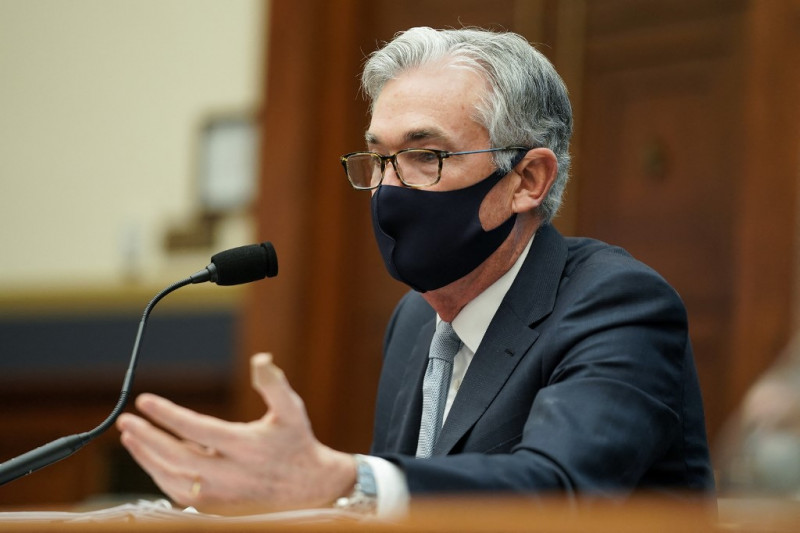
In the balance between allowing faster growth – and rising prices – in order to restore some of the more than nine million jobs still missing due to the Covid-19 pandemic, Fed chair Jerome Powell’s message has been clear: he wants to see more people back to work.
Analysts are expecting the Fed’s policy-setting Federal Open Market Committee to maintain its very “dovish” stance when it holds its two-day meeting next week.
Powell on Wednesday is expected to stress once again that the Fed is willing to accept higher inflation to get back to full employment, a goal that took a decade to achieve following the 2008 global financial crisis.
“I think it’s ‘markets be damned’ at this point,” Robert Frick of the Navy Federal Credit Union told AFP.
“The Fed has said that until (there is) real improvement in employment and in the economy, they’re not going to budge.
“I really don’t think they’re going to waver.”
From a 50-year low of 3.5% unemployment before pandemic lockdowns began in early 2020, the jobless rate spiked as millions of workers were sent home, but gradually fell back to 6.2% last month amid businesses reopening.
As vaccine roll-outs have picked up speed and President Joe Biden signed a massive US$1.9 trillion (RM7.8 trillion) stimulus package, boosting the chances of the world’s largest economy reopening soon, investors have begun to fear an inflationary spiral.
That is reflected in the spike in government debt yields, particularly on 10-year Treasury notes, a canary in the coal mine for coming price increases.
Hot, but not boiling
While the jump back to its early 2020 level could be viewed as something of a market freak-out, there are real-world consequences of rising Treasury yields, since lending rates for home mortgages and car loans are linked to them.
Mortgage rates have begun to creep up, which could price some buyers out of an already hot housing market, while existing homeowners will find it harder to refinance their loans, said Kathy Bostjancic of Oxford Economics.
Inflation is expected to rebound as the economic engine revs up, especially compared to the depressed prices seen during the pandemic closures, but any sharp spikes are expected to be temporary.
“The reopening economy is going to be turbocharged by this US$1.9 trillion fiscal stimulus, so there’s no doubt” inflation will rise, said Bostjancic.
The critical question is how high “and for how long”, she added.
“It’s going to feel warmer, but we don’t think it’s an overheating situation.”
Over more than a decade, inflation has rarely pushed above the Fed’s 2% target, and the central bank’s preferred price measure was up only 1.5% in January from a year earlier.
Bostjancic and Frick agree with many economists who say there is a lot of slack in the economy, which will dampen price increases.
Signal to markets
Powell has acknowledged that prices will move up, but he pledged that the Fed will not withdraw stimulus until the economy has returned to maximum employment – which is unlikely this year – and inflation is both above the 2% goal and on track to remain there “for some time”.
“We’re not intending to raise interest rates until we see those conditions fulfilled.”
However, the Fed is not impervious to market jitters, and Powell could try again to calm inflation fears by sending a stronger signal that the central bank will use its tools to address any worrying price increases or bond yield spikes.
While he has been non-committal about specifics, he could provide at his press conference on Wednesday more details, including his willingness to change the mix of debt the Fed buys each month.
And, Bostjancic noted that the Fed could make another technical move to ease the pressure on yields, by extending the pandemic exemption on banks’ holding of Treasuries without having to have a cash buffer.
That exemption expires at the end of the month. – AFP, March 14, 2021