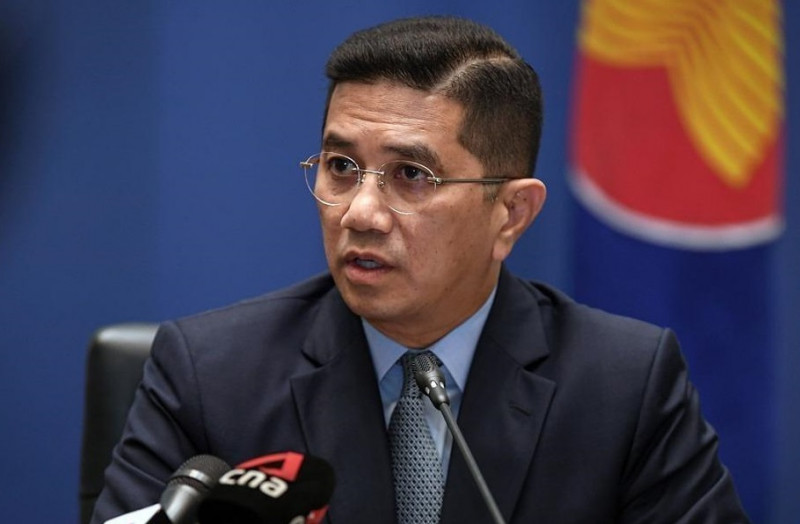
KUALA LUMPUR – The Asia-Pacific Economic Cooperation (Apec) grouping should do its utmost to facilitate affordable and equitable access to Covid-19 vaccines, International Trade and Industry Minister Datuk Seri Mohamed Azmin Ali said.
While stressing the importance for the grouping to mitigate vaccine nationalism and jab stockpiling, Azmin reiterated the strong call by Apec leaders last year to treat Covid-19 vaccines as global public goods.
“As such, Malaysia looks forward to the commencement of text-based negotiations on the temporary waiver of certain provisions in the World Trade Organisation’s (WTO) trade-related aspects of intellectual property rights (TRIPS) agreement, as these will enhance the affordability of, and accessibility to, Covid-19 vaccines,” he said in a statement today.
The statement was released following the virtual 27th Apec Ministers Responsible for Trade meeting held on June 5, which was attended by a Malaysian delegation led by Azmin.
The minister also emphasised the need and urgency for Apec to optimise all policy tools and act collectively in ensuring trade continues to flow unimpeded during these trying times.
While recognising the importance of innovation and digitalisation, Azmin urged officials to expedite the adoption of digitalisation, taking into account the pressing challenges faced by Apec during the pandemic.
In this regard, he strongly encourages member economies to share relevant data and information relating to the coronavirus through the Apec Covid-19 Latest and Immediate Virtual Exchange, a digital information-sharing platform launched last year.
On Malaysia’s priorities towards achieving concrete outcomes of the WTO 12th Ministerial Conference, Azmin said it is imperative that the organisation restores the full function of the appellate body to safeguard the predictability and stability of the multilateral trading system.
He also underscored the importance of concluding negotiations on fisheries subsidies, which would send a strong signal that the WTO can deliver a multilateral outcome.
In Malaysia’s case, Azmin said subsidies are meant for targeted groups, with the prime objective of improving the livelihoods of thousands of low-income fishermen who depend on small-scale fishing to make a living.
“Nonetheless, special and differential treatment should remain an integral part of the negotiations,” he added. – Bernama, June 6, 2021