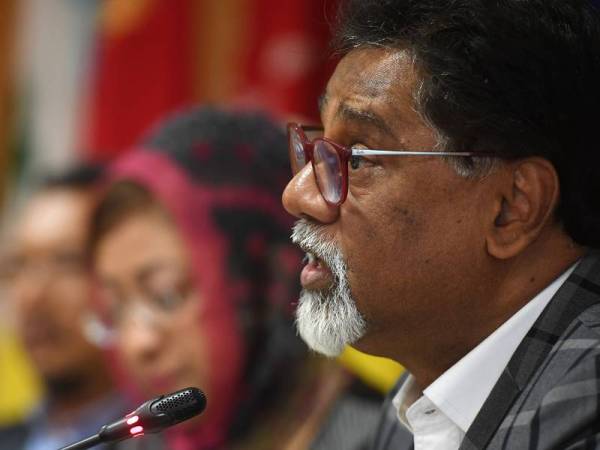
FORMER minister Datuk Dr Xavier Jayakumar has warned that rising racial and religious rhetoric could threaten the unity that has held Malaysia together since independence.
In a Merdeka message marking the country’s 69th year, Xavier said unity was Malaysia’s biggest achievement since 1957, describing it as the basis for everything the country had built since.
But as Malaysia prepares to enter its 70th year, he said divisive voices were becoming harder to ignore.
He criticised what he described as rhetoric bordering on incitement, race-baiting and religious point-scoring, saying these issues were drowning out conversations about the country’s future.
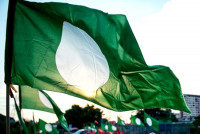
Xavier also took issue with the direction of some political leaders, particularly in Umno and PAS.
He said the generation led by Malaysia’s first prime minister, Tunku Abdul Rahman, had established a constitutional settlement based on fairness and recognition of the different communities in the country.
“That settlement wasn’t an afterthought; it was the foundation everything since has stood on,” he wrote.
Xavier said this was increasingly at odds with efforts by some political leaders to consolidate Malay-Muslim support along communal lines.
He pointed to Umno’s calls for a “grand collaboration” among Malay-Muslim parties, as well as statements by PAS leaders linking Malay and Islamic supremacy.
He also criticised recent claims that non-Muslims were responsible for most corruption in the country, saying such claims had been made without evidence.
Xavier added Malaysia’s multiracial model was not to blame for the current political tensions.
Instead, he accused certain factions in Umno and PAS of using racial and religious issues to maintain political relevance and power.
“That’s a survival strategy dressed up as principle,” the former PKR lawmaker said.
Despite his concerns, Xavier stressed Malaysia had much to be proud of after 69 years of independence.
He described the country as one of the more developed economies in the region, with the resources and a young generation capable of taking it further.
But he warned that racial and religious hostility could damage Malaysia’s standing internationally.
“We are genuinely close to something special,” he said.
“But the noise of hate and bigotry risks making the rest of the world take a second look at us — and not the kind of look we want.”
Xavier said Malaysians were ultimately faced with a choice between a country marked by racial tension and extreme politics, or one where people of different backgrounds could live safely and feel that they belonged.
For Xavier, that sense of belonging is personal.
He said his children and grandchildren, whose family had lived in Malaysia for five generations, had every right to call the country home.
“This is home. Not somewhere else. Home,” he said.
He also urged Umno, PAS and other political leaders to reconsider the use of race and religion as political weapons.
Peace, he said, was built through dialogue, understanding and compromise — not threats, ultimatums or hate speech.
“We have watched other nations cross that line and come apart. We know exactly what the point of no return looks like,” he said.
“Let’s not go there — not for anyone’s short-term political survival.”
Xavier ended his message on a more celebratory note, urging Malaysians to take pride in what they had built together.
He cited the country’s food, culture, people and everyday safety as things worth celebrating, while calling for stronger checks and balances and a country that future generations could inherit with confidence.
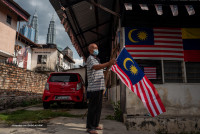
“I’ve got my flag up. Have you?” he said.
“Salam Merdeka, Malaysia.” – August 30, 2026