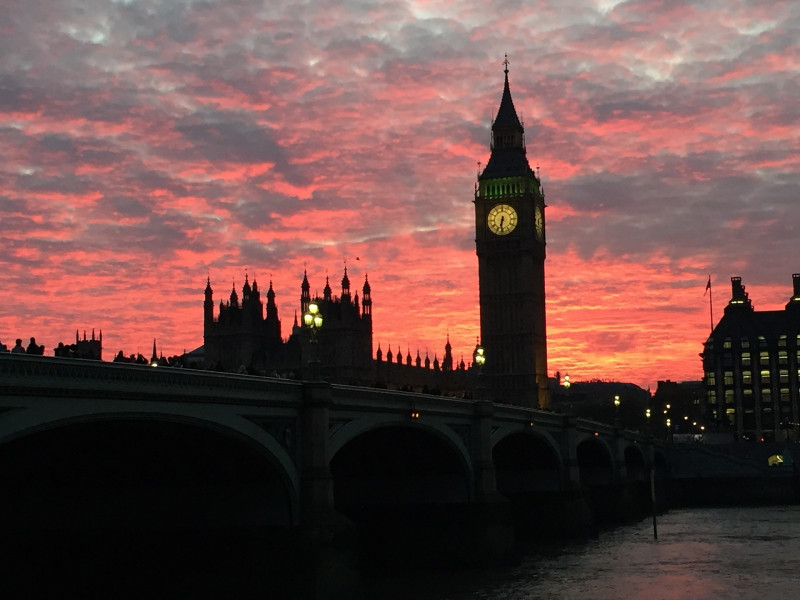
LONDON – London’s once bustling City finance district is grinding back to life, but it bears the scars of the deadly pandemic, sparking fresh questions on the future of the so-called “Square Mile”.
The Covid-19 crisis erupted in April last year, sparking a nationwide lockdown that turned the global financial hub into a ghost town.
City workers were forced to work remotely, and some have since adopted hybrid or flexible work that splits time between home and the office.
Britain fully exited its lockdown last month, buoyed by speedy vaccination, but many workers appear in no hurry to return to the office amid fears over the Delta variant.
‘Reluctance to risk exposure’
“There remains an underlying reluctance among many to risk exposure to the virus, either in the workplace or on the journey to work,” Remit Consulting’s corporate real estate specialist Lorna Landells told AFP.
School holidays and the government’s Covid-19 policy have impacted the return to office life, but fully vaccinated Britons are no longer required to self-isolate after coming into contact with an infected person.
Nevertheless, central London office occupancy is just 10.3% of its total capacity in the week ending August 20, according to data compiled by Remit.
“When I’m looking out of my office window, the streets look fairly empty,” said Nigel Wilson, head of insurer Legal & General, in an interview with The Guardian newspaper recently.
“We are still very early days into (the reopening), and I do expect more people to be back in September.”
‘London will not go back’
In contrast, Howard Davies, chairman of NatWest bank and former head of London’s financial watchdog, believes that the City has changed forever.
“The days when 2,500 people walked in through our office door... at 8.30am and walked out again at 6pm, I think that is gone,” he told Bloomberg.
“It will look quite a lot different during the day, and central London will not go back to the footfall that we had before – people are concerned about the risks of travelling, and they’ve discovered they can do things in a different way.”
British Finance Minister Rishi Sunak, however, wants office workers to return, arguing it helps the careers of young people.
Yet, banking giants like Barclays and HSBC are betting on long-term hybrid work patterns, which have also cut their need for office space.
Almost 80% of City workers plan to be back in the office from next month, according to a recent survey by recruitment firm Michael Page.
But, only 25% of workers expect to return to the full five-day working week.
‘Important hub’
City authorities are putting a positive gloss on the outlook for the area, the financial clout of which already remains uncertain as a result of Brexit.
“Central office hubs still have a crucial role to play – whether it be for staff development, team morale, collaboration and creativity, networking opportunities, or much more,” said Catherine McGuinness, policy chair of the City of London Corporation, in a statement to AFP.
“Many employees themselves are eager to return to the office for at least part of the week, and their return will deliver the footfall needed for the hospitality and retail sectors.”
City of London Corporation runs Square Mile, or the historic financial district, which includes the Bank of England and St Paul’s Cathedral.
Economics Prof Jonathan Portes of King’s College London said the City will retain its importance despite sliding commuter footfall.
“While working patterns will certainly change – and that may mean some changes to the feel of the City – I think London will remain an important hub of global finance.”
More than half a million people commuted to and worked in the City before the pandemic, breathing life into its coffee shops, pubs and restaurants. – AFP, August 29, 2021