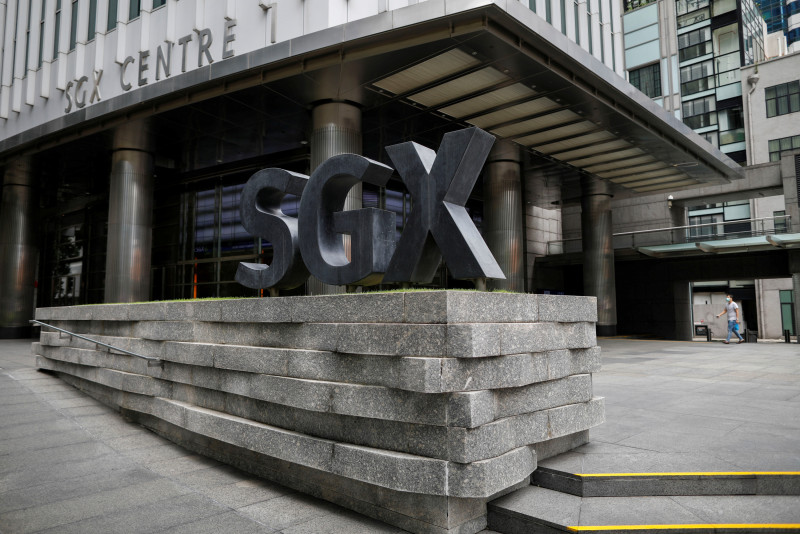
SINGAPORE – Singapore’s move to launch new funds to support start-ups will help companies seeking initial public offerings, though it may take years before the Singapore Exchange (SGX) becomes a centre for regional tech listings, said market players.
Despite shaping up as one of Asia’s leading finance hubs, Singapore has seen a decline in listings over the past decade and failed to attract large IPOs.
Market participants said, however, that the setting up of two funds with S$2 billion (RM6.2 billion) in capital for firms’ late-stage fundraising and IPOs, coupled with blank-cheque companies being allowed to list in the city state, will attract more start-ups to list there.
“The value proposition by the Singapore ecosystem to founders and shareholders of high-growth businesses is that it will be a part of the company’s journey – before, during and after the IPO,” said Ho Cheun Hon, head of Southeast Asia equity capital markets at Credit Suisse.
“This should resonate with some founders and entrepreneurs, particularly the unicorns who are starting to think about public listings.”
The republic has a long way to go.
So far this year, up to September 16, just three companies have listed on SGX, raising US$239 million (RM1 billion), according to data from Refinitiv. The amount is less than half the figure from the same period last year, and the lowest level in six years.
By comparison, funds raised on the Malaysian bourse stand at US$531 million, the Indonesian and Philippine exchanges have each attracted US$2.3 billion, while the Thai bourse has topped US$3.5 billion.
As Asean tech dealmaking booms, Singapore is looking to attract more attention after some major companies chose to list elsewhere in recent years.
Singapore-based gaming and e-commerce firm Sea listed in the United States in 2017, for example, and is now valued at US$182 billion. Southeast Asian ride-hailing and delivery firm Grab is also listing in the US via a blank-cheque firm, while gaming firm Razer debuted in Hong Kong in 2017.
Vinnie Lauria, a founding partner at the Singapore-based Golden Gate Ventures, welcomed the government’s attempts to foster start-up success.
“This is another example of Singapore using capital and smart government programmes to promote itself as the hub for Southeast Asian start-ups.”
Robson Lee, a partner at law firm Gibson, Dunn & Crutcher LLP, said the Singapore market has the potential to “punch above its light weight by being better organised and coordinated to attract unicorns and high-technology global corporates”. – Reuters, September 22, 2021



.jpg)