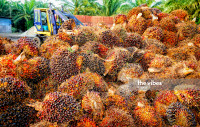
KUALA LUMPUR – There should be more allocations for the palm oil industry to further ramp up research and development for the commodity and for the production of more downstream products, said the Malaysian Palm Oil Council.
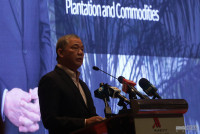
The organisation’s science, environment and sustainability division director Ruslan Abdullah said Malaysia produces about 20 million tonnes of palm oil every year, which brings in about RM70 billion in revenue for the country, but sadly the allocation for the industry has been very small.
“It is not even 1%. It does not bring justice to what we are doing. Let’s not talk about investing in other crops yet like durian or bamboo, for example. We can never get an industry as lucrative as palm oil.
“However, we are just dealing with the commodity right now when we should be looking into downstreaming, where the real money is,” he said.
Malaysian Palm Oil Board (MPOB) director-general Ahmad Parveez Ghulam Kadir said the palm oil industry is one of the main contributors to the growth of the Malaysian economy. The industry provides input to various high value-added downstream products and contributes to the country’s export earnings.
“However, as we are still facing a labour shortage, we hope the government can address the issue and that there will be initiatives or programmes to assist the acceleration of mechanisation and automation in the oil palm sector, reduce the plantation sector’s dependency on labour, and help boost productivity,” he said.
MPOB has conducted research over the years, including on innovative ways to harvest and process oil palm fruits, and on enhancing mechanisation, precision agriculture, and automation.
The board has developed more than 40 types of machinery and mechanised equipment for the use of plantation operations, including oil palm harvesting tools, and looked into ways to improve yield performance.
“As for our sustainability efforts in the industry, we expect the government to allocate a certain amount to fund smallholders in getting Malaysian Sustainable Palm Oil (MSPO) certification and other MSPO-related expenses such as certification fees, MSPO-related training, and personal protective equipment,” he said.
On raising demand for palm oil, Parveez said the government should also give an allocation to enhance the implementation of biodiesel programmes for the transportation and industrial sectors.
Last year, the plantation industries and commodities sector contributed about 12% or almost RM100 billion to the country’s revenue, with RM70 billion coming from the oil palm industry.
During the tabling of Budget 2021, the ministry only received an allocation of RM729.39 million for all commodities – palm oil, rubber, pepper, cocoa, and kenaf.
The Malaysian Palm Oil Association highlighted the need for the government to allow the industry to take in 32,000 foreign workers it currently lacks.
Many foreign workers left Malaysia to return home around the time of the first movement control order in March 2020.
Many of these workers either do not want to return to Malaysia or have had trouble getting the necessary approval to return to Malaysia, and it has resulted in even more acute worker shortages in the manufacturing, construction, and plantation sectors.
The output of palm oil was negatively impacted by this worker shortage, leading to a fall in the GDP output of the agriculture sector in 2020, even as the price of crude palm oil (CPO) increased.
“The easing of the labour shortage situation will also translate into higher tax revenue for the government, by virtue of higher production,” chief executive officer Datuk Nageeb Wahab said previously.
He also proposed a higher threshold price of RM3,500 per tonne for the CPO windfall profit tax (WPT) from the current RM2,500 per tonne imposed on planters.
Currently, companies in the peninsula are imposed a 15% WPT once the CPO price reaches RM2,500 per tonnes and above, while companies based in Sabah and Sarawak are imposed a 7.5% WPT when the CPO price hits the RM3,000-per-tonne level or above.
Budget 2022 will be tabled in Parliament on October 29. – Bernama, October 5, 2021