KUALA LUMPUR – Malaysia is justified in protecting local shippers under its cabotage policy as it also gives leeway for participation by foreign players to a large extent, said industry representatives.
They said the move will prepare domestic players to participate in future cable repairs or larger projects, while positioning Malaysia as a data centre hub, and will inevitably stimulate seaborne trade and reinforce Malaysia’s maritime nation status.
This is what other countries and international technological firms do to protect their investments and “Malaysia should do the same”, said Malaysia Offshore Support Vessel Owners’ Association (Mosva) president Mohamed Safwan Othman.
He joined calls by several quarters to draw a clear line between attracting FDIs and protecting domestic investments, even as Malaysia wishes to attract FDIs.
This is more so when it comes to safeguarding national sovereignty i.e, the shipping industry, he said, in response to the recent debate over the cabotage policy impacting the undersea cable industry.
Malaysia revoked the exemption for submarine cable repairs in November last year, which sparked debate about it affecting FDIs.
In this case, Safwan reiterated that the government should not dismiss local investments made by local companies comprising shipowners and vessel operators.
“We require policies to protect local operators and ensure that money stays in the local economy rather than flow out,” he said today.
The cabotage policy is critical for protecting local industry, which is why it should be reviewed and tightened because there are many loopholes that disadvantage local players, Safwan said.
“It does not prevent foreign companies from participating in work in Malaysian waters, but why do we have to prioritise them when local companies have the capabilities, assets, and are equally capable?
“We should protect our companies just as much as they want to protect theirs,” he said.
Safwan said protecting local industries does not just apply to the shipping industry, but the entire ecosystem, as it is intertwined with other industries, including the banking industry.
“Imagine if shipowners took out loans from local banks to build ships using local shipyards, but don’t get jobs because they are given to foreign firms.
“This will definitely impact the entire ecosystem adversely as local shipyards will have fewer orders and shipowners will have difficulty servicing their loans,” he added.
When asked if Malaysia has the assets or capabilities to undertake cable repair works, he reiterated that “Malaysia has the vessels required for subsea cable repairs. Even if we don’t, we can always invest in and acquire vessels, which will have a multiplier effect on the shipbuilding and ship repairing industries, as well as local banks”.
“All this while, foreign firms have been manoeuvring through loopholes in getting local contracts, especially for Petronas. These companies don’t even pay taxes in Malaysia,” he said.
Safwan said the cabotage policy is the first gatekeeper in safeguarding national interests and sovereignty, and so it is important to revise the policy when deemed necessary.
“Sometimes the policy may be outdated, especially as businesses and industry needs are evolving, which is why we need to study it.”
Mosva secretary-general Abdul Rahim Othman said the policy has seen relaxation over time to accommodate the needs of the nation.
“There are all sorts of relaxations but, in crucial times like the post-pandemic crisis, it is more important than ever to protect local industries from dying,” he said.
He also said the cabotage policy does not prohibit foreign vessels from operating in Malaysian waters, but rather serves as a guideline to which foreign ships must adhere.
Rahim said that he could understand the argument between the need to protect local shippers under the cabotage policy and relaxing it to encourage foreign investments, but “Malaysians should be prioritised”.
He justified Malaysia’s move to protect local players as exactly what other countries do to protect their seaborne trade.
“Do you expect other economies to protect us?” he asked.
“On the contrary, other nations will protect their own economies, especially post-pandemic. If you look around, everyone’s suffering and they need to protect their local economies first and only, before we can talk about foreign investments,” he added.
Rahim said that to date, the net book value for 300 offshore service vessels was RM3 billion, and failure to protect local shipowners would eventually deplete tonnage domestically.
Echoing his sentiments, Malaysia Shipowners’ Association (Masa) chairman Datuk Abdul Hak Md Amin said the cabotage policy does not stop foreign ships from operating in Malaysian waters.
“The Transport Ministry has also sped up the process to apply for domestic shipping licence exemptions from 40 days to just three days. I don’t understand the fuss.
“They can still come in later as these ships are not like e-hailing services that come immediately, and need some preparation to demobilise from their work before they come here,” he said.
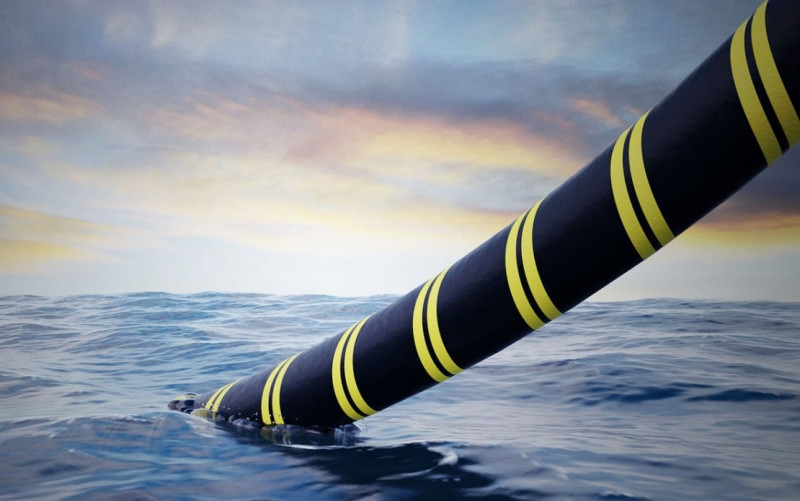
The debate on the cabotage policy also came to the fore due to the recent announcement by Facebook and Google that they will participate in the development of the Apricot subsea cable system.
The 12,000km cable system, expected to be operational in 2024, will connect Singapore, Indonesia, the Philippines, Taiwan, Japan, and Guam, and is aimed at improving Internet connectivity in the Asia-Pacific region.
However, Malaysia has reportedly been left out.
MIDF Research Institute Sdn Bhd, in a report, estimated that Malaysia’s exclusion from the Facebook and Google-backed Apricot subsea cable will result in a loss of high-capacity connectivity and investment worth US$300 million (RM1.25 billion) to US$400 million.
Transport Minister Datuk Seri Wee Ka Siong, however, countered recently that no digital investments were lost in data centre investments after the cabotage policy was reimposed for undersea cable repairs.
He had also said that the same company behind Apricot has a new plan for Malaysia, whereby the Intra Asia Express Cable will go through Kuching, which would be beneficial for the country and be in line with the MyDigital agenda.
Hak said the cabotage policy should not be the scapegoat for losing billion-dollar FDIs, as the Apricot project saw Philippine telco PLDT invest US$80 million in the cable.
“There are various factors why we were excluded from the project. For instance, the project is avoiding areas with geopolitical tension, especially after the trade war between China and the US.”
The general consensus among local players is that Malaysia’s cabotage policy, while protecting the domestic sector, is flexible in allowing foreign submarine ships to operate and derive benefits from here. – Bernama, November 14, 2021