Business

Turkey inflation rate reaches highest level in 20 years

Statistics agency reports consumer prices surge by 48.7% from January last year

Updated 4 years ago · Published on 03 Feb 2022 8:00PM

Turkey inflation rate reaches highest level in 20 years
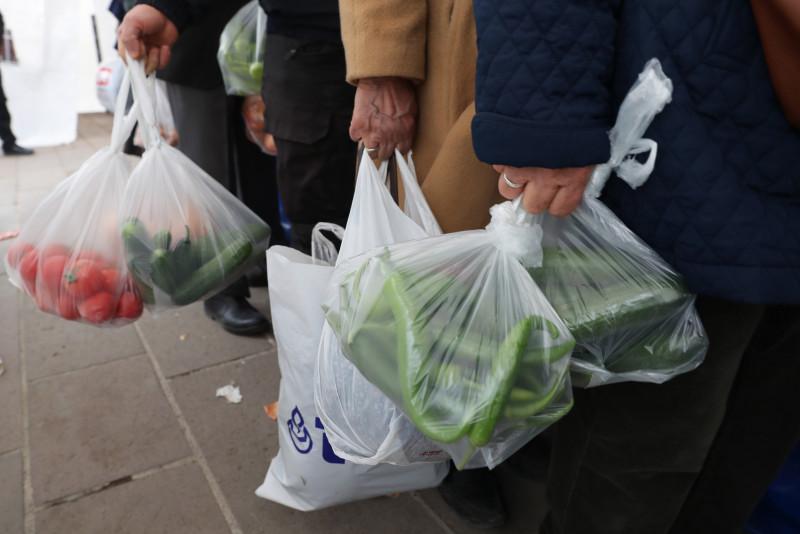
Confronted with persistently high inflation more than a month before local elections, Turkish authorities this week set up stands to sell vegetables at unbeatable prices in a bid to force markets to lower their prices. - AFP Pic, February 3, 2022

ANKARA – Turkey’s annual inflation rate in January reached its highest level since April 2002, official data showed today after a currency crisis decimated people’s purchasing power.

Consumer prices surged by 48.7 percent from the same period in January last year, up from an annual rate of 36.1 percent in December, according to the Turkish statistics agency.

The reading came out just days after President Recep Tayyip Erdogan changed the head of the state statistics agency for the fourth time since 2019.

Turkish media reported that Erdogan was unhappy with agency data showing inflation reaching the highest level since his Islamic-rooted party stormed to power two decades ago, complicating his path to re-election in 2023.

Former agency chief Erdal Dincer had only been in the job for 10 months. He was replaced by Erhan Cetinkaya, who was vice-chair of Turkey’s banking regulator.

Independent data collected by Turkish economists suggested that the annual rate of inflation rose to more than 110 percent in January.

Erdogan staunchly opposes raising interest rates, which he believes cause inflation – the exact opposite of conventional economic thinking.

He admitted on Monday that Turks would “have to carry the burden” of inflation for “some time”.

“God willing we have entered a period where each month is better than the previous one,” he added.

Turkey has suffered from persistently high inflation for years, experiencing two currency crises since 2018.

The second last year came after Erdogan orchestrated sharp interest rate cuts that put them far below the rate at which prices were rising, eroding Turks’ purchasing power and the value of their savings.

This prompted Turks to stock up on gold and foreign currency, resulting in a currency crash that saw the lira lose 44 percent of its value against the dollar in 2021. – AFP, February 3, 2022

Related News

Malaysia / 1d

Higher BUDI fuel quotas may help ease inflation, economist says

Opinion / 2d

The Mecca Accord - Where ambition meets reality in a fractured region

Business / 4w

Traders keep watch on inflation data as energy prices fuel fresh concerns

Malaysia / 2mth

PM Anwar: Putin assured Malaysia’s energy supply for next 20 years

Business / 3mth

BMI sees BNM holding OPR at 2.75% in July, amid contained inflation

Malaysia / 5mth

Tabung Haji declares payout of 3.50 percent, highest in 8 years

Spotlight

Malaysia

Singapore could bar under-18s from social media platforms that fail safety test

Malaysia

College student dies after falling from 22nd-floor condominium in Setapak

Malaysia

PM praised for ‘Medeka Day’ reforms; More needed to cope with rising costs – Guan Eng

By Ian McIntyre

World

Tupac Shakur murder case ends after 30 years as ex-gang leader found guilty

Malaysia

Unidentified man found dead in Sungai Buloh drain as police probe suspected murder

Malaysia

Four killed, four injured in 11-vehicle Pahang highway crash

Malaysia

Sarawak haze crisis deepens as five areas hit hazardous air quality

Opinion

Would the United States use nuclear weapons against Iran?

Malaysia

Tajikistan eyes bigger role for Malaysia in Central Asian market

By Alfian Z.M. Tahir

You may be interested

Business

MT4 or MT5? For traders, the choice often comes down to how they trade

By Alfian Z.M. Tahir

Business

Oil prices top US$91 as renewed US-Iran fighting raises global energy shock fears

Business

Pengerang investment must deliver results, not mere assurances – industry expert