Business

Panasonic teams up with Norwegian firms for Europe battery business

Companies to work together to develop ‘green battery’ for electric cars

Updated 5 years ago · Published on 18 Nov 2020 10:30PM

Panasonic teams up with Norwegian firms for Europe battery business
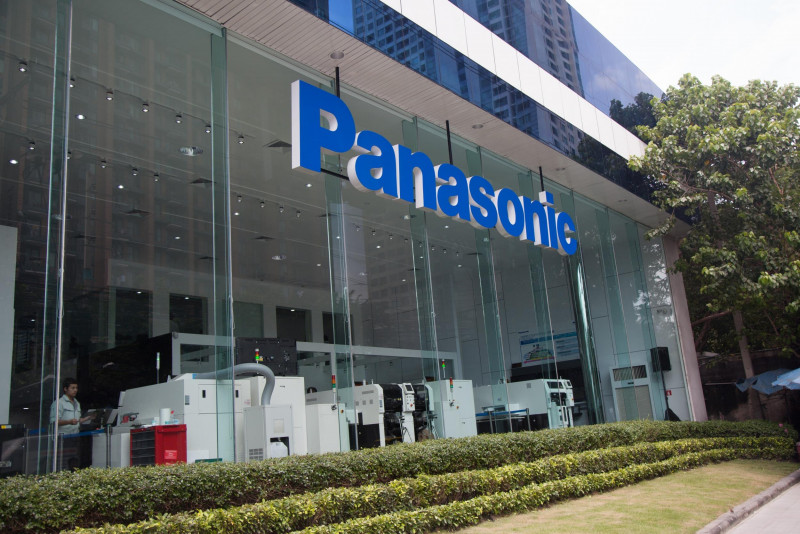
Panasonic is already a leading lithium-ion producer and has a major joint factory in the US state of Nevada with electric carmaker Tesla  – Wikipedia pic, November 18, 2020

TOKYO – Japan's Panasonic said Wednesday it has signed a partnership with two Norwegian firms to develop a “green battery” business targeting the European market, including for electric cars.

Panasonic, energy firm Equinor, and industrial group Hydro, said they would work together "towards summer 2021 to assess the market for lithium-ion batteries in Europe and... the business case for a green battery business located in Norway".

The initial phase of the project will involve consulting potential customers and holding talks with Norwegian and European authorities, the companies said in a joint statement.

Panasonic is already a leading lithium-ion producer and has a major joint factory in the US state of Nevada with electric carmaker Tesla.

The Japanese firm's executive vice president Mototsugu Sato said the partnership would “potentially pave the way for a robust and sustainable battery business in Norway.”

“We expect battery production to grow rapidly as a solution to the world's number one challenge, climate change,” added Arvid Moss, executive vice-president of energy and corporate development at Hydro.

“We believe the combined strengths of Panasonic, Equinor and Hydro represent an attractive starting point for exploring the possibilities for a profitable and sustainable battery business in Norway, where we have a strong foothold, renewable power base and close proximity to the European market.”

Batteries make up about 40% of the value of an electric car, and the market is growing fast in Europe as consumers look for greener alternatives to petrol and diesel.

China currently controls two-thirds of worldwide cell manufacturing. 

But the EU hopes to increase its share from the current 3% to 25% by 2028. 

Last year the bloc approved €3.2 billion (RM15.53 billion) of state subsidies from France, Germany, Finland, Sweden, Italy, Belgium and Poland to stimulate a European battery industry and meet homegrown demand.– AFP, November 18, 2020
Related News

Malaysia / 2mth

Malaysia must accelerate energy transition to safeguard future

Malaysia / 2mth

Malaysia ensures secure energy supply through international strategic cooperation – PM

Malaysia / 3mth

Malaysia's energy supply sufficient until July - PM Anwar

Malaysia / 3mth

Malaysia’s missile deal collapse exposes hidden risks in global arms trade

Opinion / 3mth

Norway harshly cancels NSM missile supply contract to Malaysia

Malaysia / 4mth

EV taxis with battery swapping system introduced to address fuel crisis

Spotlight

Malaysia

Elderly man admits to hitting neighbour with iron rod

Malaysia

Body found at KLIA2 in tyre storage compartment of aircraft from Japan

Malaysia

Factory operator faces rape, unnatural sex charges involving polytechnic student

Malaysia

Ismail Sabri granted RM300k bail after pleading not guilty to asset declaration charge

By Alfian Z.M. Tahir

Malaysia

Sunway Lagoon ride halted as safety probe seeks to protect public - DOSH

Malaysia

Malaysia ready to deploy military expertise for Nepal flood relief, says Defence Minister

Malaysia

Violence in Thailand: Visitors drop by almost 50 per cent

By Ian McIntyre

You may be interested

Business

Asia-Pacific growth set to slow as tariffs, geopolitical risks raise economic pressure

Business

Robo.ai Inc announces appointment of new independent director

By Alfian Z.M. Tahir

Business

K8 Cargo: Company still in limbo, claims CEO

Business

Moves in major US stock indices could spill into currency and gold markets

By Alfian Z.M. Tahir

Business

Oil slides as Iran-Oman Hormuz talks raise hopes of easing tensions

Business

Oil falls for fourth day as Hormuz supply fears ease