KUALA LUMPUR – The global economy remains uncertain with many fragilities in the post-Covid-19 era, with supply chain disruption, geopolitical risk, high oil prices, as well as shortages among the exogenous variables impacting the global economy, said an economist.
Juwai IQI Global chief economist Shan Saeed said the global price inflation is due to the four exogenous variables beyond the control of many policymakers and governments.
“History repeats after 52 years. The 1970s are back with stagflation, high inflation, and low growth.
“Two-fifths of the global economy is in stagflation, 40% or 77 countries mostly in Europe, Africa and Latin America,” he said in an interview.
The economist also said that due to the conflict between Ukraine and Russia, supply chain bottlenecks, and subsequent inflation, global economic projections are getting revised downwards from big banks globally.
He said that the global gross domestic product (GDP) growth for 2022 was initially projected to be 4.4% as of January but has since been adjusted to 3.6%.
“Inflation remains higher in the advanced economies due to an increase in the velocity of money. Quantitative easing could not spur growth for many economies.
“However, inflation in Asia remains low due to effective monetary policy by the central banks. There is a great schism between inflation outlook in advanced and Asian economies,” he said.
Commenting on the levels of inflation, Shan said it depends on the economy and country dynamics to determine what level of inflation is dangerous.
“There is no rule of thumb for the level of inflation to be considered as acceptable or unacceptable.
“Inflation goes up or down depending on the monetary policy levers. Price and growth stability are the key focus of all the central banks globally,” he said.
However, he said there are a few rules that policymakers follow globally for inflation numbers and the acceptable level of inflation is under 4%-5% while the unacceptable or hurtful level is above 10%.
“Of the 42 big economies featured in the indicators page of The Economist magazine, eight still have inflation below 4%. Six of those eight are in East or Southeast Asia.
“The region also includes some smaller cases of price stability,” he said.
Citing the magazine, he said inflation is not high everywhere and high inflation is not a worldwide phenomenon.
“Asian inflation has increased since February but is much lower than in the United States and Europe,” he said.
Meanwhile, Shan said Europe inflation is expected to stay higher based on the Eurozone year-on-year percentage of inflation.
The estimate for June was at 8.6%, up from 8.1% a month prior, US (9.1%), Japan (2.5%), United Kingdom (9.1%), Canada (5.1%), and Germany (7.6%)
Thus, he said, inflation is expected to stay higher in many advanced economies for the next two years.
“Global GDP has surpassed the US$104 trillion (RM462.6 trillion) mark, which is a new milestone for the global macroeconomic era.
“Although growth keeps trending upwards, the recovery expected in the post-pandemic period is looking arduous and strained due to inflationary pressures and exogenous factors,” he said.
Shan said Juwai IQI has shared in a newsletter that inflation is expected to meander around 2.2% to 2.8% for the year 2022.
“Global inflation remains high and a stronger US dollar is pushing the emerging market currencies to stay lower.
“Thus, depreciating currencies bring in inflation in the economy, inviting central banks to raise rates,” he said.
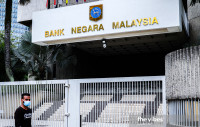
He said Bank Negara Malaysia (BNM) has done a good job in maintaining price and growth stability in the country with the overnight policy rate standing at 2.25%.
“BNM has plenty of room to manoeuvre to bring down the inflation rate through monetary policy levers or the appreciating ringgit.
“Malaysia’s GDP outlook for 2022 is expected to stay between 4% and 5%,” he said.
Shan said a buoyant outlook and tame inflationary pressures represent the hallmark of successful macroeconomic stabilisation.
“Malaysia continues to stay on global investors’ radar due to its economic confidence and strategic geography in trade and commerce,” he noted. – Bernama, July 15, 2022