Business

Moody’s revises downward global GDP forecasts for 2022, 2023

Picture getting grimmer amid record-high inflation, rate hikes, Ukraine conflict, China’s economic difficulties

Updated 3 years ago · Published on 26 Sep 2022 1:00PM

Moody’s revises downward global GDP forecasts for 2022, 2023
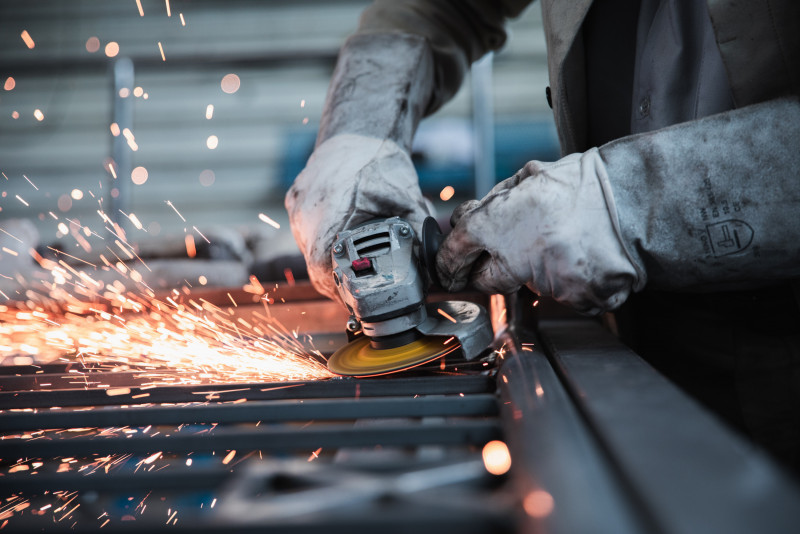
Moody’s Analytics says global growth fell in the second quarter on an annualised basis for the first time since the depths of the virus outbreak in early 2020, driven by contractions in the US, the UK, and China. – Pixabay pic, September 26, 2022

KUALA LUMPUR – Moody’s Analytics has revised its global real gross domestic product (GDP) forecast for 2022 and 2023 downward to 2.7% and 2.3%, respectively.

This is from forecasts of 4.2% for 2022 and 3.6% for 2023 in January.

“While the global economy is projected to grow in 2022, any policy missteps or additional risks would increase the threat of a worldwide recession in the next 12 months above its current assessment of just over even odds,” Moody’s Analytics said in a note today.

“The global economy is at a crossroads as the nascent post-pandemic recovery has quickly morphed into a darker and more fragile environment.

“Record-high inflation in the US and Europe from supply shortages and surging commodity prices following Russia’s invasion of Ukraine are weighing on the global expansion and are compounded by an aggressive monetary policy response.

“At the same time, China’s economy is facing challenges on multiple fronts, including a cooling property market and a build-up of risks in the financial sector,” it added.

As a result, Moody’s Analytics said global growth fell in the second quarter on an annualised basis for the first time since the depths of the virus outbreak in early 2020, driven by contractions in the US, the UK, and China.

“More broadly, performance remains uneven among the world’s major economies – the US, China, Japan, India, and the five largest economies in Western Europe.

“Outcomes will continue to diverge through 2023 due to differing trade and investment linkages to Russia and Ukraine, particularly in relation to energy products,” it said. – Bernama, September 26, 2022

Related News

Business / 1mth

BMI sees BNM holding OPR at 2.75% in July, amid contained inflation

Malaysia / 1mth

Penang initiates measures to minimise impact of Middle East conflict

Malaysia / 1mth

Penang CM: New developments key to stimulating state economy

Malaysia / 1mth

Penang on track to propel economic growth, says CM

Malaysia / 1mth

Selangor allocates over RM130 million to face West Asia crisis

Malaysia / 3mth

Maintaining dividend of over 6 per cent reflects EPF's strength - PM

Spotlight

Malaysia

Bersatu-PH tie-up a possibility as coalition seeks Malay support, analyst says

By Alfian Z.M. Tahir

Malaysia

Woman molested on her way home from work (video)

Malaysia

Court allows Daim's daughter to permanently keep passport

Malaysia

Santiago pokes holes in data centre hype, asks: Who really benefits?

By Alfian Z.M. Tahir

Malaysia

Jeweller vows to pursue Rosmah until ‘every penny’ is recovered as RM67.5m battle enters enforcement phase

Malaysia

Ambulance carrying two injured men crashes en route to hospital after MPV collision in Besut

Malaysia

Man blames 'lack of love' for sexual assault on teens

Business

BNM's OPR to stay at 2.75 pcent in 2026 amid strong domestic demand - Kenanga IB

Malaysia

Missing jewellery: Rosmah ordered to pay RM67.5 million

You may be interested

Business

Ringgit holds firm despite US inflation shock as markets brace for Federal Reserve decision

Business

Unemployment rate rises to 3.0 per cent in April 2026 - DOSM

Business

Kami Builders secure RM300 million ASEAN sustainability sukuk, channels Islamic capital into QIU campus development

Business

Ringgit holds firm against major currencies as markets await key US inflation data

Business

BNM's OPR to stay at 2.75 pcent in 2026 amid strong domestic demand - Kenanga IB

Business

Open fibre sues Bank Pembangunan, six others in RM2b claim over Aries telecoms liquidation

Business

AI should support human thinking, not replace it - MDEC CEO