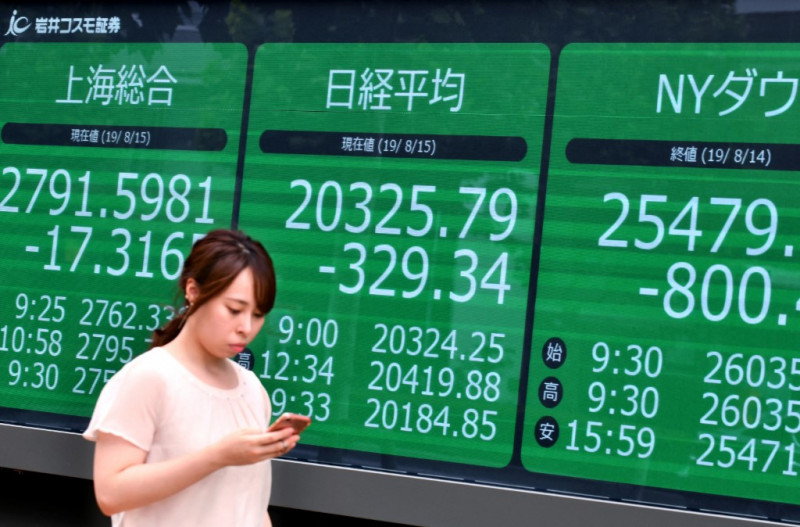
HONG KONG – The yen held onto gains today and equity markets were mixed after plunging the day before in response to the shock Bank of Japan decision to shift away from its ultra-loose monetary policy.
The move to allow yields on certain government bonds to move in a wider band was seen as a precursor to a possible interest rate hike next year, finally bringing the central bank in line with others around the world.
Yesterday’s announcement sent the yen soaring from above 137 to the dollar to just above 130 – its strongest since August – while it also rallied against other peers including the euro. And it managed to hold on to most of the advances today.
And some observers say the Japanese unit could strengthen further to around 120, saying it remained relatively cheap, having tumbled for most of the year against the dollar owing to the divergence of Fed and BoJ policies.
“It would be safe to assume that the BoJ shift will likely fuel further yen strength on repatriation flows as local bond yields rise,” Stephen Innes of SPI Asset Management said in a note.
“Effectively the BoJ pivot is the equivalent of quantitative tightening, which should lead real long-term rates to increase.”
Regional markets mostly edged back up after a painful sell-off, though fears that borrowing costs will continue to rise globally next year were keeping any rally in check.
Tokyo fell again after dropping more than 2% yesterday, while there were also losses in Shanghai, Mumbai, Singapore and Seoul.
But Hong Kong, Sydney, Wellington, Taipei, Manila, Bangkok and Jakarta all rose.
The surprise move came as investors were already suffering following hikes by the US Federal Reserve and European Central Bank last week, and warnings by officials that rates would likely go higher than initially expected.
The tightening measures, aimed at bringing decades-high inflation under control, have fanned speculation that the world economy will be tipped into a recession.
“Tighter BoJ policy would remove one of the last global anchors that’s helped to keep borrowing costs at low levels more broadly,” said Deutsche Bank analysts.
And National Australia Bank’s Ray Attrill added that yesterday’s “tweak has, whatever the BoJ (and government) will have us want to believe, been interpreted as putting the writing on the wall for a policy shift next year.
“It is also seen as signifying a formal end to tolerance/desirability of yen weakness.”
Traders are also keeping an eye on China as it quickly reopens after almost three years of a zero-Covid-19 policy of lockdowns and mass testing that hammered the world’s number two economy.
However, there is a worry about the immediate impact of a spike in infections, with hospitals struggling, pharmacy shelves being stripped bare and crematoriums overwhelmed.
“Though unspoken, it is well understood that policymakers have decided to accept a sizeable Covid-19 wave,” said Innes.
“And beyond the Covid-19 shift, Chinese policymakers have taken more decisive steps to support the economy, while broader macro policy continues to ease.
“The trade-off is to expect weaker oil demand through the Covid-19 ‘exit wave’ across the country but possibly an above-consensus 2023 demand bounce on the accelerated pace of reopening.”
Still, the expected bump in demand from China has helped push crude prices higher. A drop in US inventories also provided support, while the upcoming northern hemisphere winter is expected to further boost energy use. – AFP, December 21, 2022