KUALA LUMPUR – The federal government’s revenue is projected to decline slightly by 1% in 2023 to RM291.5 billion, following smaller proceeds from non-tax revenue resulting from lower crude oil prices.
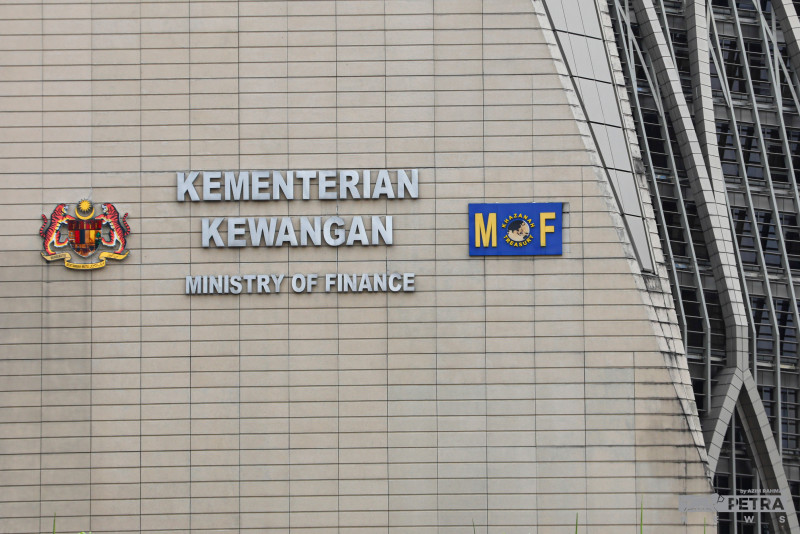
The Finance Ministry (MoF), in its Fiscal Outlook and Revenue Estimates 2023 report released today, said the lower non-tax collection is cushioned by an increase in tax revenue which is expected to record RM218.3 billion.
“Tax revenue remains the major contributor to the federal government’s revenue with a share to gross domestic product (GDP) remaining around 12% while non-tax revenue at 4%,” it said.
MoF said the collection from direct tax is estimated to increase by 6.9% to RM164.1 billion, constituting 75.2% of total tax revenue, of which the bulk of the increase is primarily attributed to more extensive collection from companies’ income tax (CITA) and individual income tax at RM96.4 billion and RM35.3 billion, respectively.
“The higher collection from CITA is mainly contributed by improved corporate earnings prospects and continuous efforts in enhancing auditing and tax compliance.
“At the same time, the government is expected to receive tax due from the prosperity tax for the assessment year 2022,” said the ministry.
Meanwhile, revenue from other direct taxes comprising stamp duty, real property gains tax (RPGT) and other taxes are expected to increase marginally by 0.1% to RM10.2 billion.
The increase in stamp duty and RPGT to RM8.1 billion and RM1.9 billion, respectively, are in line with the expected stable property market, said MoF.
The ministry noted that indirect tax is anticipated to decrease by 2.1% to RM54.1 billion due to lower collection from the windfall profit levy on crude palm oil (CPO) as a result of a lower average CPO price forecast in 2023.
However, the better collection is expected from sales and service tax (SST) amounting to RM33.3 billion or around 1.8% of GDP.
“Sales tax collection is projected to increase by 5.6% to RM17.2 billion, primarily contributed by higher demand on plastics and electrical products, clothing as well as machines and spare parts.
“Similarly, service tax is estimated at RM16.2 billion largely contributed by higher demand for the food and beverages sector followed by the telecommunications and insurance sectors,” it said.
According to the report, excise duties in 2023 are expected to decline by q% to RM12.4 billion due to a lower estimated total industry volume for motor vehicles which correlates with the Malaysia Automotive Association’s report.
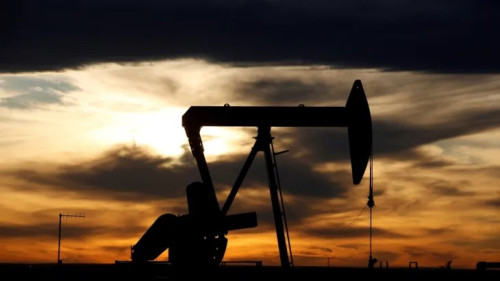
For non-tax revenue, the government projected it to be lower at RM73.2 billion on account of lower proceeds from investment income mainly from Petroliam Nasional Bhd’s (Petronas) dividend.
“In 2023, the government is expected to receive a RM40 billion dividend from Petronas while the dividend from Bank Negara Malaysia (BNM) is expected to be lower at RM2.75 billion.
“Furthermore, the contribution from Retirement Fund Incorporated is expected to remain at RM3 billion to finance the retirement charges partly,” it said.
Meanwhile, licences and permits are expected to decline by 9.3% to RM14.2 billion due to lower petroleum royalties compared to lower average crude oil prices.
However, other major components for licences and permits such as motor vehicles and levies on foreign workers are forecast to increase to RM3 billion and RM3.5 billion, respectively, said MoF.
In 2023, petroleum-related revenue is expected to decrease by 20.9% to RM65.2 billion, in line with the projected average global crude oil price at US$80 (US$1=RM4.43) per barrel, and lower dividend from Petronas.
The petroleum-related revenue to GDP ratio is estimated to decline to 3.5%, constituting 22.4% of total revenue.
In the meantime, the ministry said non-petroleum revenue is projected to increase by 6.8% to RM226.3 billion in consonance with the government's initiative to widen the revenue base coupled with measures under the Medium-term Revenue Strategy (MTRS) and continuous auditing.
“As a percentage to GDP, non-petroleum revenue is forecast at 12% reflecting less dependency on petroleum-related revenue,” it said. – Bernama, February 24, 2023





.jpg)