Business

China exports surge by forecast-beating 21.1% in November

Overseas shipments grew 21.1% on-year last month to US$268 billion thanks to strong demand for medical goods and electronics

Updated 5 years ago · Published on 07 Dec 2020 2:30PM

China exports surge by forecast-beating 21.1% in November
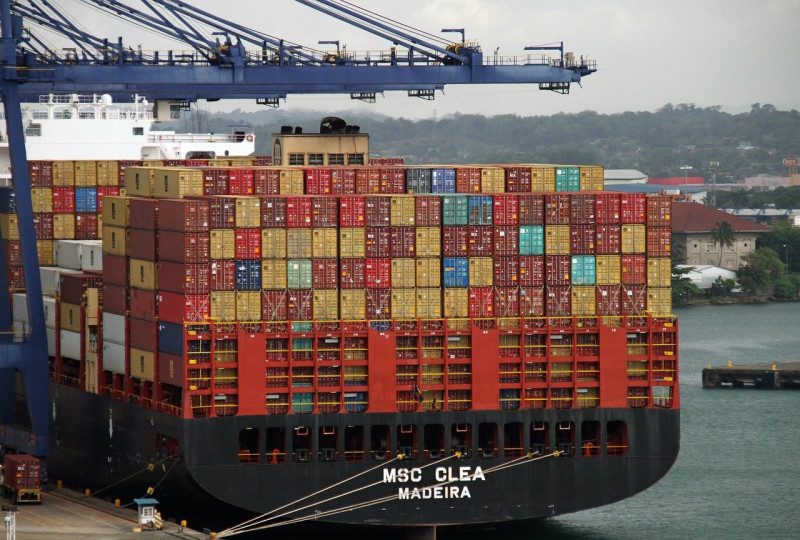
In November, China’s trade surplus with the US – a major point of conflict in their bruising trade war –  expanded 52% to US$37.4 billion. – Pixabay pic, December 7, 2020

BEIJING – China’s exports rose in November at their fastest pace in almost three years, official figures showed on Monday, as a surge in demand in key markets ahead of the festive period also helped the country post a record trade surplus.

The reading is the latest spot of good news out of the world’s number two economy, which has been enjoying a bounceback from virus-induced lockdowns that sent it into a rare contraction earlier in the year.

Overseas shipments grew 21.1% on-year last month to US$268 billion thanks to strong demand for medical goods and electronics. 

The figures – the best since February 2018 – surpassed the 12% tipped in a Bloomberg poll of analysts and was much better than the 11.4% seen in October. The reading also marked the sixth straight month of growth.

However, imports expanded 4.5%, weaker than the 7.0% estimated and slightly worse than the previous month. 

In the first 11 months of the year, customs figures showed exports of textiles, including masks, surged 33 percent as governments put in place virus containment measures.

The data also showed China’s surplus with the rest of the world hit US$75.42 billion in November, up from US$58.44 billion in October and the largest on record dating back to 1990, according to Bloomberg News.

Iris Pang, chief economist for Greater China at ING, told AFP the latest trade figures were likely the result of “urgent export deliveries before Thanksgiving and Christmas”, with importers from western economies worried about lockdowns ahead of the year-end holidays.

But Louis Kuijs, head of Asia economics at Oxford Economics, cautioned: “Many Covid-related purchases won't happen again and we eventually expect a global rotation from goods to services consumption as vaccine availability reduces the need for social distancing.”

In November, China’s trade surplus with the US – a major point of conflict in their bruising trade war –  expanded 52% to US$37.4 billion. – AFP, December 7, 2020

Related News

Business / 2d

Pengerang needs to create wider economic value, not just store more oil, says expert

Opinion / 2d

The Jensen Huang case: The racial trope driving US - China relations

Opinion / 1w

Honey Trap: Western media response to Jensen Huang and the latest China spy story

Business / 2w

Energy disruptions - a timely reminder that energy, economic security are interconnected - Minister

Opinion / 3w

Will the AI bubble burst?

Events / 4w

Shanghai trade fair returns to KL with 500 exhibitors in November

Spotlight

Malaysia

Durian trader in Raub loses nearly half a million in AI-based investment

Malaysia

GPS banks on fresh faces, retains Abang Johari and key incumbents for Sarawak polls

Malaysia

Anwar yet to accept Anthony Loke's resignation, says DAP chief remains on leave

Business

MAG to add 10 Boeing Dreamliners in long-term fleet expansion drive

Malaysia

Court imposes gag order in case against AKPS chief Mohd Shuhaily

Malaysia

Cyber scam losses hit estimated RM19.7b in a year

Malaysia

Govt approves RM451m for projects in 66 opposition-held constituencies

By Alfian Z.M. Tahir

You may be interested

Business

South Korean robotic parking company explores opportunities in Malaysia

By Ian McIntyre

Business

MAG to add 10 Boeing Dreamliners in long-term fleet expansion drive

Business

Oil prices rebound on Middle East supply fears

Business

Matrix Concepts founder honoured as FIABCI Malaysia Property Man of the Year 2026

Business

Govt moves to block seven US-blacklisted entities from accessing local data centres

Business

Oil prices holds above US$80 as Hormuz attacks heighten supply concerns