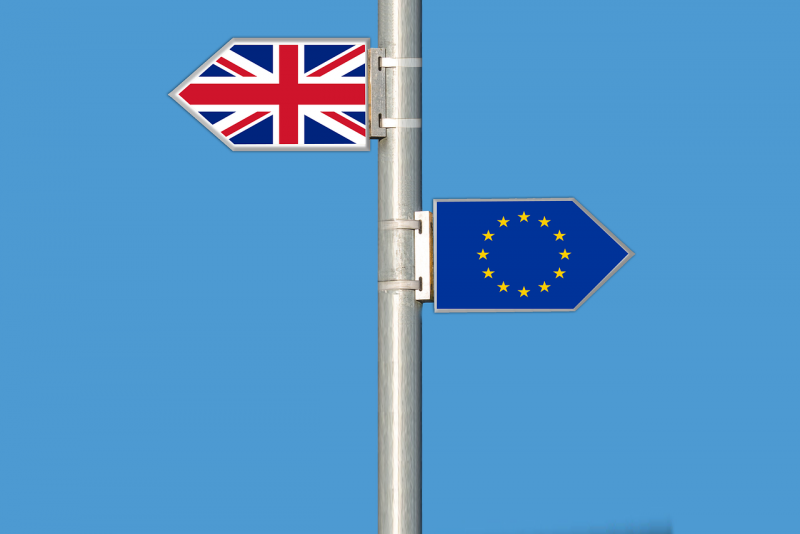
LONDON – Trade talks between Britain and the European Union continued into the night yesterday ahead of the latest make-or-break deadline, as the navy readies armed ships to patrol UK fishing waters in case of a “no-deal” Brexit.
Negotiations in Brussels are due to continue today, the day that Prime Minister Boris Johnson and EU chief Ursula von der Leyen have set as the deadline to decide whether any trade deal is still possible.
“Talks are continuing overnight, but as things stand, the offer on the table from the EU remains unacceptable,” said a UK government source.
“The prime minister will leave no stone unturned in this process, but he is absolutely clear: any agreement must be fair and respect the fundamental position that the UK will be a sovereign nation in three weeks’ time.”
A senior EU source, echoing von der Leyen’s words on Friday, said: “The defence of the single market is a red line for the EU. What we have proposed to the UK respects British sovereignty. It could be the basis for an agreement.”
Four 80m British boats have been placed on standby, part of increased contingency planning on both sides of the Channel, and evoking memories of the “Cod Wars” with Iceland over fishing rights in the North Atlantic in the 1960s and 1970s.
Johnson on Friday said it is “very, very likely” the talks will fail, and Britain will revert to World Trade Organisation (WTO) terms with its largest single trading partner.
European leaders have also been told that the chances of a deal are slim, with both sides at loggerheads over rules to govern fair competition and fishing rights in British territorial waters.
Deal or no deal, Britain will leave the EU single market and customs union on the evening of December 31, more than four years after a landmark referendum on membership of the bloc.
The River-class patrol vessels of the Fishery Protection Squadron – the navy’s oldest front-line squadron with a history dating back more than 500 years – already enforce UK and EU fisheries law.
The Defence Ministry confirmed that it has conducted “extensive planning and preparation” for a range of post-Brexit scenarios from January 1, and has 14,000 personnel on standby to help with the transition.
The four offshore patrol boats will be part of “robust enforcement measures in place to protect the UK’s rights as an independent coastal state” that could also include helicopter surveillance.
WTO terms would mean tariffs and quotas, driving up prices for businesses and consumers, and the reintroduction of border checks for the first time in decades.
That has already raised the prospect of heavy traffic clogging roads leading to seaports in southern and southeast England, as bureaucracy lengthens waiting times for imports and exports.
Transport companies have warned that EU member Ireland could see import volumes shrink in the event of new customs procedures for goods routed through Britain. – AFP, December 13, 2020






.jpeg)


.jpg)