
I WAS sipping a freshly made 2-in-1 coffee around 9pm to the horror of coffee snobs everywhere. The two screens in front of me were primed and ready for a conference call that will happen soon. On one screen is the interface of a popular web conferencing software. The other is the animal-named web browser recommended by the internet to be the best in screen sharing videos.
It was movie night, or at least the testing of one since neither myself nor the friend who’s going to enter soon have done it before.
“So, is everything ready?” the voice from the other side of the call asked after a short exchange of pleasantries, testing the mic levels, etc. For the sake of simplicity, let’s call the friend 'H'.
H was comfortably donning the white pagoda T-shirt with a sarong look; I guess it was technically already near bedtime for many people. His webcam framing was also interesting with an assortment of artworks, books, an acoustic guitar and other visually interesting objects sitting on a short cabinet behind him in a slightly scattered but not messy manner.
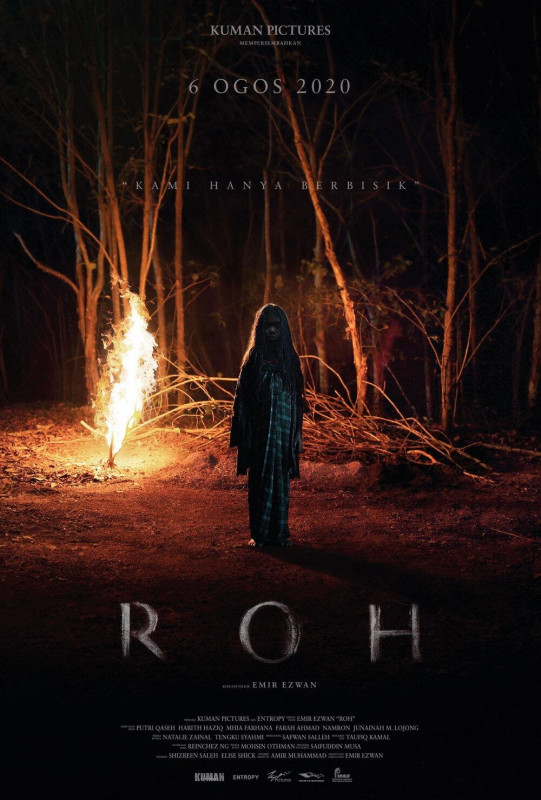
The movie we decided to do this test-watch was ‘Roh’ (2019) by Emir Ezwan. A low-budget slow-burn folklore-horror tale produced by the independent production house Kuman Pictures about a down-trodden family without a patriarch living isolated and far away from other villages taking in a mysterious girl into their home, and weird things start to happen. The film was selected by Finas to represent Malaysia for Best International Feature Film in the 93rd Academy Awards (Oscars)...
“Do we really need to talk about the Oscars?” H quickly broke my thought-process before I start ranting about this Oscar obsession our film development body seems to have.
“Yeah, I guess not. Let’s continue with the movie.”
The characters
“What do you like most about the film?” H inquired first during the end credits of the film.
The element that popped out straight away to me was the characters' names. They’re not names per se, but roles, societal roles. It is also the roles the characters inhibit when we first meet them. Mak (mother), Along (eldest child), Angah (second child), Adik (younger sibling, a general term when referring to someone younger), Tok (elder person, another general term that does not mean familial connection), and Pemburu (hunter). Then, throughout the film, each character reveals another side of them. A different hat they have been simultaneously wearing that we, the viewers, may or may not even notice by the end.
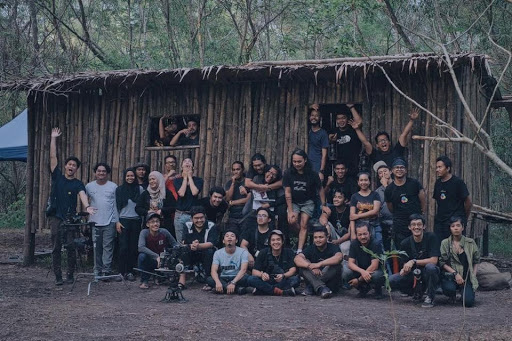
“So is the film trying to commentate of societal roles? On the consequences of following or breaking it?”
H’s question stumped me for a bit. It is not that, either. Not to overread a single element in moviemaking, for me, it commentates on how those roles influence our perception about a particular person and how those perceptions can be misinformed. Like the strong and commanding Mak, the friendly and helpful Tok, the scary and off-kilter Pemburu, the sweet and curious children and how it all changes. The shift is not due to deceit per se but on how we are inside and how we want others to see us.
There are also references to Islamic eschatology within the characters’ visuals, but other local reviewers have already explored it. Do watch/read them, too.
The silence
“I actually like the silence of the film,” said H after I ended. “The film properly took the time to establish its mood and atmosphere without the need to rush from one set piece to the other. It is a solitary, lonely type of film.”
“That’s interesting. Do tell more.”
“It is like the spaces between words… The frequency changes between using a short word and a long word. We usually will focus on the syllable, but the spaces, the pauses, the periods, the ellipsis, the breaking up of sentences and paragraphs plays an important role too.”
“I guess a more urgent style of writing would emphasis on short words and sentences while a more reflective writing would benefit from using longer, more stretched out sentences.”
“Yes, but up to a point. Everything still has to be balanced. Or not you’ll ruin the effect yourself. The heavy emphasis on sound design also helps set the mood.”
“By sound design you mean by recreating the actual sounds one might hear in their environment right? Like footsteps, crickets, etc.”
“Sometimes just using the audio captured on set, but that’s what it is.”
“Maybe this is also why film editors are still underappreciated, it’s about understanding the atmosphere the films wants to bring. There’s no need for exaggeration, just knowing what you want to do.”
I guess sometimes I do forget a movie is audiovisual-based media first. It is on how the audiovisuals carry the narrative by its emotional and cognitive weight. It is a movie that’s meant to be reflective for the viewers to properly absorb the audiovisual and contextual cues without an explainer dialogue. Sometimes the audiovisuals are all we need. This is where we have to give credit to the whole team.
The genre
There aren’t that many ways to write a horror story. Even the ending of any story can only go four different ways: (1) The main character accomplishes their goal and is happy about it, (2) The main character fails to achieve their goal and is dejected about it, (3) The main character realises their goal but realises that’s not what they wanted or lost too much in their journey, and (4) The main character fails in their purpose but realises that is a good thing for them.
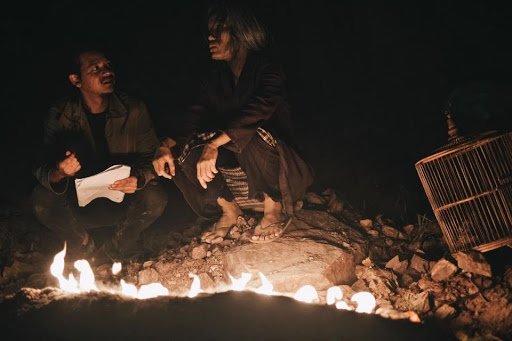
If we want to compare ‘Roh’ with any other horror films, some might find the plot to be basic. It is about inviting the ‘uninvited’ to our homes – a common trope within Asian horror stories. Also on the consequences of breaking local mores and taboos such as the one’s surrounding the forest. I would not particularly say the film is also about good versus evil, but more about what evil is capable of when we are not careful.
But ‘Roh’ doesn’t just end there; the ‘uninvited’ person they invited wasn’t just Adik but also the initial clashing images of Tok versus Pemburu from an emotional stand-point. It’s not about who you invite home, but who you let into your hearts and listen to, in this case, it was Tok that they wrongly let in.
“Wait, isn’t that a huge spoiler?” H broke my thought-process again.
“Oh no…”
Tok is basically John Milton from 'The Devil’s Advocate' (1997). As Milton tries to bring a more fatherly, mentor-like figure into Kevin Lomax’s life, Tok tries to bring the more motherly, grandmotherly empathy towards Mak and her family. Both of them claim they only whisper options while giving the main character complete free will in choosing those options in the reveal, but in reality, they’re already manipulating the situation from behind.
Rather than Kevin Lomax overcoming the final confrontation, this does not happen with Tok and Mak’s family to show a more disheartened, overwhelming story. When the devil wins, the devil wins. It's a tragedy all-around.
The ending
“So, what do you think the movie wants to tell us H?”
“You know I’m not the kind of person that looks for meanings in art right? Anyhow, it does have a religious slant if one wants to take any meaning from it.”
“I don’t too, but from a different perspective, I think this movie really shows it is possible to tell a subtle, non-didactic, atmospheric horror story in Malaysia without the need to be preachy and moralising.”
“That’s an interesting take.”
“What about you?”
“Me?”
“Yes.”
“Well, maybe as Zainal Ariffin Ismail always said, ‘Jangan biarkan hidup anda diselubungi… misteri'.” – The Vibes, March 13, 2021


.png)