
I GET IT. Art films can be daunting. They also have an air of pretentiousness primarily wafting from their tall-nosed monocled stans who rank the whole space with their putrid presence straight out of a Ralph Steadman illustration. I understand why some are afraid to go there. No one wants to go near that.
Recently a debate started with Martin Scorsese himself being quoted as saying the Marvel movies are ‘closer to theme parks’. Level-headed cinephiles who read his editorial in The New York Times understood he was not specifically talking about the technical side of things but more on the economic side.
The current films are made to be consumed, thus they go through the same process that fast food would go through, like market research, taste testing, making and remaking it until dollar signs pop up on the other side. In short, the whole thing has become similar to the food industry.
These kinds of movies also have a monopoly on the physical cinema as major cinema halls prefer these bigger movies over smaller, independent movies. Especially when independent cinemas are at a decline and the whole ‘arthouse’ thing happened due to those independent cinemas bringing in quirky and avant-garde European films to the American audience.
His main complaint was about how movies are no longer being made for the love of it but as mentioned before, tailor-made to be perfectly consumed to bring in the most buck. Filmmakers are no longer taking the risk to push the artform, they’re just hired to make the film. Or at least this is how I understood his rationale.
On the other hand, the term ‘art film’ is quite wide-ranging that anyone who has actually seen them in the cinemas or on a TV near them thinking it is just another Hollywood movie. I’ve seen scenes of ‘The Godfather’, or one of the films on TV as a child. I did not go, “Oh wow, what a great art film!” It was just like any other late-night movie on the local channel.
Art films are on the other side of trashy movies, but I am not talking about quality nor artistry. If trashy movies are meant to entertain, gives us a good time after a long hard day – art films are meant to tickle our cognitive curiosities about life, about death, about the future, about the past, about identity, about how we conduct our lives, and about art in itself.
As it just happened, let me share my experience of watching two highly rated art films for the first time.
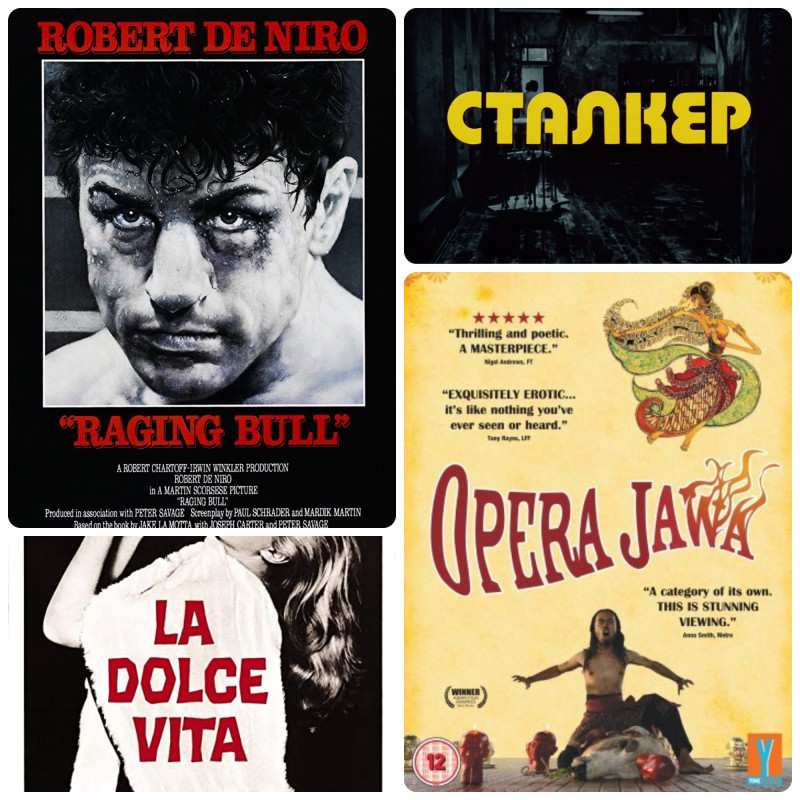
Last Saturday was the premiere of the movie night with friends that I alluded to in the appreciating Roh article. Through our collective, Projek Rabak, we set-up a public, for education purpose screening session dubbed Pawagam Cabuk. The film was ‘Opera Jawa’ (2006) by Garin Nugroho.
I am someone who’s already familiar with the broad aspects of the Ramayana Epic; meaning I at least know the names Rama, Sita, Ravana, Lakshmana and Hanuman and how the story generally goes. The foreground narrative of ‘Opera Jawa’ is a retelling of this epic from the Javanese tradition, thus from the narrative aspect, I will not be a total stranger, or so I thought.
The film started with a traditional wedding of two of the main characters, Setio and Siti, two theatre actors who used to play the role of Rama and Sita. Then there’s a topless oversized singer riffing melodiously throughout explaining the context of what we are watching with gusto and humour.
One of his lines was: “Men everywhere have vied for her heart, since the beginning of time from Prophet Adam to Adam Smith”. This was also the line that Zim Ahmadi of Awful Track Record said made him instantly know it would be a great film.

The film is filled with a mix-match of modern and traditional imagery but it never looked out of place. With art installations of mannequins, golden heads, flowers, although bringing the absurd,l does not seem out of place. Then comes in the singing and well-choreographed actors in an interesting mix of costumes with the baddies all wearing some kind of modern hat like a fedora or trilby and there’s even a scene invoking a 20s or 30s Jazz bar – it all still doesn’t look out of place.
"This medium of the film itself is a mix of everything... there are many different artforms the director brought into cinema in this film," said Meor Hailree, cult poet, performance artist and filmmaker, who was also the curator of the screening. "He (the director) is trying to hybrid realism and absurdism, at the same time trying to hybrid the Javanese tradition into the musical format."
However, it doesn't mean art films can't be fun. ‘Opera Jawa’ is filled with humour, or as Zim Ahmadi puts it, "It's not the haha jokes, although there are haha jokes, it is more to awkward situations that becomes comical." Meor Hailree later added another aspect of this movie that I fully agreed which is, “This film is like a cake, there are many layers to it and however you slice it, you will get something different.”
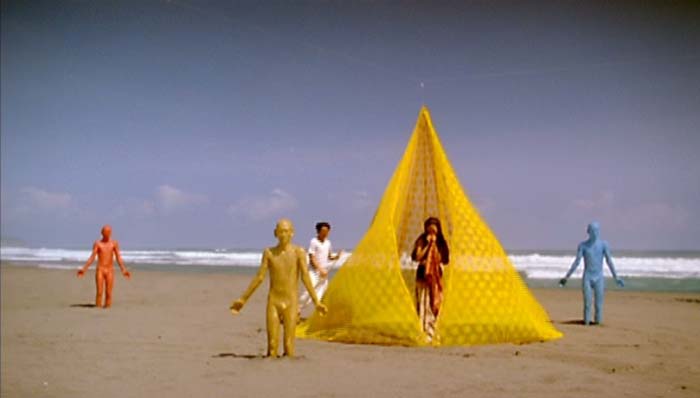
I can watch the whole film just as it is and still be entertained. No need to go deeper into the metaphors and the semiotics of things, but one can if they want to. It is not a requirement but seeing the imagery, the sound design, the weaving of the story, my experience with the epic, the interaction between characters, as I mentioned before, it tickles the cognitive curiosity.
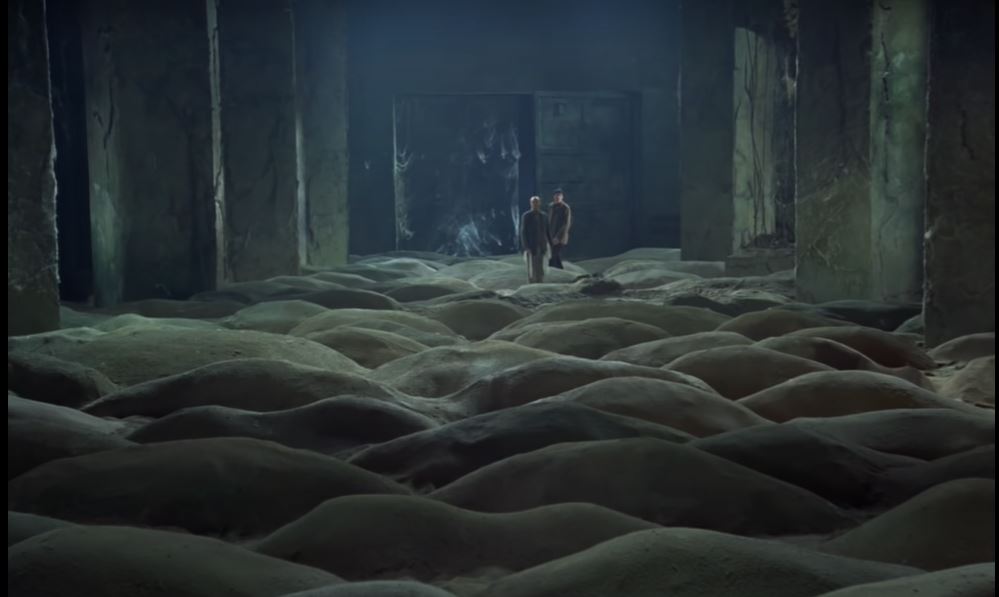
Another fun art film that I watched just yesterday for the first time due to suddenly thinking about it was Andrei Tarkovsky’s ‘Stalker’ (1979). Well maybe not as fun due to it’s long, contemplative style of filmmaking that goes deep into existential questions for 2 hours and 35 minutes. Although, in a similar way, there are many humourous sections that definitely lighten the mood.
I’ve always been interested in this film due to references towards it and the original book (‘Roadside Picnic’ (1972) by Boris & Arkady Strugastky) are in one of my favourite books and video games – ‘Metro 2033’ (2002) by Dmitry Glukhovsky (who was extensively involved in the making of the game too). Our Russian friends do really know how to write these kinds of existential, conceptual stories, even in the form of video games.
Most likely a reference towards the Tunguska event of 1908, there exists a mysterious zone that seems to have a mind of its own, and is cordoned off from the public. Eventually rumours start to come out that there is a room in the zone that will grant you your deepest desires, and the only way to get in there is with the help of professionals known as Stalkers.
This time there are two who want access to this mysterious place; the Writer, who embodies the rockstar existentialist writer who is quick with his words with plenty of clamouring fans; and the Scientist, who embodies the archetype of the underappreciated scientist who no one knows about.
However, there are no straight paths to the room, even though you can actually see the building the room is in from the entrance of the zone. It is a maze that only allows the fully hopeless to reach it. There is a strong sense of isolation and space throughout the movie and the emphasis on longer takes helps us the viewers experience that isolation and space.
‘Stalker’, the film, from one perspective, wants us to question if that room exists, and if you’re in front of it, would you really step in? Because it will only grant your heart’s deepest desire, something that you yourself might not know nor fully understand. Then comes the other layers and metaphors. The story that’s happening in the background of it all. The way the camera moves and decides what and when to show something, how it shows something.
This film is also a cake, as it will give someone else something else to ponder about. Like the room itself, it gives us what our heart wants, what it wants to take away from the experience we just went through.
Now, I might scare some of you a bit with the hidden layers and needing to pay attention to a lot of things. Don’t worry about that. It is okay not to dip your toes into the semiotic world or symbols and metaphors when watching these movies for the first time. It is okay to just focus on the foreground narrative. It is okay to feel bored, or confused.
Just try to experience it first, like you’re experiencing a song from a language you don’t understand where the singer’s voice and words blend in with the other melodic instruments creating an aural experience without even needing to understand it. There is no pressure at all to “get it”.
Art films are meant to be experienced first, understood later, if it even needs to be understood. – The Vibes, April 3, 2021
A.R. Shah is a multimedia storyteller trying to explore the various modes of storytelling. Currently he's part of the artist collective Projek Rabak to explore deeper into the arts and humanity.