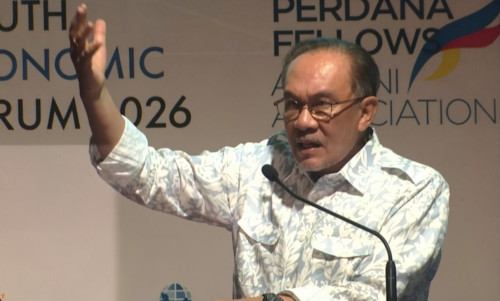
NATIONAL Film Development Corporation chairman Datuk Kamil Othman believes the success of Malaysian films lies in producing exportable content and understanding market demands.
Kamil highlighted the importance of market research and strong publicity when responding to concerns about poor box office performances under the Skim Wajib Tayang (Mandatory Screening Scheme),
“The scheme supports local films, but not all are funded by Finas. Many of those that fail do so due to weak publicity,” he said during the Movie Launching & Contract Signing Ceremony for the Sabah-China Film Collaboration.
“In today’s audiovisual world, advertising is everything. Even burger shops rely on strong publicity—why should films be any different?”
Kamil stressed that filmmakers need to understand audience preferences and market trends better.
“You can’t produce a comedy when everyone prefers horror, or a horror movie when audiences are into romance. Market study is crucial,” he said, adding that the primary responsibility for a film’s success rests with producers.
“Finas and the government provide support, but producers invest their money. They hire the crew and actors. Filmmaking is a business, and producers need to think like businesspeople.”
The Skim Wajib Tayang mandates that local films be shown in cinemas for 14 consecutive days, but poorly performing titles are often relegated to smaller halls due to low turnout.
A recent report revealed that while a handful of local films performed well, 21 titles of 50 films under the scheme failed to cross the RM100,000 collection.
One film, Takafur, made only RM5,778.55.
This highlights significant losses for producers, with the average Malaysian film costing between RM800,000 and RM2 million to produce, the report suggested.
Kamil acknowledged this challenge but urged filmmakers to aim for global markets.
“Creating exportable films is the way forward. A movie that works in Singapore already triples your revenue due to the exchange rate. In Europe, five million euros could mean RM30 million. Why limit yourself to local screenings?”
He said even Hollywood struggles with market dynamics, suggesting that timing and strategy are crucial when making films.
“Some films simply miss the timing. It’s common, but it highlights the importance of aligning production with audience demand,” he said.
Kamil reaffirmed Finas’ commitment to encouraging producers to create films with global appeal.
“It’s not just about meeting local quotas. Filmmaking is about understanding your audience, strategising, and producing films that resonate internationally,” he added. - January 18, 2025.






.jpeg)