LOCAL filmmakers including actors, directors and producers may get some good news soon if a proposal from Persatuan Karyawan Malaysia (Karyawan) is implemented by the Communications and Multimedia Ministry, it said in a statement yesterday.
Karyawan noted that local film and television practitioners have never been paid royalties or "residual" fees for their works shown on television. They are always paid on a "one-off payment" only and are not eligible to receive any payment after that even if their works are used for decades after the original publication.
Some film and television works are screened in foreign countries without any payment to the party who was involved in the production.
Of particular note is the works and films of the late Tan Sri P Ramlee which were published over 50 years ago. Most of these works have exceeded the copyright limit and have become works in the "public domain" after 50 years.
Yet, P Ramlee and his family did not get any payment after the films were released more than 50 years ago. He only got his original payment for his role in directing and acting in the films, which was even then a meagre amount.
The same fate befell P Ramlee's contemporaries such as Datuk Sarimah Ahmad. She starred in several films directed by P Ramlee and did not receive any extra payment for her works which were shown for decades on television.
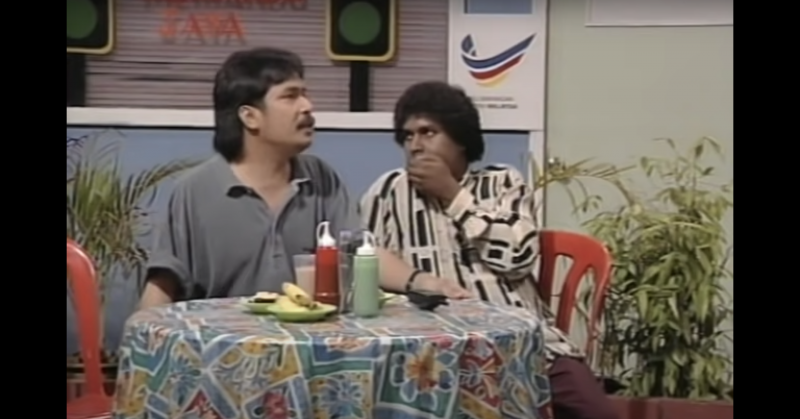
Karyawan gave another example of a show that has aired for decades. The comedy series 'Pi Mai Pi Mai Tang Tu' was aired more than 30 years after the original aired on a private television station without any payment to the producer or actors involved in the production.
"It's time something was done to ensure that if a work in the form of a film or production for a television broadcast was shown for many years, the people involved in the production should be given extra compensation compared to a work that was only shown once or twice on television," said Karyawan president Datuk Freddie Fernandez.
"Apart from the 'residual' payments, we also need to make an effort to collect royalties when a visual work or film is shown or shown in public places for public viewings, such as restaurants, hotels and other public places," said Fernandez.
"This has been successfully done for music by several CMOs (collective management organisations) who represent "rights holders" in the music industry. But, for visual content, it has never been done.
"Indeed, the screening of films in public places is not as much as music but there are also screenings of films and television shows in public places where it can be used as a source to engage in royalty collections representing all filmmakers," he said.
"Karyawan has proposed to the Minister of Communications and Multimedia Tan Sri Annuar Musa to introduce a new rule where all stations are not encouraged to engage in an 'outright buyout' of copyright of a work or show for broadcast purposes.
"Alternatively what is paid by the stations should be classified as 'broadcast rights' only where it must be agreed that the station will broadcast the material, for example, twice in two years only and after the first two years, any repeat broadcasts will be subject to extra payments.
“This fee will be divided equally between the three groups, the first is the producer who holds the rights to the film. The second party would be the scriptwriter and director who together have produced the storyline and screenplay while the third party are the main and supporting cast of actors who have dialogue in the film,” said Fernandez.
“This royalty collection and management organization may be established as a limited company where all producers, directors, scriptwriters and actors will be asked to register themselves and their works for royalty and residual payments.
"After getting the mandate from all the filmmakers, the collections can be monitored and distributions made according to usage.
"Finas can be tasked to ensure that the operation of this body is done professionally and under the laws and conditions set in the Copyright Act," he said.
Fernandez, who founded MACP, a royalty collection body for composers and lyricists in 1989, is prepared to assist in setting up this new body that will represent filmmakers whose works are screened in public and track the use of films in television for "residual" payments. – The Vibes, October 27, 2021