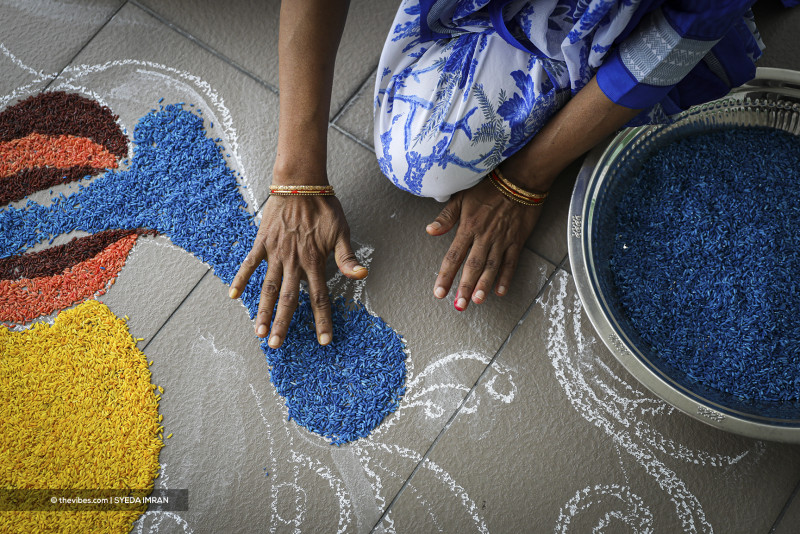

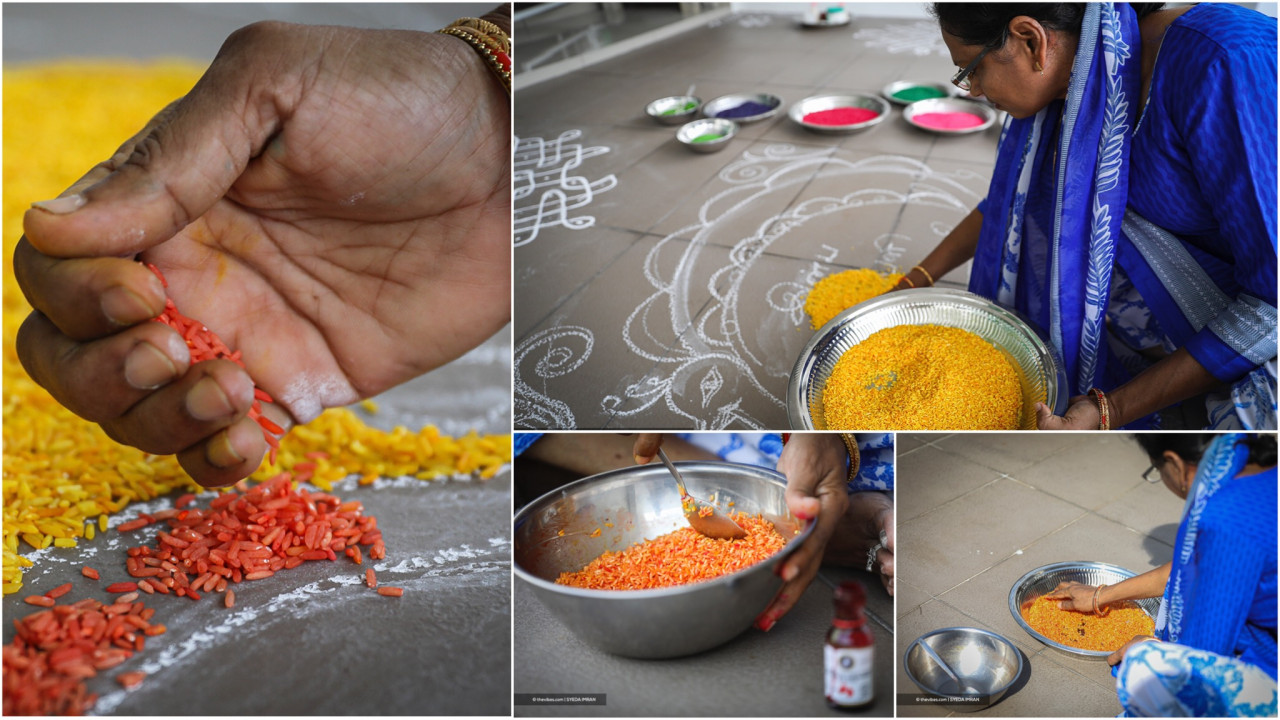
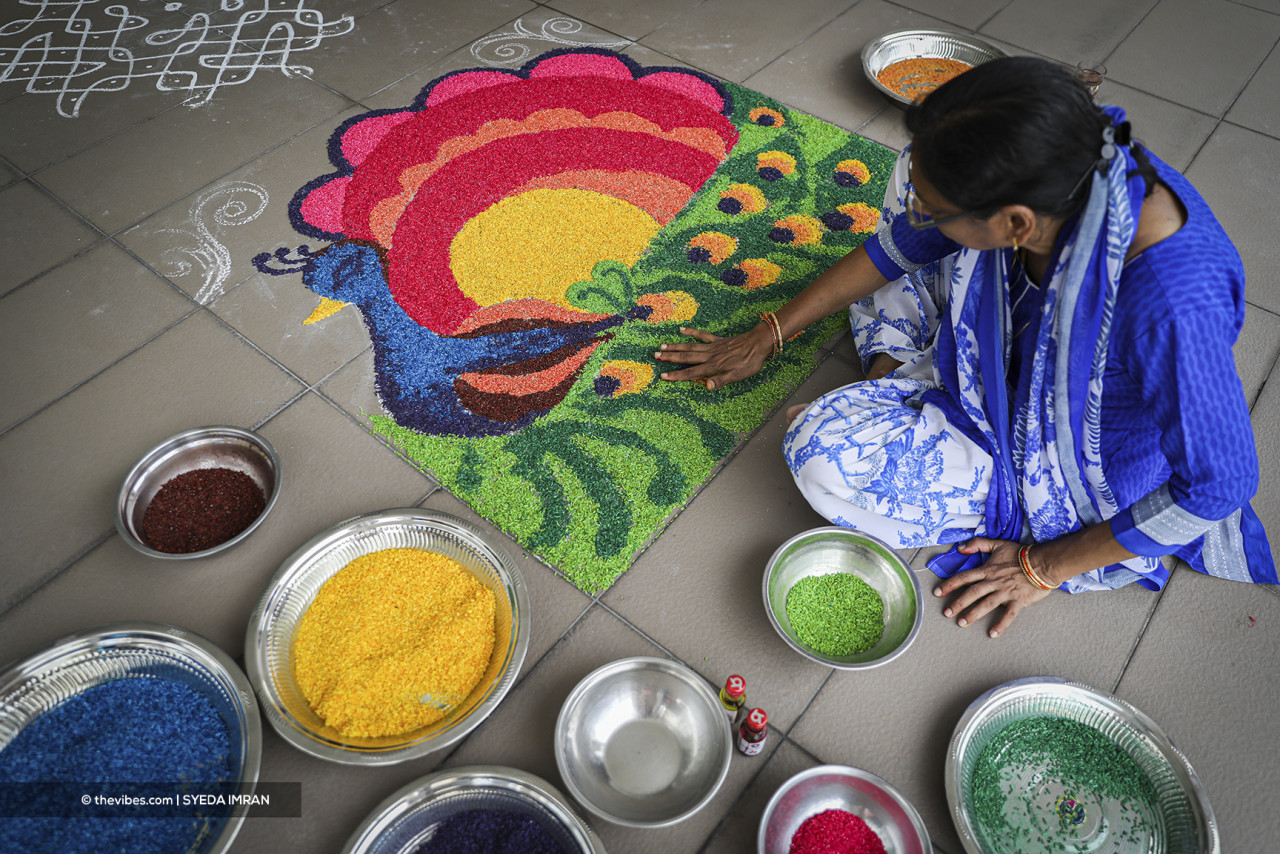
RUSHING to capture the colourful rangoli being created live before the gloomy weather catches up on us, we arrived at a home in Simpang Pulai, Perak, earlier this week, where 55-year-old kolam artist Dewi Ramasamy could be found.
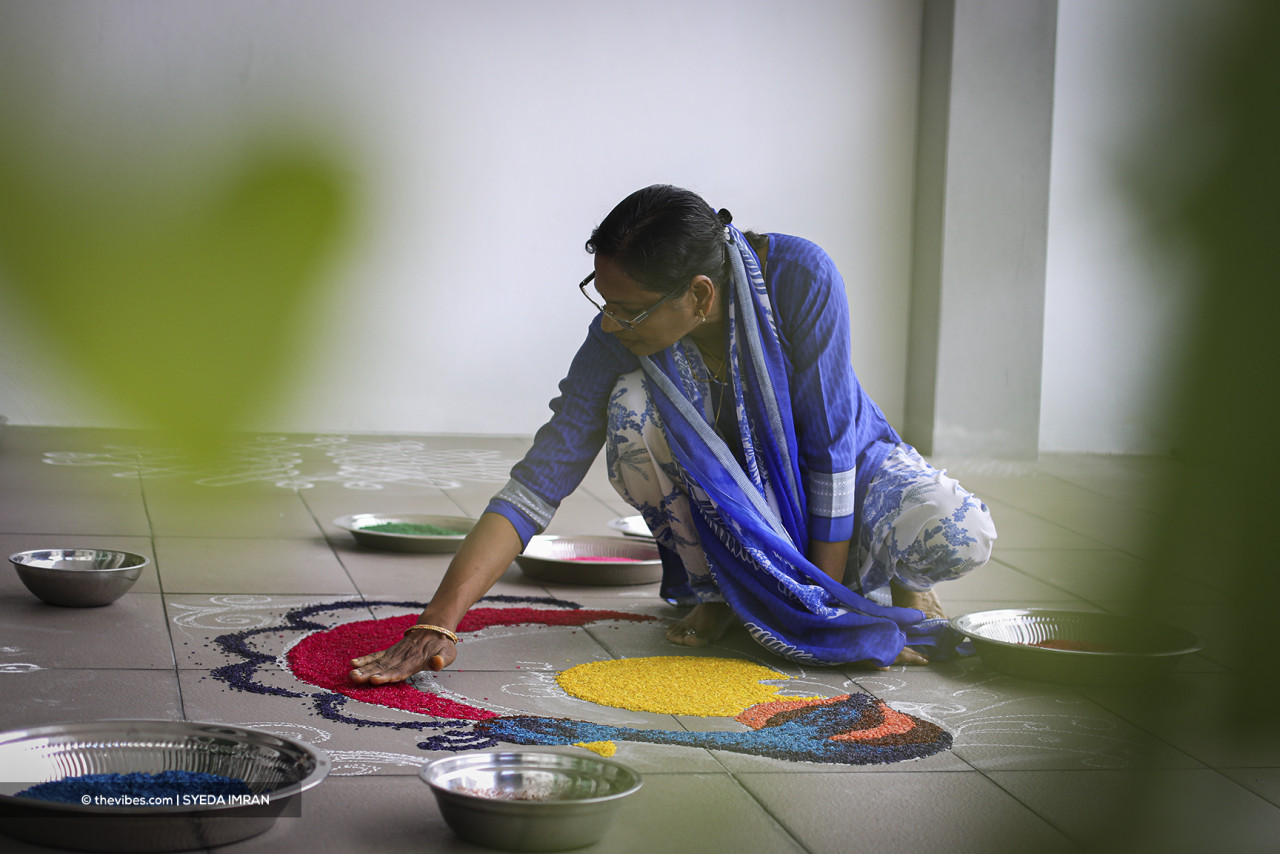
She had eagerly anticipated the team’s arrival ahead of the Deepavali celebration. This enthusiasm of sharing her love for the art form could be seen with the various symmetrical kolam patterns prepared in advance to welcome our visit.
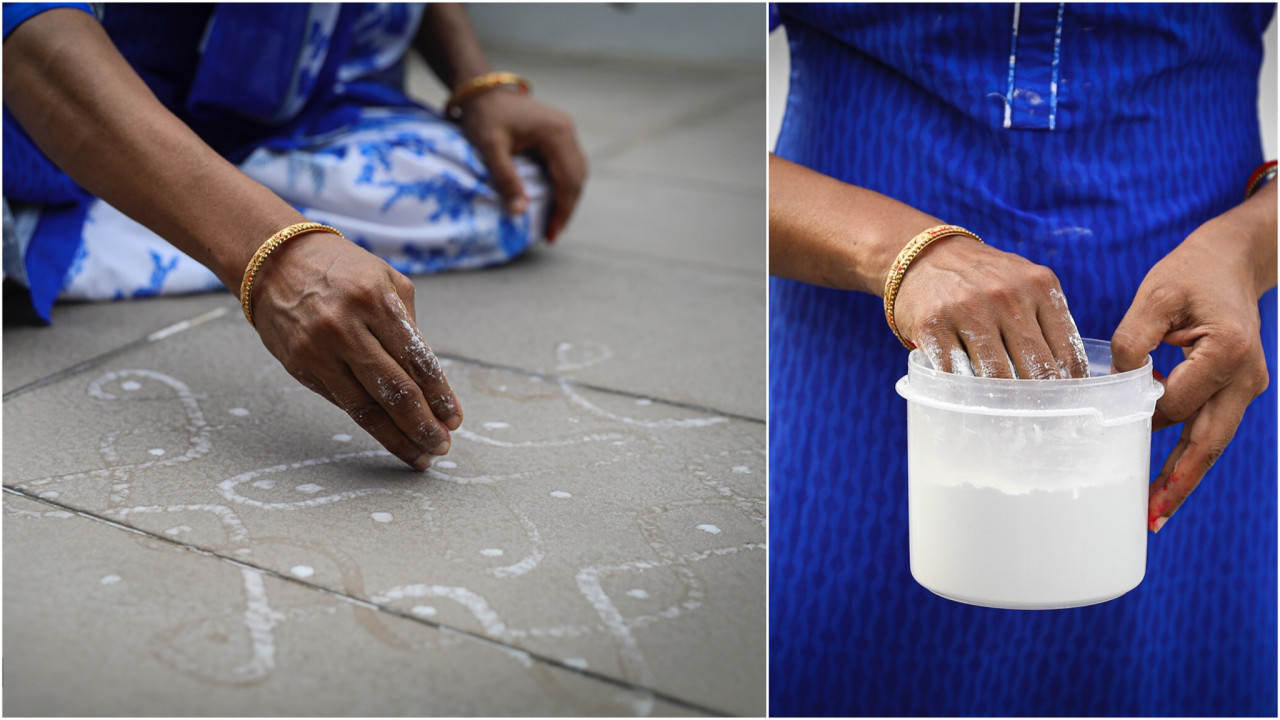
“These are the traditional kinds that most Hindu households would make at home,” said Dewi pointing out to the white dotted kolams.
“On flat surfaces we would combine a mixture of (rice/wheat) flour and water so that the patterns can stick better, while maintaining the powder form on grainy/textured surfaces for the same purpose,” she added.
For those who are intrigued, the kolam is a kind of string or knot pattern seen primarily in the Tamil Nadu state of south India.
Boasting a very attractive system of pattern formation, Kolam patterns can range from simple to complicated depending on the drawing rules.
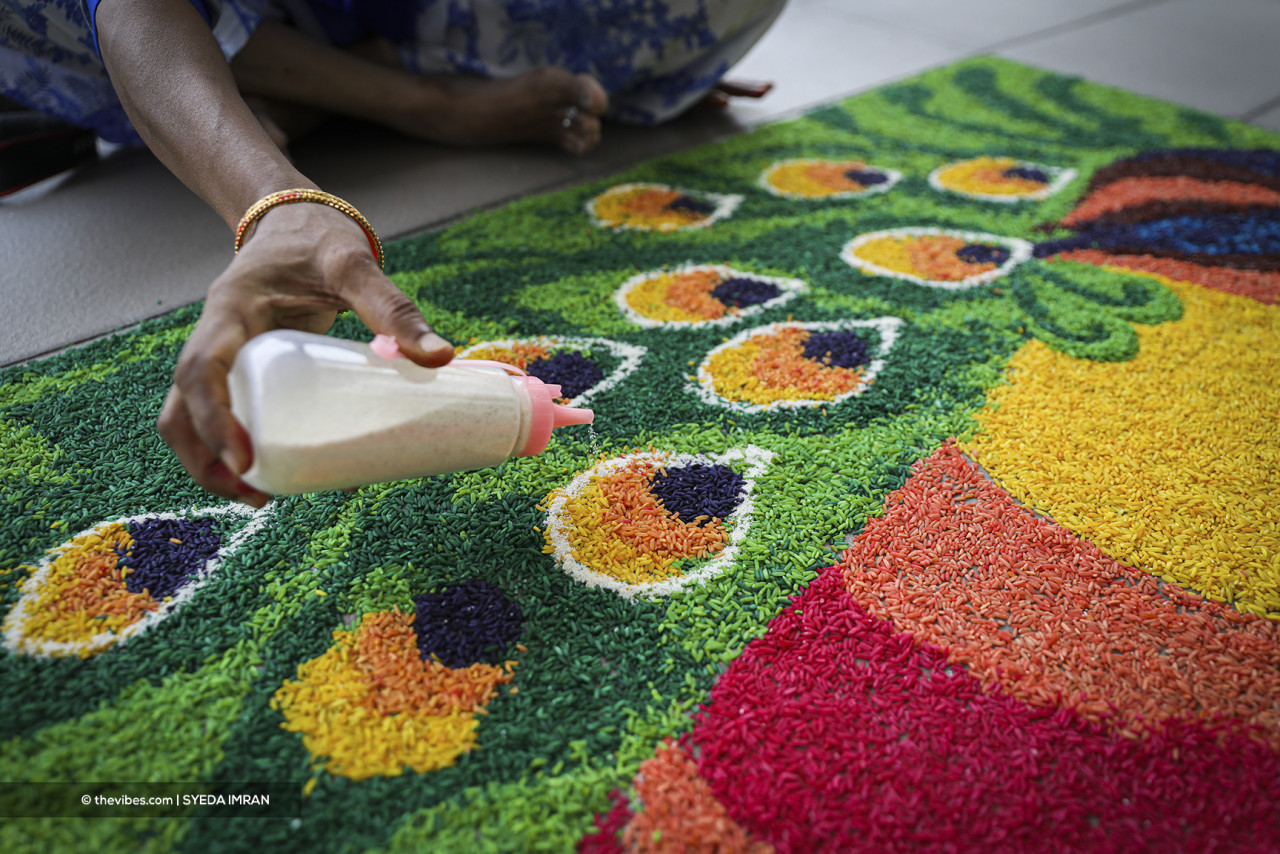
“The colourful kolam that you will see me making today is more widely known as ‘Rangoli’, and it is introduced relatively new. Only about 30-40 years ago,” expressed Dewi.
“Today, you can see it at many Hindu festivals and celebrations.
“The only time where you won’t see it is during a sad/sombre occasion,” added the kolam artist.
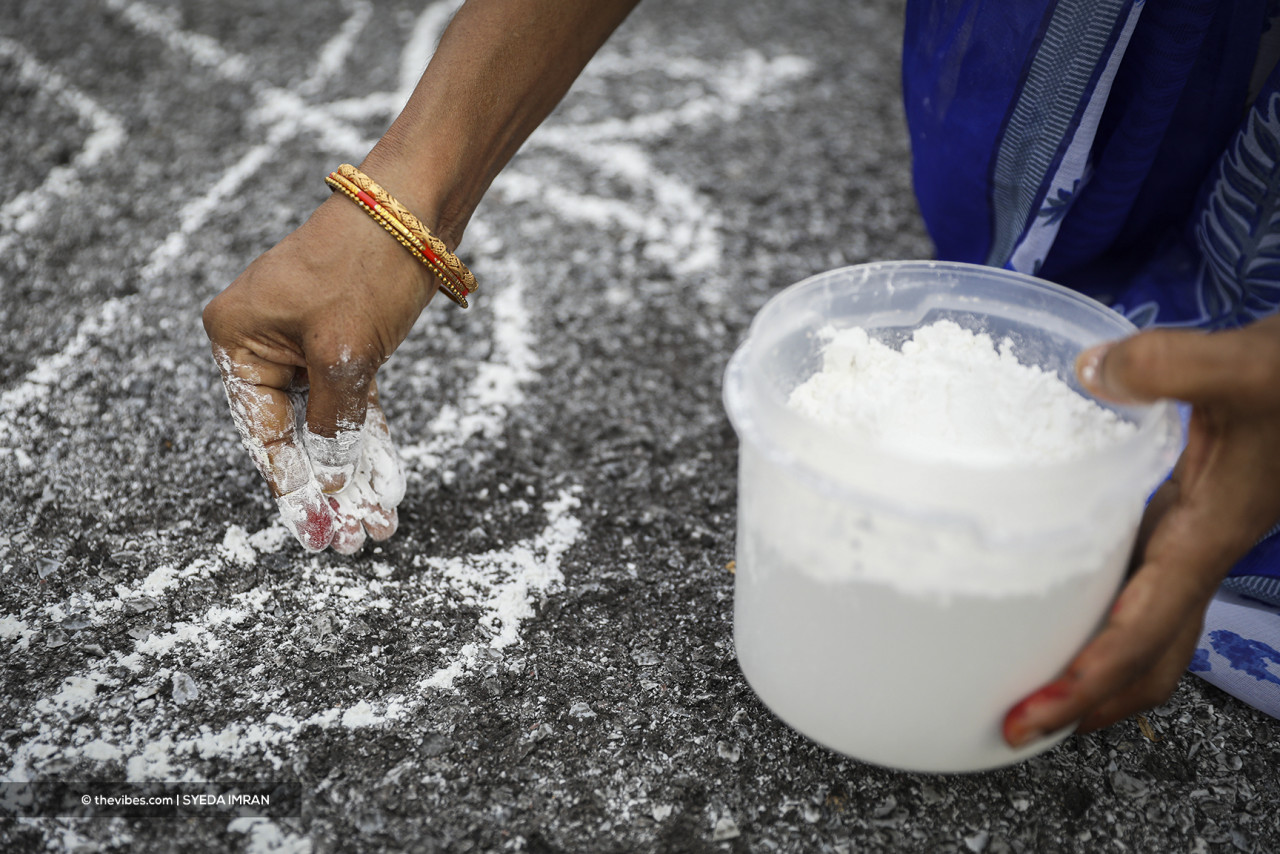
Whatever style each kolams represents, the symbolic meaning of this art form links it to the goddess Lakshmi, whom the kolam maker (primarily women), invite to depart her heavenly abode and rest momentarily at their thresholds reflected in the flour diagram.
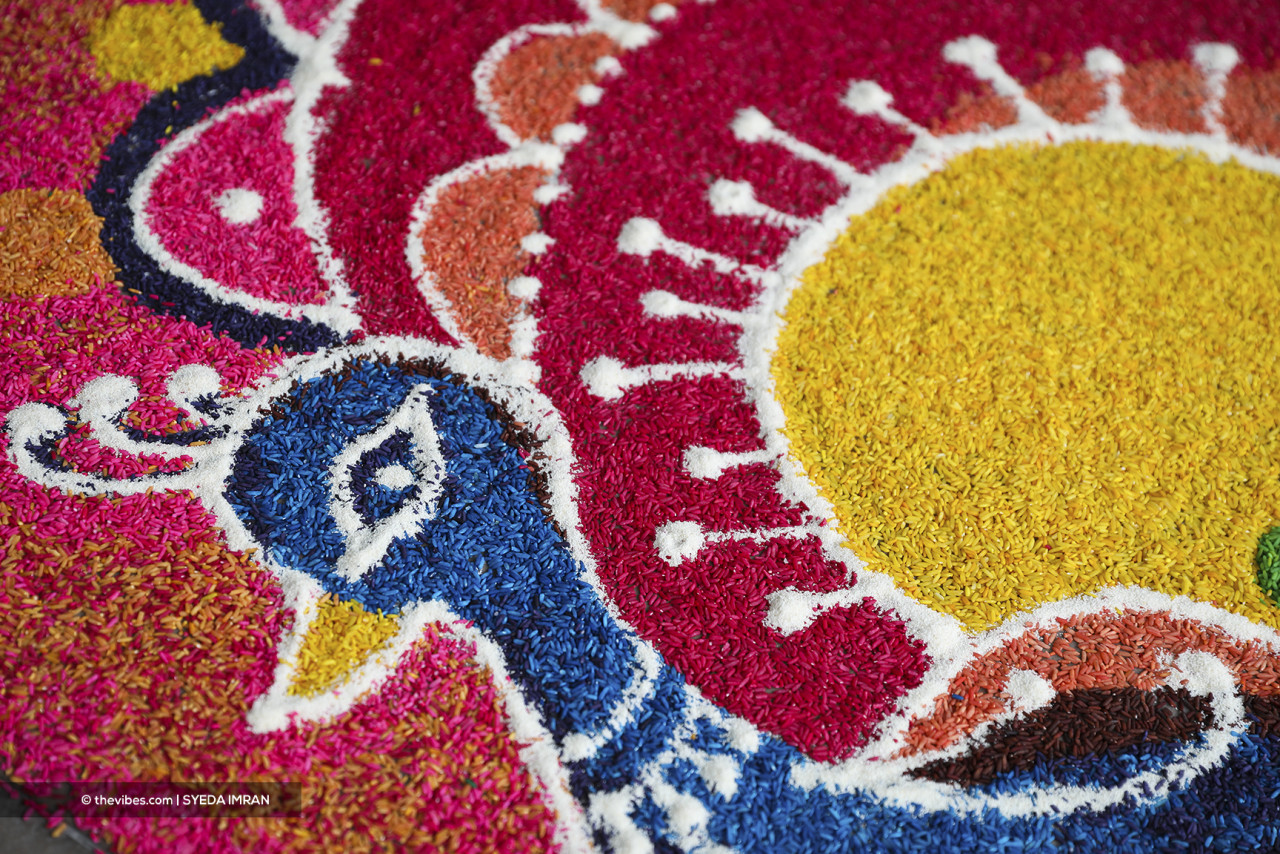
It is through this that the goddess brings good fortune, enveloping the home in an auspicious sphere of protection.
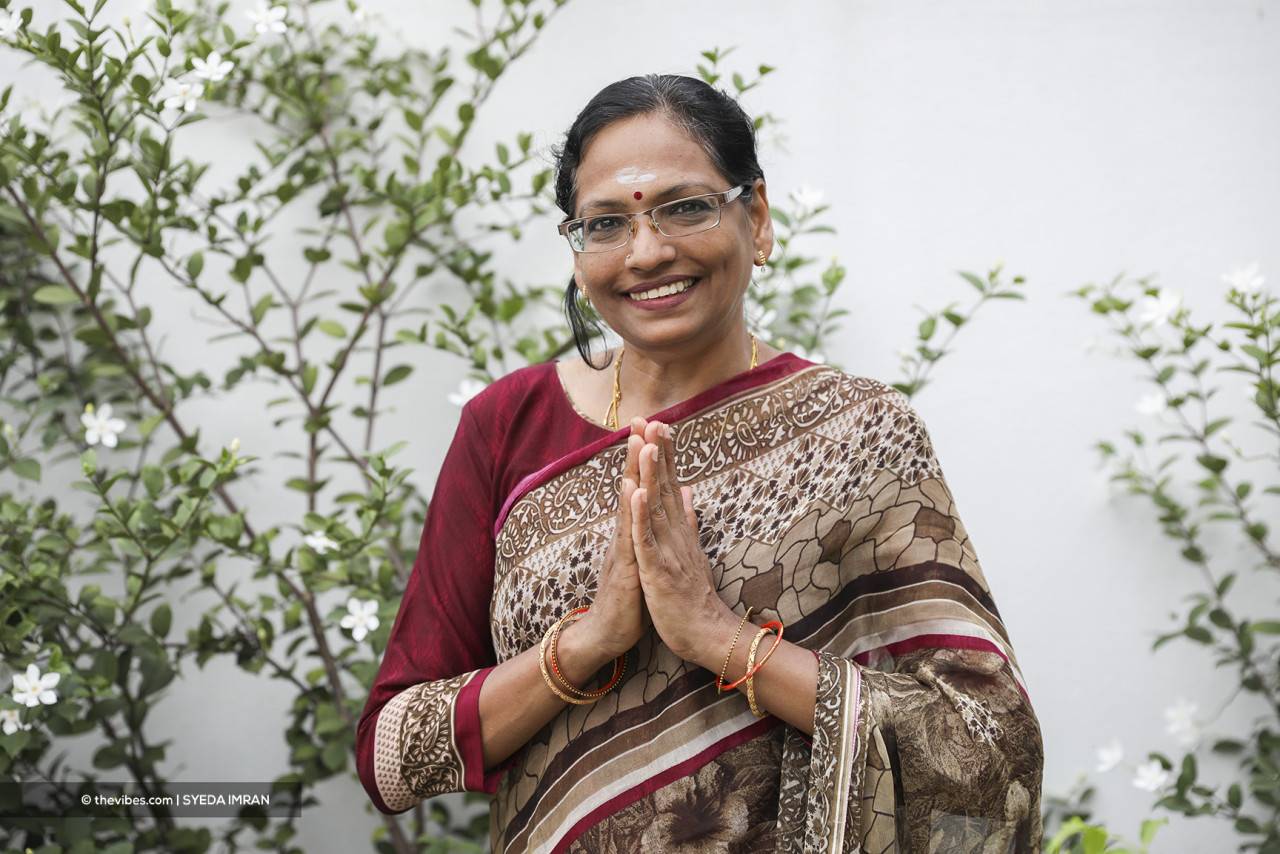
Considered to provide nourishment even to the smallest of insects throughout the day, devotees also see the art as an extension of their devotion. – The Vibes, November 4, 2021
More in the video interview below…