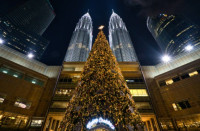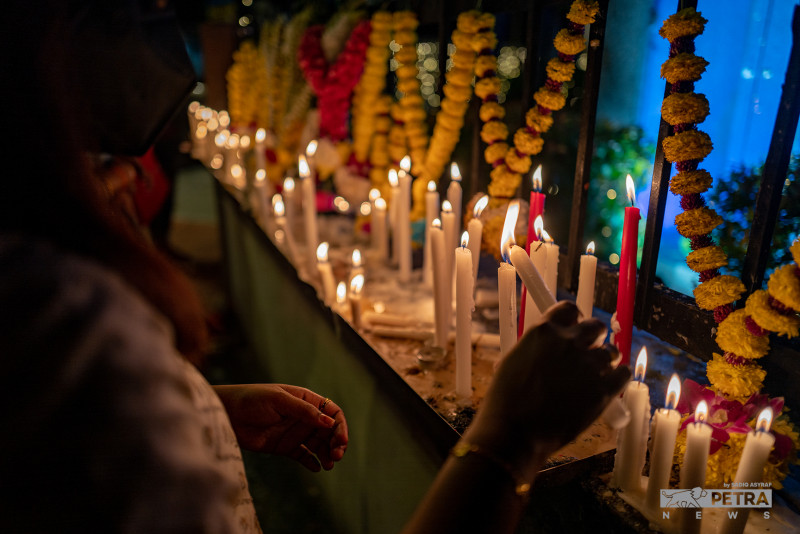

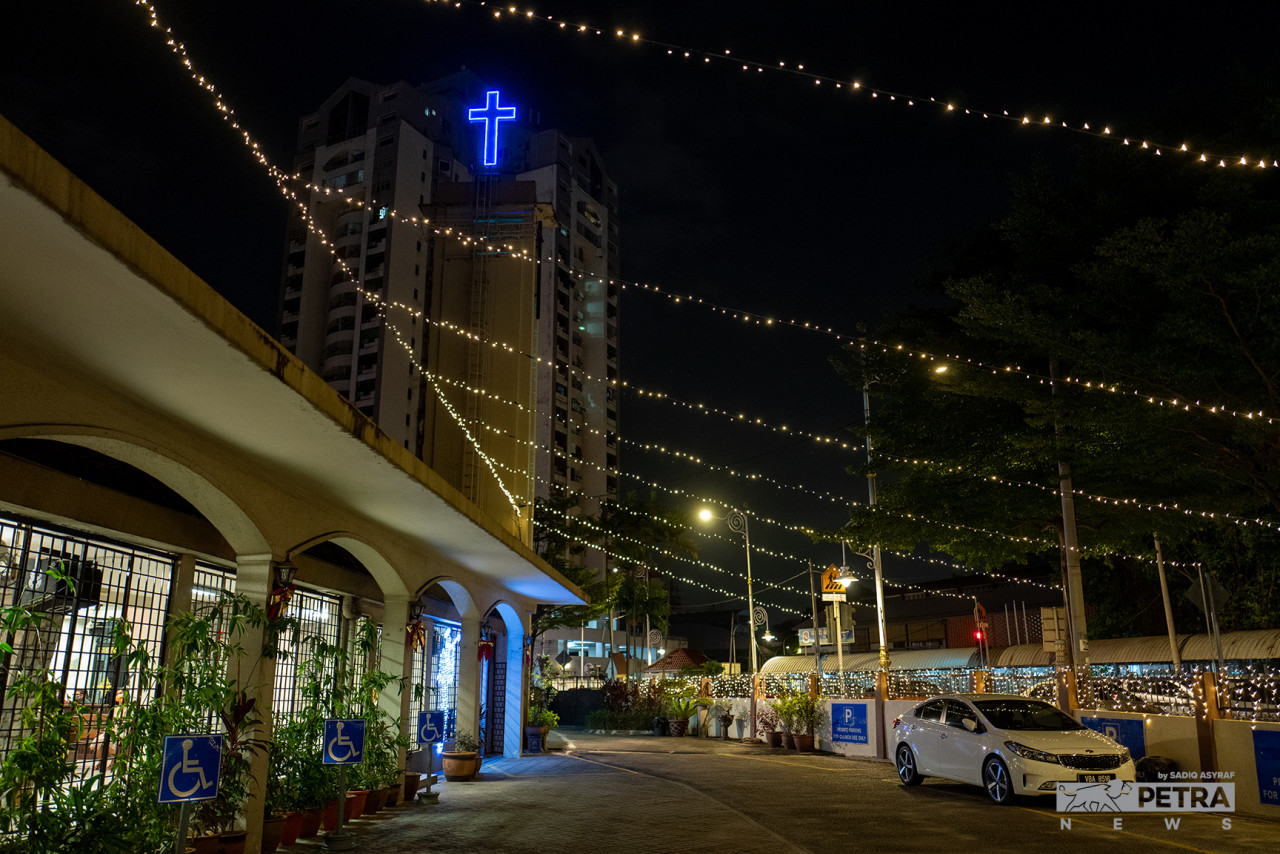
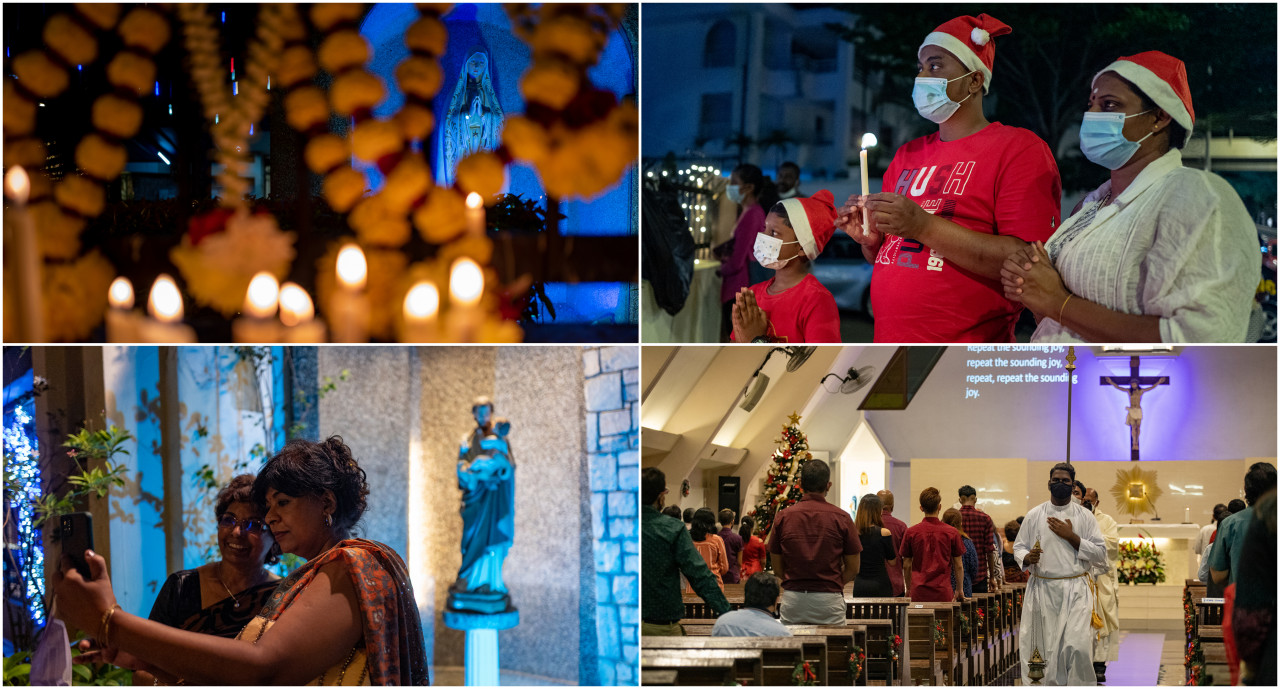
ECHOING the ray of Christmas vividly to any passer-by, the halls of the Catholic Church of Our Lady Fatima were illuminated with harmonious hymns on the eve of the weekend celebration.
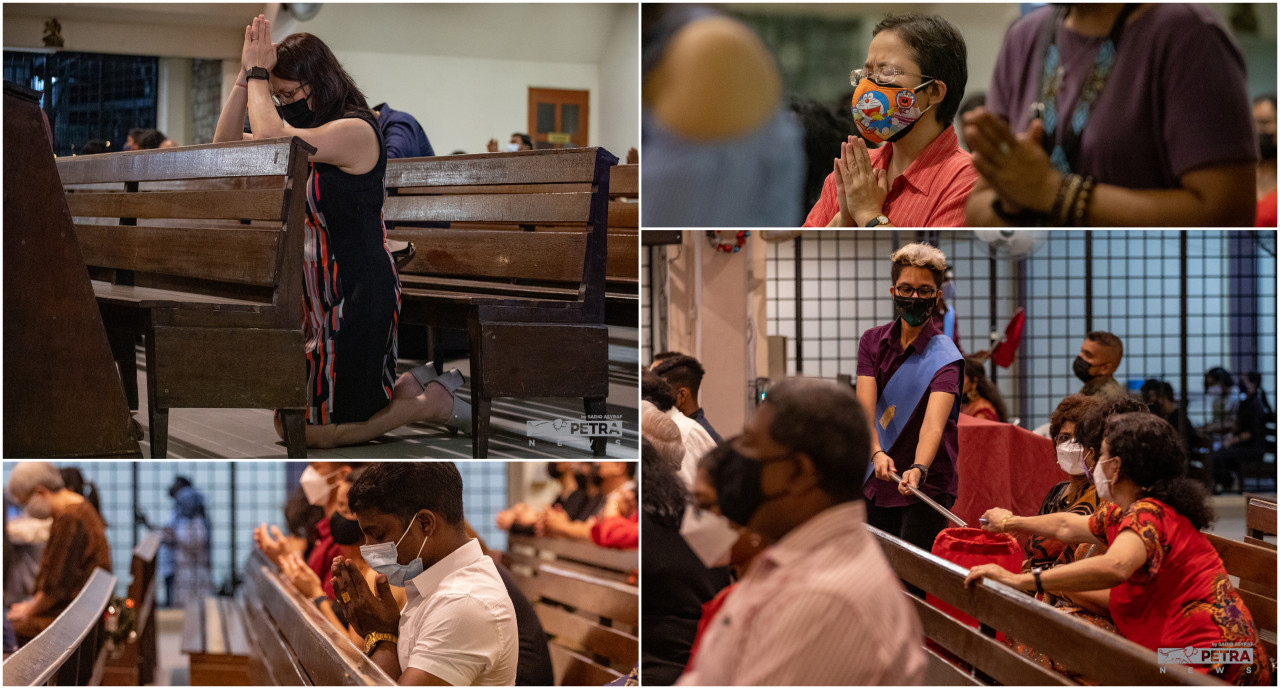
The modern yet quaint church sitting on the stretch of Jalan Sultan Abdul Samad held its in-person vigil, with strict SOP intact, to commemorate the birth of Jesus Christ.
Days prior, the writer had explored Brickfields to observe how the faithful were preparing for the merriment. This was of course during a time when the nation struggled to grasp the devastation of the recent deadly flood, where its toll knew no boundaries.
The Catholic Church of Our Lady Fatima was not singled out from the impact of last weekend’s heavy downpour either.
The initial intention was to discover the history behind the house(s) of worship, the church in question was the start in learning about the remaining other religious institutions that could be found in such a historical area.
Although the decades-old church reopened soon after being hit by rising waters, the work has been ongoing to repair and recover the loss caused by floodwaters where the extent of the damage is still “…being factored in”.
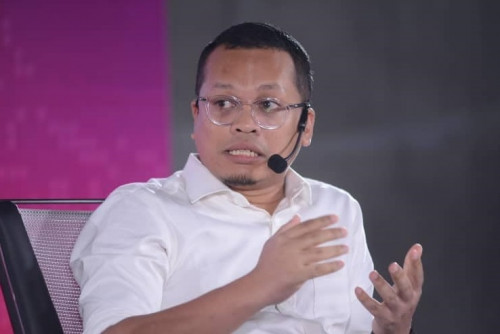
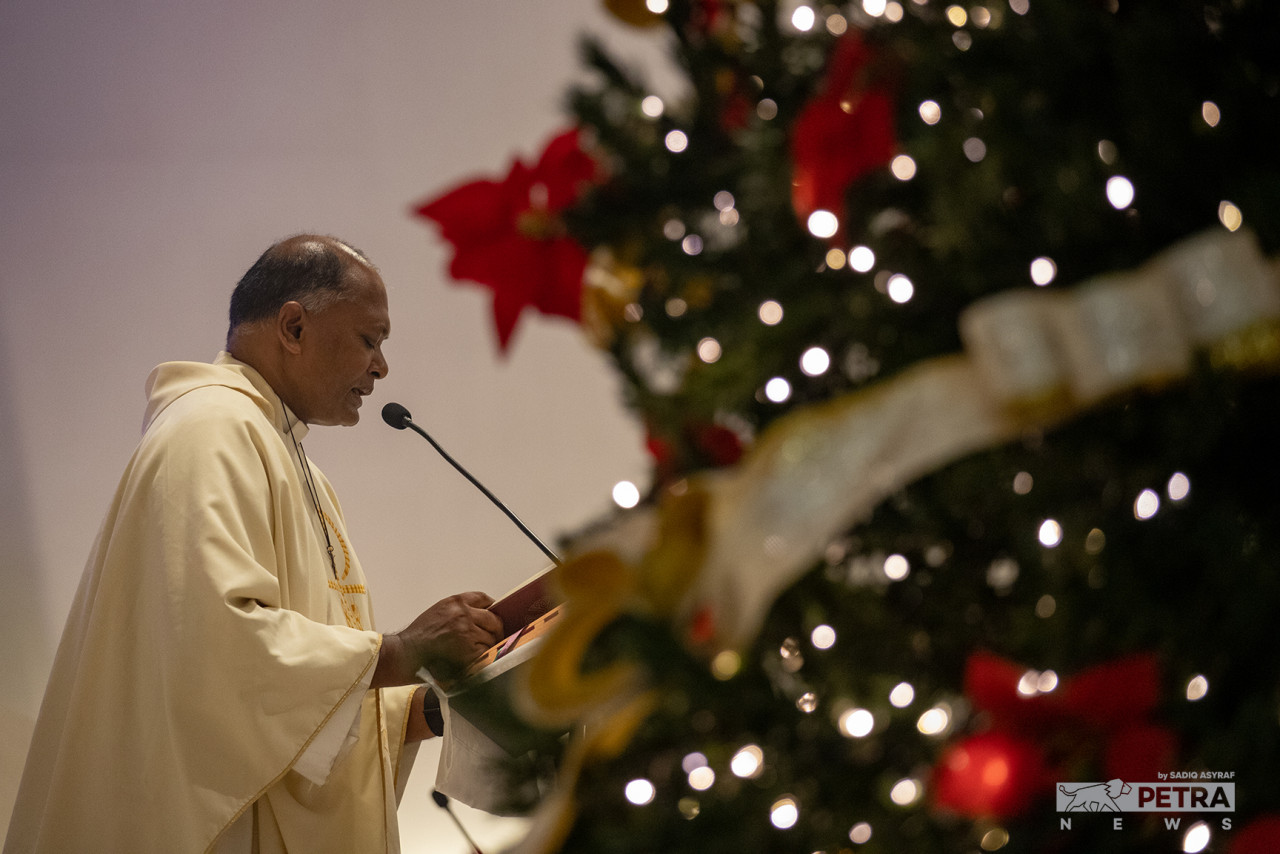
“Our cleanup to accommodate the vigil tonight was done by Wednesday, but I would say that the cost [damage] has gone up to RM30,000 more or less,” shared Reverend Father Dr Clarence Devadass.
Although the church was hectic at its preparation due to unforeseen circumstances, it served as an opportunity to think about how Christmas was observed in the past and perhaps a way to adjust how devotees can look towards the coming year.
Sentiments of light and goodwill
“The Christmas message here is to tell people to hang in there,” highlighted the reverend.
“During this pandemic, a lot of people have to rebuild their lives. Everybody is affected by it on some levels, and it is not just limited to having to deal with financial constraints.
“Emotional stresses, challenges with access (to education for instance where kids are finding it hard to cope with online learning), even relationships are put to the test – these are just some of the examples.
“It’s really about finding meaning back in life as we slowly get out of this pandemic. We are not going to go back to where we were before, but finding purpose during trying times is the unifying message,” he added.
Noting that during a national crisis, people, in general, shouldn't be looking at race or religion, “...especially when witnessing fellow human beings suffering.
“For the church, we are trying to see where we can encourage hope, and that we just need to support one another because no one has to suffer alone.”
Dr Devadass said that Malaysians, in general, are already generous, but recent events when responding to the floods heightened this quality.
“With whatever said and done about the country, and the polarisation that is happening, offering help without our faith being made a question is the way forward.”
From past to present
Brickfields was an area of great industrial importance. It was seen as a source of brick-clay during a time in our city’s history where Yap Ah Loy began to prospect for more resources to fulfil the gazette of Frank Swettenham. He was said to have bought a sprawling piece of real estate that marked the spur in rebuilding Kuala Lumpur.
It’s quite a challenge to look at the suburb that we know today as the immediate backwater of the city seeing the immense development to date. Brickfields served as a gateway then – as goods needed by the inland population had to pass through this area – as well as now with it being home to KL Sentral and seen as a top central business district and commute in the country.
Brickfields is indeed one of the pioneer settlements in Kuala Lumpur. What is more interesting apart from being interspersed with old colonial structures is that the area is also tagged as a ‘Divine Location’ as many religious institutions can be found present up to this day.
Adding to the colourful history of the area, the establishment of the Church of Our Lady Fatima (1963) dated more than half a century. It caters mainly to the Catholic community living in Brickfields, Bangsar, Pantai Dalam and Old Klang Road. It is considered to be the main anchor to the prosperity of the community in the areas mentioned.
The growth of the Catholic faith prospered in parallel with the British influence in Kuala Lumpur, where it has existed for centuries. Tamil-speaking Catholics lived harmoniously with all the developments and struggles since 1886 where they also worked as labourers in the plantation sector, mid-level administrators and as supporting staff in both government and private sectors.
Adding on to the significance of how Brickfields have to also be central for many devotees of different faiths, Dr Devadass shared that the individual houses of worship, from mosques to temples and churches, are in great communication with one another.
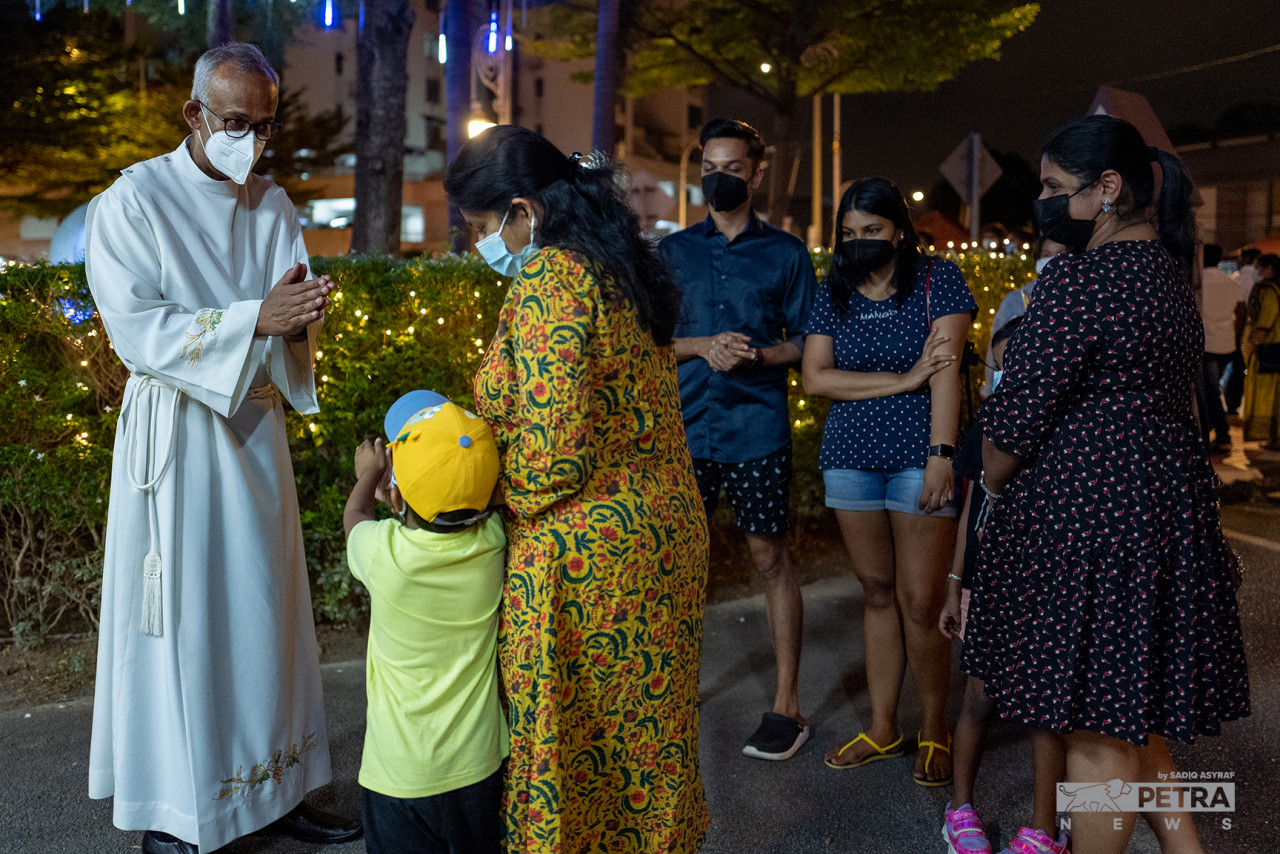
“We even have a WhatsApp group to support each other where we can, especially when faced with a short supply of resources. Ie. food or aid,” he noted, adding that the sense of community is strong.
According to the reverend, compassion goes a long way and that apathy is a great deterrent from allowing oneself to understand humankind.
“When we first experienced the pandemic, I personally shared with members of the church to not turn down anyone (even a child for that matter) who is hungry,” said the reverend.
“Being a developed country as we are, I believe no one should say that they don't have food on the table,” he added. – The Vibes, December 25, 2021