THE Baba-Nyonya (Straits-born Chinese) are Chinese immigrants who came to Malaya between the 15th and 17th centuries.
Most of them settled down in Melaka, Singapore, and Penang. As part of the migration, they adopted the Malay culture and blended into the Peranakan culture, including the love of jewellery.
Peranakan jewellery is also a symbol of status in the community.
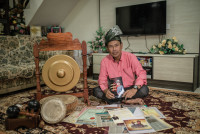
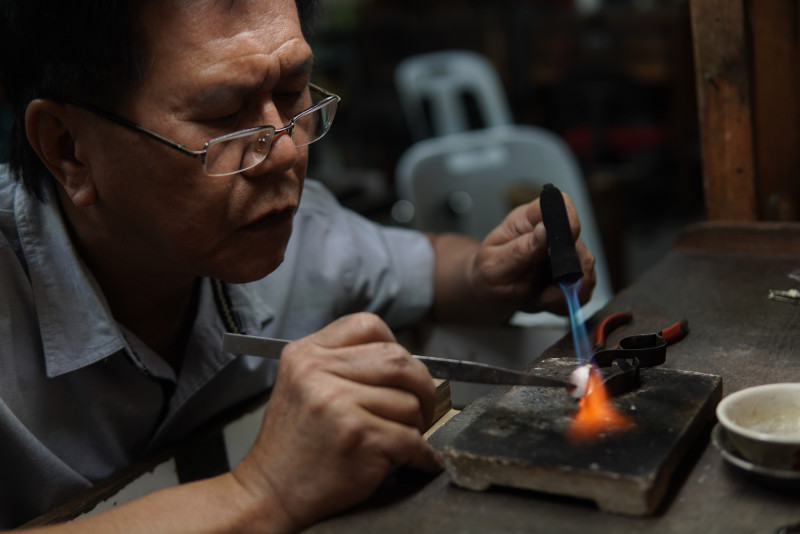
Chin Kok Chee started his apprenticeship in jewellery making at the age of 18. The craft requires special skills in working with your hands – particularly learning techniques of cutting and using a flame to shape the jewellery.
Chin was born in Penang, and went to Singapore to seek his fortune as a teenager. It was there he met his sifu, Wong Kong, who taught him the craft.
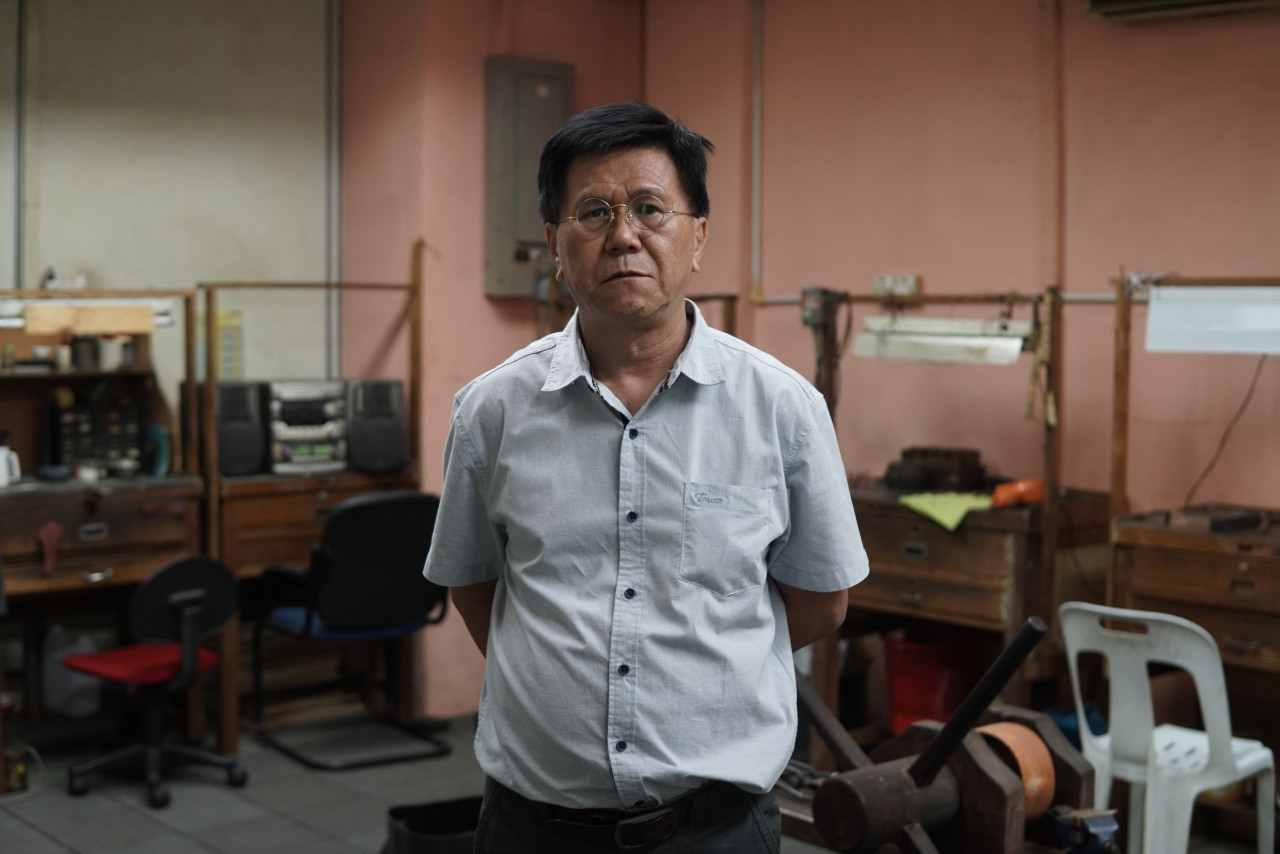
“My sifu’s name is Mr Wong,” said Chin. “When I woke up in the morning, I had to sweep the floor and boil the water for everybody.
"Then only I would sit at the table, where he would give me an item, and ask me to make a cut here or file it there. Once the shape had come out satisfactorily, I had to show it to him. But if he said, ‘not quite nice’, I had to do it again until he was satisfied."
Many years of training and a deep passion for the craft contributed to making Chin the master craftsman of Peranakan jewellery that he is today.
Peranakan jewellery encompasses Nyonya style kerongsang (brooch), as well as earrings, necklaces, belts and hairpins. In the early days, they used intan as the main gemstone for Peranakan jewellery.
Intan is Peranakan style rose hand-cut diamonds, a rose cut technique delicate hand cleaved with a few uneven facets. They use flowers, leaves, and phoenixes, distinct from other jewellery designs.

Traditionally they used gold, intan, and silver as Baba Nyonyas were affluent in those early days.
After spending 12 years in Singapore, Chin came back to Malaysia and applied for a job in a jewellery shop, where he worked for three years.
"To become a skilled worker, you need to sit down and work everyday. After 10 years, 20 years, then you become an expert. It’s not something that you can do in one or two days. You have to work on the basics first. Like learning kung-fu,” he said.
He earned a reputation as an accomplished craftsman of handmade Peranakan jewellery. In the early 1990s he met Thum Koh Teik, FGA certified gemologist, and they developed a long friendship.
In 1997 during the global economic crisis, Thum proposed the idea to start manufacturing jewellery. Eventually, Chin joined Thum, and now runs Lybragold Jewellery with Thum’s son Thum Fu Tsing, also known as Leon.
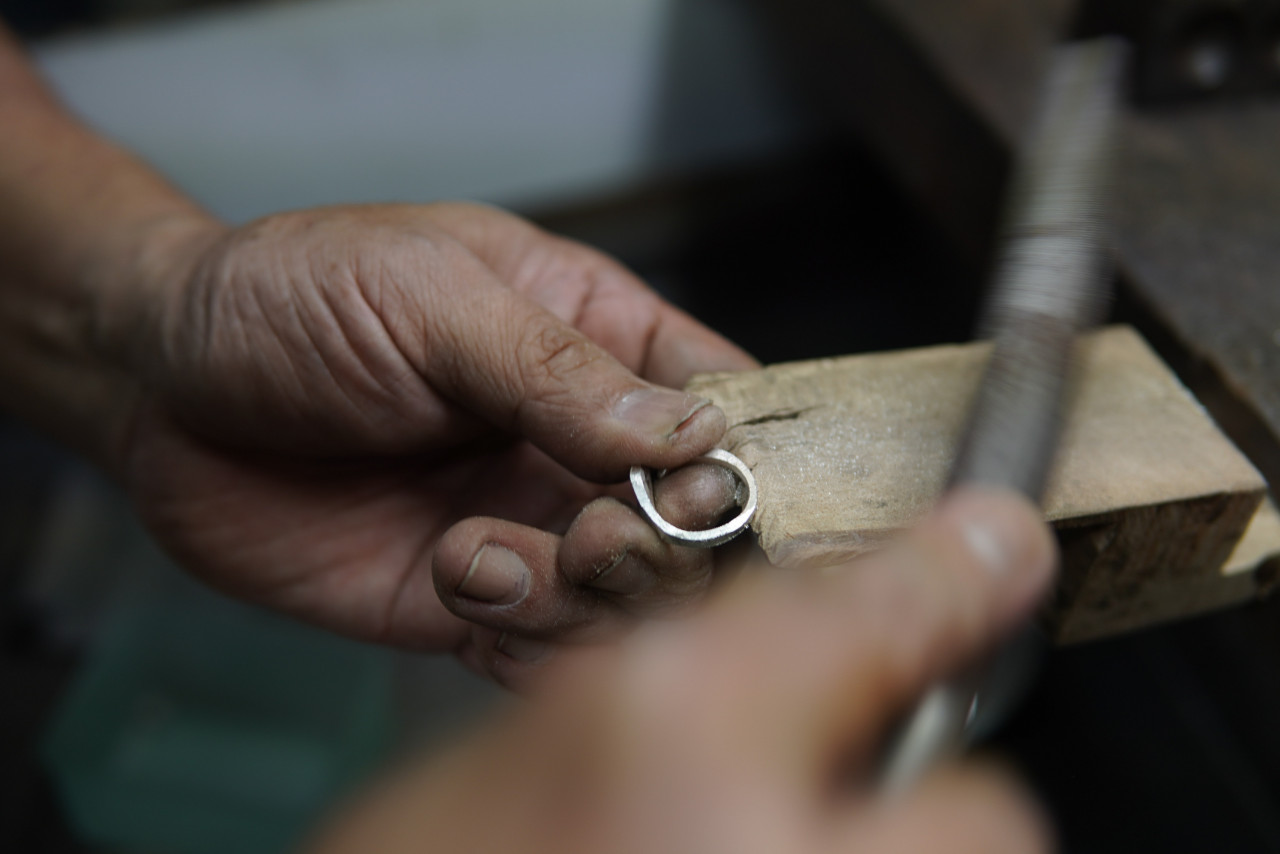
Lybragold Jewellery has been championing handmade Peranakan jewellery.
It is the old guard like Chin who keeps the art alive in the face of indifference from the youth.
“I hope there will be more young people interested in this line of work,” Chin said. “If not, it will disappear. In these kinds of craft practices, you need to have a lot of patience. You have to sit there for eight hours. That’s why young people don’t want to learn.
"In the modern world, everyone wants money and high salaries. They’re not interested in this. The first thing they ask when they come in is, ‘how much can you pay?’ Then they don’t come back.”
Chin still hopes to teach young people the craft. “I don’t want the skills and tradition to disappear.” – The Vibes, January 29, 2023
Adiguru Cendana is a community arts programme that aims to sustain the development and ensure continuity of Malaysian traditional art forms, implemented by Cendana (Cultural Economy Development Agency) in collaboration with cultural organisation Pusaka.
A total of 34 masters of traditional arts throughout the country have received Adiguru Cendana grants.