BANGI – After being heavily chastised over its earlier restrictions on cultural attire during its convocation ceremony, Universiti Kebangsaan Malaysia (UKM) seems to have opened up by generally specifying “national attire” (baju kebangsaan) as permitted during the event.
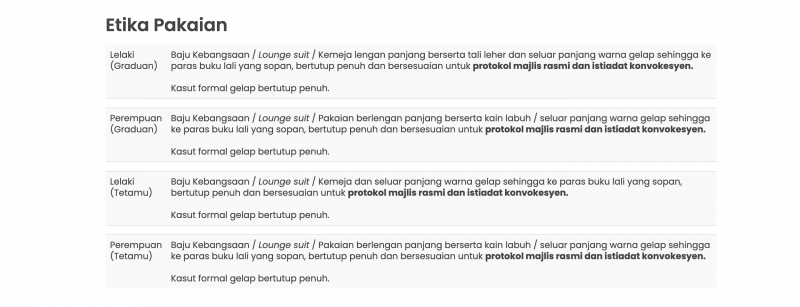
The page on the dress code for the occasion in UKM’s web portal has been updated with a full text-only explanation, and now no longer contains illustrations.
However, the page does not elaborate on what “national attire” includes.
The pictures removed from the page include those of traditional Chinese and Indian outfits, specifically the cheongsam and saree.
The university now provides leniency on what attendees wish to wear, as long as their dressing adheres to the formal protocols.
The text explains that both graduates and their guests can don “national attire” or lounge suits.
This comes after the university’s previous dress code specification went viral online and sparked criticism as well as debate among netizens.
The earlier illustration in the portal showed the cheongsam and saree as being disallowed at the formal event.
Male graduates can alternatively wear a long-sleeve shirt with a necktie and dark long pants that cover the ankles.
Male guests are allowed to wear a dark shirt and long pants, implying that they can come in short sleeves. They do not have to wear neckties.
Female graduates and guests who do not dress in “national attire” or lounge suits are required to wear long-sleeve, loose-fitting dresses. If they choose to wear pants, it must be dark and reach down to the ankles.
Everyone is required to wear formal dark shoes that fully cover the feet (“bertutup penuh”).
Following the uproar yesterday, the webpage on the dress code was cleared with only a simple note that it was being “updated”.
The dress code has caught the attention of many Malaysians. A Twitter user known as Anne James took to the social media platform to criticise the university, saying that as an educational institution, UKM should not have “supremacist” policies – The Vibes, October 31, 2022