FROM the way we experience touch, to how we meet people, date and love, 2020 has been a strange kind of year for our private lives. But what can we take away, what will remain as we head into 2021?
Who better to ask than François Kraus, head of the political and current affairs service at the French market research firm Ifop, who carried out several surveys on the sex lives and love lives of French people in the era of Covid.
Love and the forced march to digitalisation
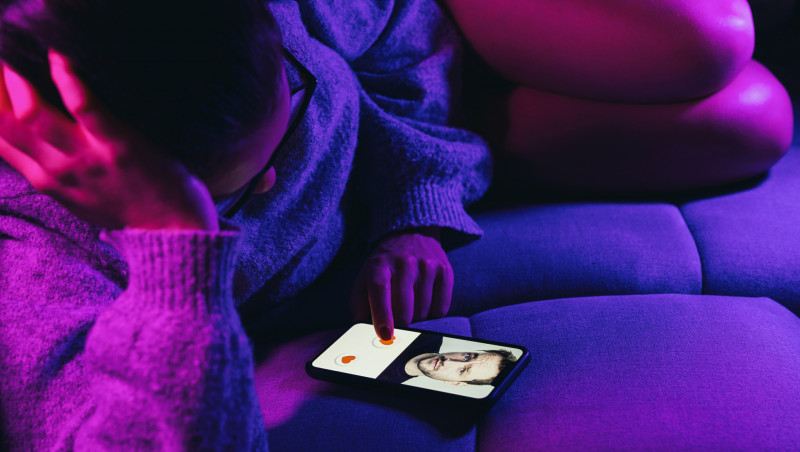
"The Covid crisis accelerated the digitalisation of the French economy, of professional activities, of shopping – but also the spheres of friendship, family and sex. Closing places where people socialise with festive or sexual dimensions – such as nightclubs, bars – has led to a sort of privatisation of the ways of meeting people. In the survey we just carried out for Facebook (1), it seems that websites have become the top way of meeting people in France in 2020.
"The trend towards digitalisation was already there, but this wasn't the case before, unlike in the USA. Major crises experienced by a society always leave something behind, and Covid will likely leave its mark, because it allowed all these tools, these dating apps, to pass a new milestone."
Laptop, smartphone in my hand, who's the fairest in the land?
"There has always been a significant proportion of people using dating sites for things other than real-world dating. In 2015, two-thirds of French users of dating sites said that they had already had conversations with someone without seeking to meet them in person. And the figures from recent studies aren't so different: 39% of people polled had looked for a friend to chat to without seeking to take things further, according to our study for Facebook (1).
"We observed several profiles: young women, particularly, who use dating sites to learn the 'process of seduction' [testing it out] on people they're interested in, without going any further, all in the interest of learning; women who just want to be found attractive, because we know that they endure strong pressure about [their] physical appearance, which can lead them to lose confidence in themselves.
"Sites allow them to get through a time like lockdown all the while knowing that people still find them attractive, without that going any further. Moreover, people who are in couples also got an ego boost from feeling attractive to others, while within their relationship, they don't feel that anymore."
How Covid-19 fueled break-ups and sexual exclusion
"Between the two periods of lockdown, we observed that, on average, 5% of people were no longer with the same partner. For lots of couples, lockdown was an ordeal that served to purge slightly shaky relationships with partners who weren't very used to seeing each other a lot or having to put up with each other on a daily basis in a confined space.
"In parallel, a study carried out for Pornhub (2) shows that the question of health risks – previously limited to STDs – was a new brake on dating among single people: 40% of single people would refuse to kiss someone for fear of catching covid; 60% of people would refuse to make love to someone who had previously been infected with coronavirus; and 60% would refuse to make love to someone who is at risk of exposure [to the virus] – at work, for example. Covid-19 has become a new factor of sexual exclusion, like we saw with AIDS in the 2000s."
Time for a softer side ...
"As with lots of life's ordeals, lockdown also had some positive effects. And the latest Gleeden (3) survey gives couples something to smile about. During the second lockdown, the lack of privacy was greatly reduced because children were in school, and we were able to move around again.
"In this less stressful context, we nevertheless saw a situation of low moods and generalised depression. And yet, sexual activity restarted, from the perspective of comfort sex, a need for emotional connection more than unbridled, purely physical sex."
From playing the field to playing it safe
"On dating websites, genuine singletons decided to use the period of lockdown to chat extensively with potential partners, even if they knew that – in the short to medium term – they weren't going to be seeing them. Rather than seeing each other very quickly – there is a significant proportion of people who hook up from the first evening, without even bothering with a restaurant – they were able to take advantage of this period to lift that pressure.
"In the summer months of 2020, I thought we would see the summer of love of the Covid generation. Like in 1969, a moment where the build-up of general frustration from two months of lockdown brought about the social acceptability of playing the field with sexual encounters and transgressive experiences. [But] for lots of people, we see that there's actually a trend towards caution.
"There's an aspiration towards monogamy and safe sex. It's much more about looking for a stable partner because the experience of being single during these periods of crisis has been relatively negative. More than ever, the value of the couple is heightened." – ETX Studio, December 23, 2020
(1) "Did lockdown speed up the digitization of dating?" Ifop survey for Facebook Dating, conducted via phone and self-reported online questionnaire, January 17-21, 2020, and October 15-16, 2020, with a sample of 1,694 people, representative of the population, age 18-69, living in mainland France.
(2) "The post-lockdown sex life of the French: cold feet or general debauchery?" Ifop survey for Pornhub, conducted via self-reported online questionnaire, June 9-12, 2020, with a sample of 3,018 people representative of the population, age 18+, living in mainland France.
(3) "French people's sex and love lives during the second lockdown." Ifop survey for Gleenden, conducted via self-reported online questionnaire, November 24-30, 2020, with a sample of 2,017 people, representative of the population, age 18+, living in mainland France.