THE Organisation of the Petroleum Exporting Countries (OPEC) has reaffirmed its commitment to continued investment in fossil fuel production, emphasising the importance of a balanced approach to the global energy transition.
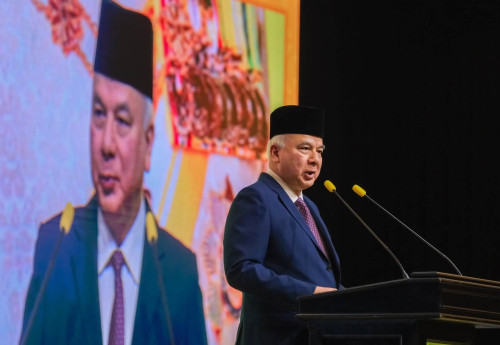
Speaking at the Energy Asia 2025 conference on Monday during a panel session titled ‘Enabling Asia’s Future Energy Ecosystem’, OPEC Secretary General Haitham Al Ghais stressed that while addressing climate change is critical, it must not come at the cost of energy security and affordability.
“Sometimes we get carried away talking about net zero and energy transition. At OPEC, we believe in a balanced approach. We must transition and address climate change, but not at the expense of energy security or affordability,” he said.
He highlighted that fossil fuel development remains a long-lead-time, capital-intensive sector requiring consistent funding to maintain energy system stability.
“One of the key factors we consistently stress is the importance of continued investment,” Haitham added.
Responding to perceptions that OPEC stands in opposition to renewables, he clarified that many member states are actively adopting clean energy technologies.
“We do not dismiss renewables. On the contrary, many OPEC members are embracing renewable energies. However, we recognise that renewables alone will not suffice. That is why our approach to the energy transitions must be multipath,” he explained.
“There is no single pathway. We need all sources of energy and technology to complement and support one another, especially those that can help reduce emissions.”
Haitham estimated the oil industry would require a total of US\$17.4 trillion in investment over the coming decades — roughly US\$640 billion annually — to meet growing demand and ensure supply security.
“Today, oil still represents 30 per cent of the global energy mix. When combined with gas, this figure rises to about 56 to 57 per cent,” he noted.
“In terms of volume, we are seeing oil demand hit a new record each year. This year, we are forecasting oil demand to exceed 104 million barrels a day.”
The remarks come as global energy stakeholders gather in Kuala Lumpur for *Energy Asia 2025*, where dialogues continue on reconciling sustainability goals with the practical demands of growing energy needs across the region. - June 16, 2025