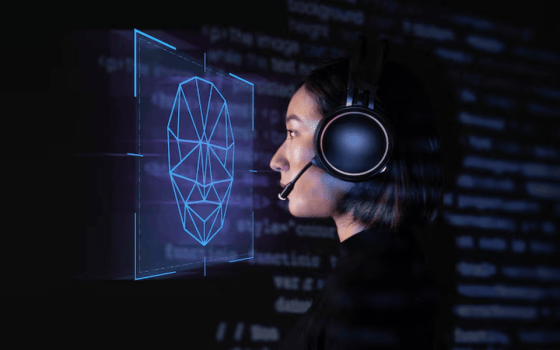
A 47-YEAR-OLD woman in northeastern China has created an artificial intelligence avatar of her late father, allowing her to see, hear and converse with a digital recreation of him after his death from cancer, in a case that reflects the emotional and technological frontiers of China’s fast-growing “digital human” industry.
The woman, Zhang Xinyu, turned to the AI firm Super Brain two years ago after struggling with grief and loneliness following her father’s passing.
The company developed a highly realistic avatar that resembles and sounds like him, enabling her to interact with what she describes as a comforting digital presence.
She told AFP that speaking with the avatar gave her an immediate emotional lift. “I can now converse online with her father’s avatar, something that made her feel ‘fully recharged in an instant and filled with motivation once again’,” she said.
However, she acknowledged concerns raised by friends who feared she might become overly dependent on the virtual reconstruction of her father and struggle to move on, describing it as a form of “false comfort”.
“But even if the comfort itself is simulated, the love behind it is real,” said Zhang, who is based in Liaoning province.
Her experience comes amid the widespread use of AI-generated “digital humans” across Chinese social media platforms, where they are increasingly used in advertising and entertainment, often exhibiting highly realistic facial expressions and movements.
China’s cyberspace regulator has responded by proposing new draft rules in April to govern the development and deployment of such avatars, aiming to prevent misuse, including harm to children, threats to social stability, and the creation of likenesses without consent.
The proposed framework also requires clear labelling of AI-generated content and prohibits the unauthorised use of personal data to create deepfake replicas of individuals. Violations could attract fines ranging from 10,000 yuan to 200,000 yuan.
The industry itself is expanding rapidly. State media reported that China’s digital human sector was worth about 4.1 billion yuan (RM2.7 billion) in 2024, marking growth of around 85 per cent year-on-year.
Experts say China’s approach to emerging technologies has historically followed a pattern of rapid adoption followed by regulatory refinement. Associate Professor Marina Zhang of the University of Technology Sydney said the country’s governance model typically reflects a “develop first, then regulate” approach.
Industry developers, including Super Brain founder Zhang Zewei, have described regulation as a necessary and inevitable step. “I view this as a positive development, as it achieves a balance between standardised regulation and industry growth,” he told AFP.
Super Brain specialises in creating AI avatars of deceased individuals for grieving families. Mr Zhang described one widely circulated case involving an elderly woman who unknowingly interacted with an AI recreation of her late son, saying the firm always works with family consent. He called such creations a “well-intentioned lie”.
The emotional and ethical implications of such technology have sparked intense debate online in China, particularly following viral videos showing hyper-realistic AI interactions that some users say blur the boundary between comfort and deception.
Authorities have already acted against misuse of AI-generated identities, including deepfakes of public figures in commercial livestreams, which regulators said had “severely damaged” the online ecosystem.
Analysts say Beijing’s tightening oversight reflects both economic ambition and political caution. Manoj Harjani of Singapore’s S. Rajaratnam School of International Studies said one objective is to safeguard “sovereignty and political objectives” as digital technologies evolve.
Under the draft rules, digital humans are also prohibited from producing content deemed to threaten national security or encourage subversion of state authority.
Additional provisions aim to protect minors by banning virtual services that simulate intimate relationships or encourage harmful emotional or behavioural patterns.
“Beijing wants to move quickly on AI adoption and deployment, but within a controlled framework,” said Dr Lizzi Lee of the Asia Society Policy Institute.
She added that while there is strong support for technological innovation, regulators in China tend to act swiftly once risks become visible. - April 19, 2026