QUESTIONS surrounding public drinking in Malaysia frequently arise from everyday social settings such as cafés, parks and informal gatherings.
However, the legal position is not defined by a single prohibition, but by a layered framework combining federal statutes, local by-laws and religious law.
For non-Muslims, there is no overarching federal law that prohibits the consumption of alcohol in public or the possession of open containers, Says.com reportedly said.
Instead, enforcement generally focuses on conduct, intoxication levels and whether behaviour disrupts public order.
Under Section 15 of the Minor Offences Act 1955, individuals found “drunk and incapable of taking care of oneself” in a public place may be fined up to RM25 or jailed for up to 14 days.
Repeat offences carry higher penalties, including fines of up to RM100 and imprisonment of up to three months.
In addition, Section 510 of the Penal Code criminalises disorderly behaviour linked to intoxication.
A person who causes “public disorder” while drunk in public may be fined or jailed for up to 10 days, reinforcing the principle that it is disruptive conduct, rather than consumption itself, that is primarily targeted.
Local authorities add another layer of regulation through state and municipal by-laws, which vary significantly.
In Selangor, public parks and recreational areas prohibit alcohol consumption, with compound fines of up to RM1,000. In Negeri Sembilan, similar restrictions in parks, beaches and playgrounds can result in fines of up to RM2,000.
Malaysia also operates a dual legal system in which alcohol consumption by Muslims falls under Syariah jurisdiction.
Under Section 19 of the Syariah Criminal Offences (Federal Territories) Act 1997, Muslims found consuming intoxicants in public may be fined up to RM3,000 or imprisoned for up to two years.
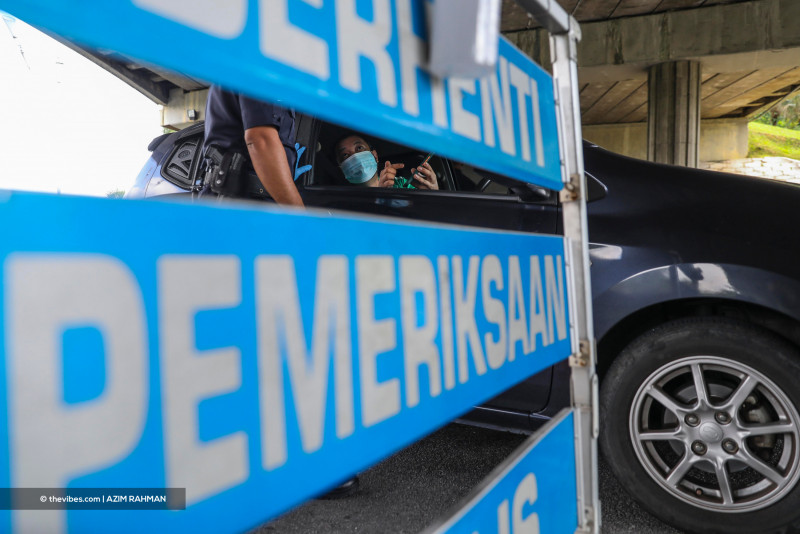
While public drinking offences are generally treated as minor under civil law, the legal landscape changes significantly when it comes to drink-driving, where Malaysia enforces some of the strictest penalties in the region following amendments to the Road Transport Act 1987 in 2020.
Legal alcohol impairment thresholds are set at 22 micrograms of alcohol per 100 millilitres of breath and 50 milligrams per 100 millilitres of blood.
Even in cases where no accident occurs, first-time offenders under Section 45A face mandatory penalties including up to two years’ imprisonment, fines between RM10,000 and RM30,000, and a minimum two-year driving ban.
Where drink-driving results in death, penalties escalate dramatically. Under Section 44 of the same Act, offenders may be sentenced to between 15 and 20 years in prison, fined up to RM100,000, and disqualified from driving for at least 10 years for first-time convictions.
In practice, social alcohol consumption remains legal for non-Muslims in licensed premises and many public spaces, provided it does not breach local by-laws or result in public nuisance.
However, once intoxication leads to disorderly behaviour or driving under the influence, enforcement shifts sharply from minor fines to severe criminal penalties.
Legal observers frequently note that while social drinking may appear low-risk, the decision to drive after consuming alcohol can quickly escalate into a serious criminal offence with long-term consequences, making alternative transport not only safer but significantly more prudent - April 25, 2026