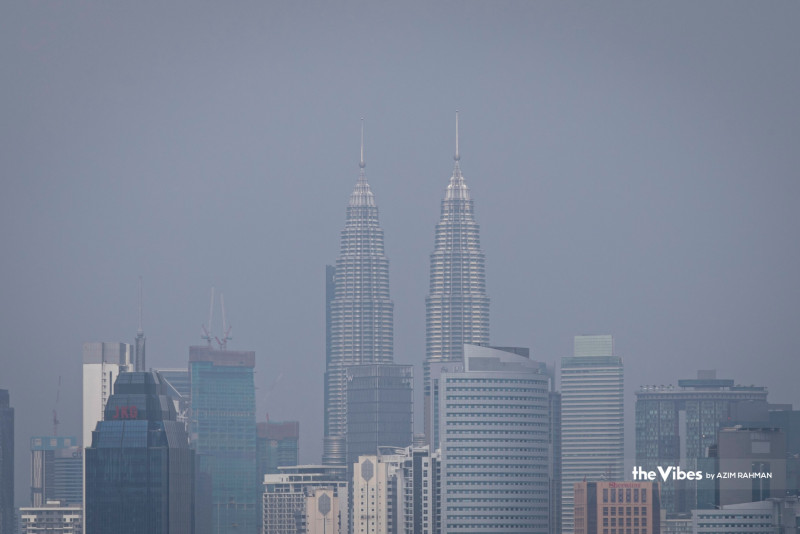
A HIGH risk of severe haze engulfing parts of Southeast Asia in the second half of 2026 has been flagged by the Singapore Institute of International Affairs (SIIA), amid the return of El Niño conditions and growing pressure from deforestation linked to biofuel demand.
In its annual haze outlook report, the think-tank said the warming El Niño climate pattern is expected to intensify and prolong the dry season, increasing the likelihood of widespread fires at a time when fire-prevention capacity may be weakened by economic uncertainty and budget constraints.
This marks only the second time since the SIIA began issuing its annual outlooks in 2019 that a “red alert” has been issued, the previous instance being in 2023, another El Niño year that saw Singapore briefly affected by haze.
El Niño refers to the periodic warming of sea surface temperatures in the eastern Pacific Ocean, which typically brings hotter and drier conditions across Southeast Asia.
The Straits Times reported on Wednesday that scientists are also monitoring a possible “super El Niño”, which could result in exceptionally hot and dry conditions across 2026 and 2027.
At the same time, the report said a positive Indian Ocean Dipole, expected to form around July or August, could further intensify and prolong dry conditions across the region, potentially extending the haze season into October.
The ASEAN Specialised Meteorological Centre has indicated that El Niño conditions are already present and are expected to strengthen between August and September.
The SIIA said the combination of these climate systems, alongside existing pressures from land-use change, could significantly increase fire risk across peatlands, plantations and forest areas.
It added that deforestation driven by rising biofuel demand is exacerbating land-clearing activity, with nearly a fifth of deforestation in 2025 linked to food and bioenergy crop expansion.
The report also warned that higher agricultural input costs, including fertiliser and fuel, may push some producers towards cheaper and potentially unsustainable land-clearing practices.
SIIA chairman Simon Tay said haze should not be seen solely as an environmental issue, but as a supply chain challenge requiring sustained sustainability commitments across the agricultural sector, including smaller operators under financial strain.
Associate director Khor Yu-Leng noted that ongoing energy market disruptions and commodity price pressures could further strain food producers, increasing the risk of land clearing through slash-and-burn methods in some areas.
The report also highlighted concerns over reduced firefighting capacity in parts of Indonesia, where local budgets in fire-prone regions have already been depleted following previous spikes in forest fires.
It added that Indonesia’s expanded biofuel mandate, which increases palm oil-based biodiesel blending requirements, could further intensify competition for land between food and energy crops.
The SIIA warned that the coming dry season will serve as a major test for regional governments and industries in managing land use, enforcing environmental regulations and preventing transboundary haze. - June 24, 2026




_exercise.jpg)